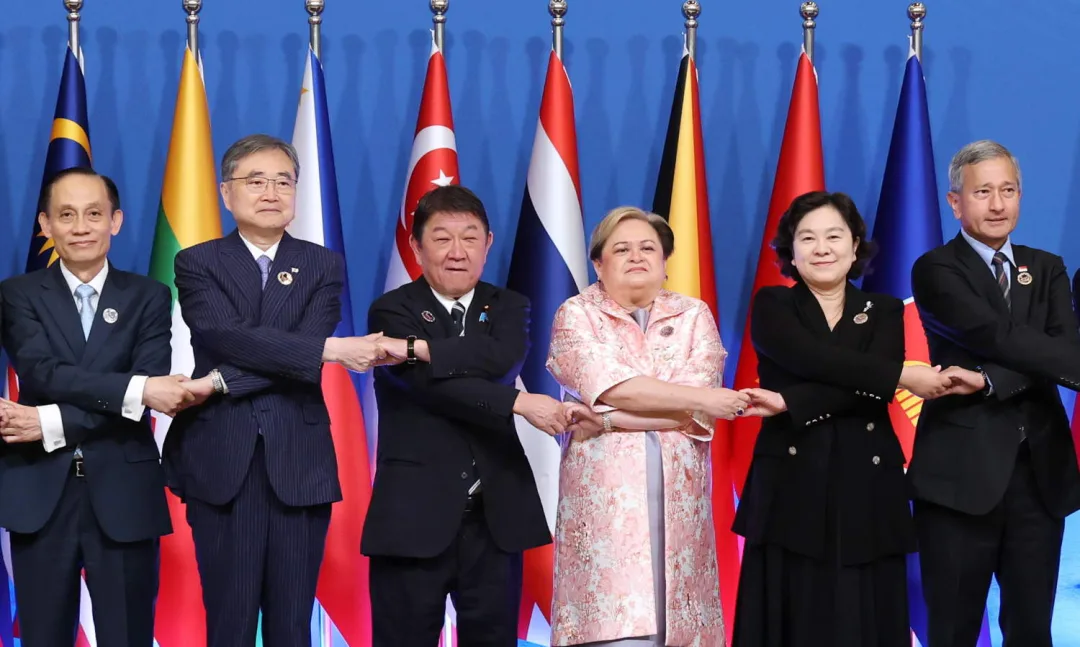
Manila, Philippines. Top diplomats from Asia, Europe and North America gathered on Thursday for the ASEAN Regional Forum, where ministers were expected to call for a peaceful settlement of renewed and intensifying hostilities in the Middle East.
The conflict in Iran and the blockade of the Strait of Hormuz dominated the Manila meetings, attended by U.S. Secretary of State Marco Rubio, Russian Foreign Minister Sergei Lavrov and senior officials from Australia, Britain, China, the European Union, India and Japan.
Regional economic concerns
The conflict is a key concern for the 11-member Association of Southeast Asian Nations, which has a combined gross domestic product of about $3.8 trillion and relies heavily on Middle East oil. The disruption has exposed the region to fallout that has contributed to global inflation.
“We convene against the backdrop of profound geopolitical and geoeconomic uncertainty,” Philippine Foreign Secretary Maria Theresa Lazaro said in opening remarks. The Philippines is chairing the grouping.
“These issues transcend borders and underscore the reality that no nation can address today’s complex security environment alone,” Lazaro said.
Military action and oil supply risks
The U.S. military completed a 12th successive night of attacks on Iran on Wednesday. Iranian-aligned Houthis said the following day that they had struck two Saudi oil tankers as part of a blockade threatening a second chokehold on global oil supplies in the Red Sea, alongside the Strait of Hormuz.
China’s Vice Foreign Minister Hua Chunying told a meeting of officials from ASEAN, China, Japan and South Korea on Thursday that the world had entered a “new period of turbulence and transformation,” warning of an urgent need for peace and stability.
U.S.-Russia talks
Rubio said on Wednesday that the United States wanted a diplomatic solution in the Middle East, but that Tehran was not engaging.
Rubio and Lavrov held talks on Thursday for just under an hour, discussing the war in Ukraine and the normalisation of U.S.-Russia ties, Russia’s foreign ministry said.
Lavrov reaffirmed Russia’s readiness for a political and diplomatic settlement of the conflict and told Rubio that Moscow remained committed to proposals put forward by the leaders of both countries, the ministry said.