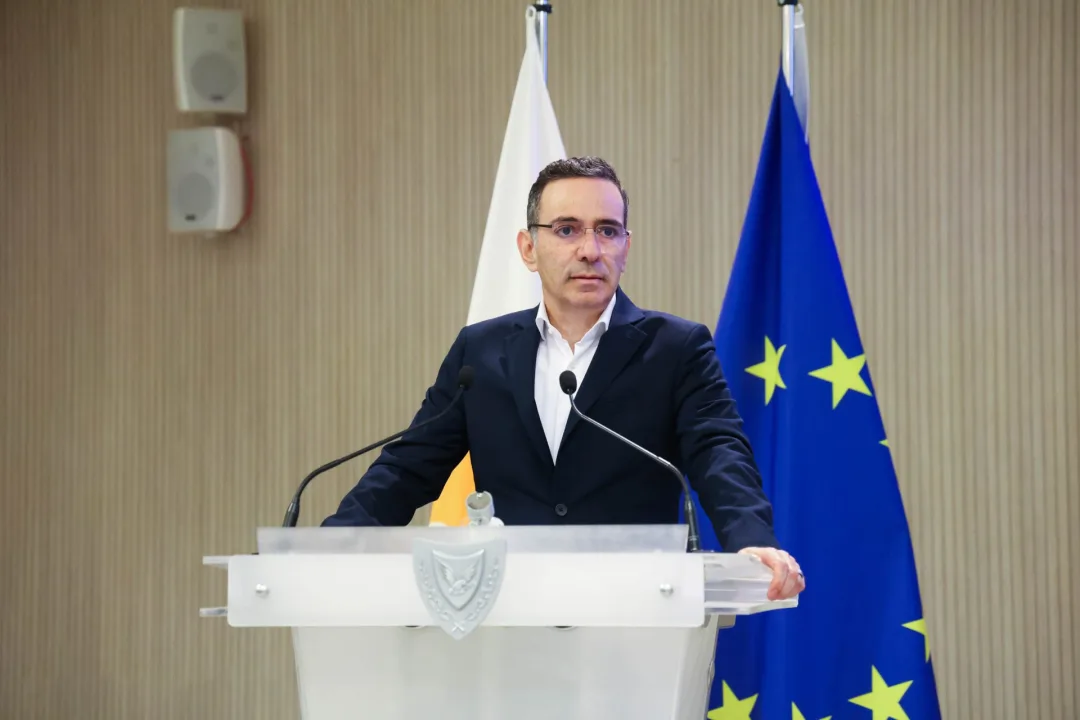
Nicosia, Cyprus. Cyprus used its six-month Presidency of the Council of the EU to advance key European files on digital policy, artificial intelligence, research and innovation, Deputy Minister Nicodemos Damianou said. He said the country had helped shape a more ambitious agenda for Europe’s technological future and had received broad recognition from European partners.
Presidency priorities and recognition
Speaking on CyBC’s Apo Mera se Mera, Damianou said the recognition received by the Cyprus Presidency reflected the preparation, coordination and management shown throughout the six-month term.
In a statement following the interview, he said the Presidency had been characterised by serious preparation, collective effort and effective management.
Damianou said that, particularly in digital policy, research and innovation, the Cyprus Presidency had promoted an agenda with tangible results for Europe’s competitiveness and technological autonomy. He said the success of a Council Presidency should be measured not simply by the number of meetings held, but by whether it delivers on the targets it sets.
Focus on Europe’s technological position
He said Cyprus’ targets were closely linked to the European Union’s broader effort to strengthen its position in technology, innovation and global competitiveness.
Damianou said this debate had been shaped in large part by the Draghi report, published in September 2024, which warned that Europe risked losing ground unless it invested more seriously in technological development.
Since then, he said, the EU has placed stronger emphasis on strategic autonomy, technological independence and a single market that allows companies and innovative ideas to grow more easily across member states.
He added that 85 per cent of European businesses currently depend on technologies from outside Europe, including cloud services and artificial intelligence tools.
Legislative and policy files
Damianou said the Cyprus Presidency coincided with discussions among member states on a broad set of legislative and policy files, making the period particularly demanding.
He said these files included cybersecurity, connectivity, digital infrastructure, space technologies, artificial intelligence, research and innovation.
According to Damianou, Europe’s dependence was also visible in space technology, where it continues to rely heavily on systems developed elsewhere, including satellite technologies from the United States.
He said artificial intelligence was at the centre of the discussion, with the recent conference held in Nicosia as part of the Presidency focusing on Europe’s immediate technological future and how member states could shape it together.
Research framework and online safety
Damianou said Cyprus also helped advance one of the EU’s largest research files by reaching agreement among member states on the structure and direction of the next European research and innovation framework programme for 2028 to 2034.
He described it as a difficult dossier involving complex negotiations between 27 member states and said the new programme is expected to have roughly double the budget of the current Horizon Europe programme, which stands at about €95 billion.
Alongside the main legislative work, he said Cyprus also sought to bring forward broader issues linked to the digital transition, including the protection of minors online.
Damianou said the issue had become more urgent because artificial intelligence tools have made the online environment more complex and, in some cases, more dangerous, particularly for young people.