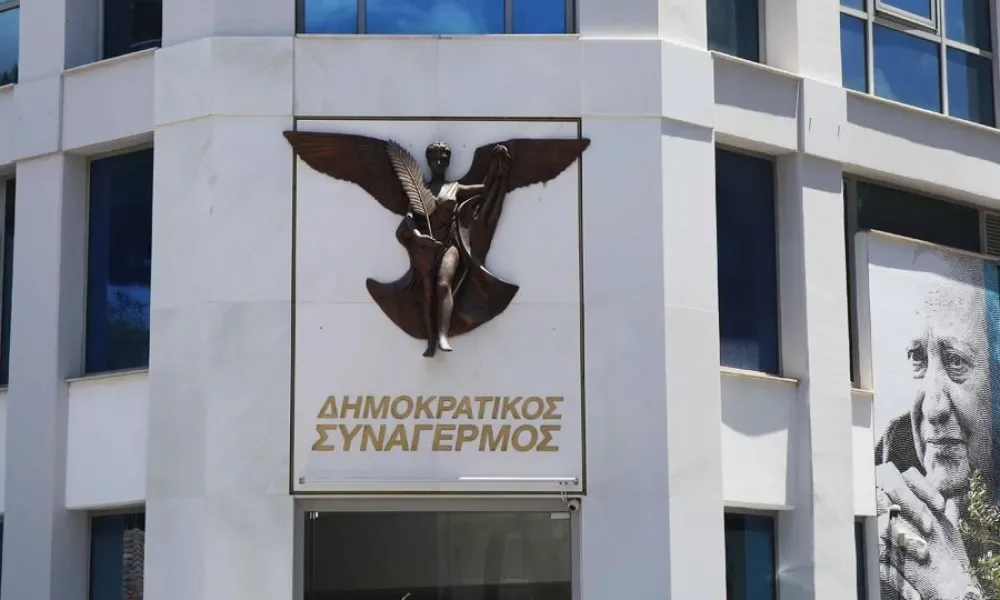
Nicosia, Cyprus. Disy on Friday criticised the government over President Nikos Christodoulides’ attempt to extend European Affairs Deputy Minister Marilena Raouna’s term in office until the end of the year. The party said the rejected urgent request was a last-minute move and accused the government of trying to mislead public opinion.
Disy response to rejected request
Disy said the president was attempting to turn one of his own failures into a political attack on the party. It said a government request submitted as urgent had been voted down and that any other presentation of the matter amounted to a conscious attempt to mislead public opinion.
Questions over timing
The party said the government’s decision to submit what it described as a supposedly serious matter at the last minute, without enough time for study, consultation, or substantive parliamentary work, raised questions of political expediency.
It asked why, if the extension was so crucial for the interests of the Republic of Cyprus and for negotiations on the multiannual financial framework, it had not been foreseen in time. The multiannual financial framework is the EU’s budget for the period from 2028 to 2034.
Disy also asked why the extension of Raouna’s term had not been included from the outset in the relevant legislation, as it said had happened during Cyprus’ previous presidency of the Council of the EU.
Concerns over public spending and procedure
The party said the creation of new structures, the extension of terms of office, and the imposition of new, inflexible expenditures on the public were serious political decisions. It said such decisions could not be introduced at the last minute or be approved by parliament without the necessary documentation.
Position on European negotiations
Disy said it was inconceivable to suggest that securing European funds for the Republic of Cyprus depended on a six-month extension to the term of one person.
It said that since 2004, Cyprus had participated in the European Union as an equal member, negotiated multiannual financial frameworks, and secured significant amounts of European funding through competent state institutions.
The party said the finance ministry, the foreign ministry, the development office, and other competent state institutions had shown over time that they could carry out this task successfully. It added that the country’s own historical record contradicted the government’s claims.
Disy’s stance
Disy said it was the only party that had consistently defended the country’s European course with actions, seriousness, and documentation, rather than with what it described as communication exaggerations.