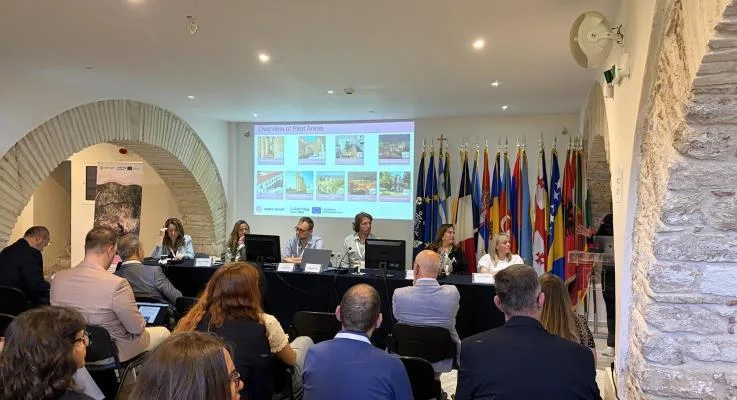
Athens, Greece. The Limassol regional tourism board, Etap Limassol, presented results from nine pilot actions under the HERIT ADAPT Interreg EURO-Med project at a European conference in Athens. The work focused on sustainable tourism and the impact of climate change on cultural heritage sites.
Conference and project closure meeting
According to an announcement by the board, Etap participated alongside the Limassol Chamber of Commerce and Industry (Evel) in the conference and the final meeting marking the closure of the EU-funded HERIT ADAPT project. The events took place from May 18 to May 20, 2026.
Participants and pilot action outcomes
The conference brought together eight organisations from Mediterranean countries, which presented outcomes from nine pilot actions developed under the project. The actions highlighted the role of innovation in creating sustainable tourism development models focused on cultural heritage and resilience to climate change.
Technology tools used in pilot regions
Etap said emphasis was placed on the use of advanced technological tools in pilot regions across participating countries, including 3D modelling, extended reality technologies, IoT-based climate monitoring systems and artificial intelligence tools for the promotion of cultural heritage.
Broader discussions and potential expansion
Discussions also addressed the relationship between sustainability, circular economy principles and tourism development, as well as the potential to expand the project’s results across the wider Mediterranean region.
Etap Limassol statement and EU context
Etap Limassol said its participation in HERIT ADAPT confirms its ongoing commitment to promoting sustainable and innovative practices in the tourism sector and cultural heritage management. The project forms part of wider EU efforts to strengthen resilience in coastal and heritage destinations increasingly exposed to climate-related risks, while also enhancing digital transformation in tourism management.
How do you think advanced technologies such as 3D modelling and IoT monitoring could affect the protection of cultural heritage sites?