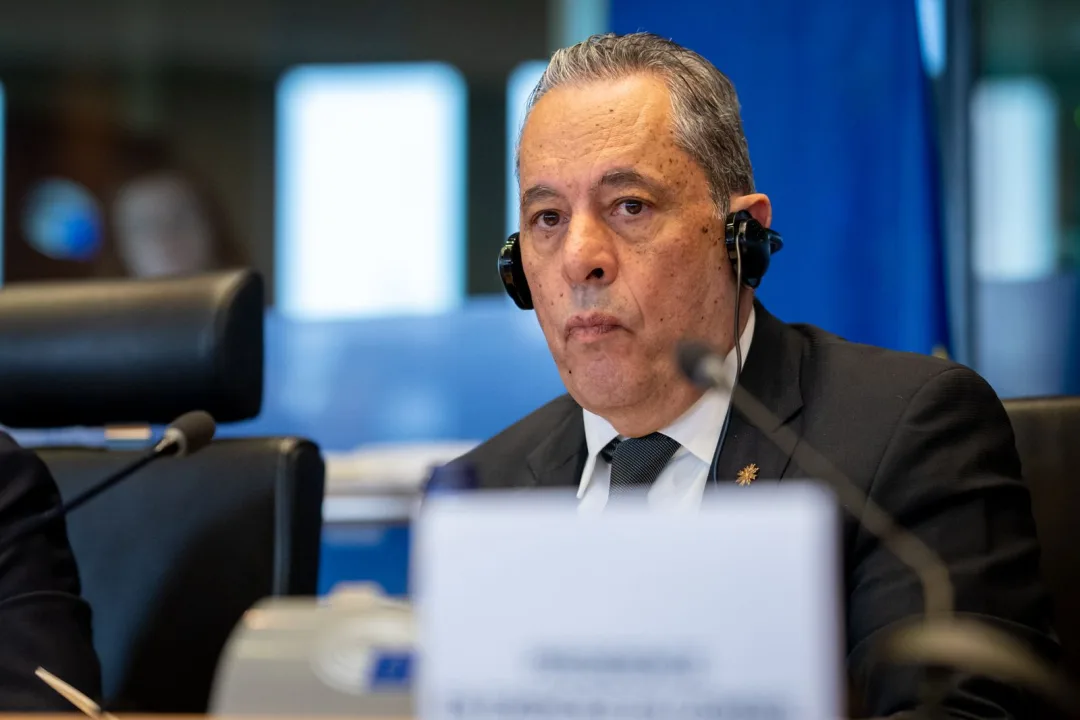
Nicosia, Cyprus. Defence Minister Vasilis Palmas on Monday welcomed the Council of the European Union’s adoption of an agreement with Canada allowing Canadian companies and products to take part in procurement under the EU’s €150 billion Security Action for Europe (Safe) defence programme. Canada is the first non-European country to participate in the programme.
Canada joins Safe programme
Palmas said Canada is one of the European Union’s closest allies and that its participation in Safe reflects deep trust and sets a precedent for cooperation with key strategic partners.
The European Parliament ratified the agreement three weeks ago, concluding the process for Canada to join the programme.
Scope of procurement access
In addition to Canada, procurement under the Safe programme is open to the EU’s 27 member states, the four European Free Trade Association states — Iceland, Liechtenstein, Norway and Switzerland — and Ukraine.
Canadian government statement
Canadian Prime Minister Mark Carney said earlier that, in a dangerous and divided world, Canada and Europe are strengthening their defence partnership to rapidly procure new equipment and technology, accelerate Nato targets and create opportunities for defence manufacturers.
He said Canada’s participation in Safe would address reliability gaps, expand markets for Canadian suppliers and attract European defence investment into Canada.
Cyprus loan agreement
Earlier this month, the Cypriot government and the European Commission signed a loan agreement allowing Cyprus to receive more than €1 billion in funding under the Safe programme.
Cyprus was the sixth EU member state to sign a loan agreement, following Poland, Lithuania, Croatia, Romania and Belgium, whose agreements were signed last month.
Cyprus defence plans
Palmas had previously said the funding would allow the National Guard to acquire military hardware to cover its priorities until 2030.
He also said the Safe programme was established at a time when the European Union faces significant needs to address shortcomings and when the mobilisation of equipment programmes and joint procurement programmes is becoming urgent.