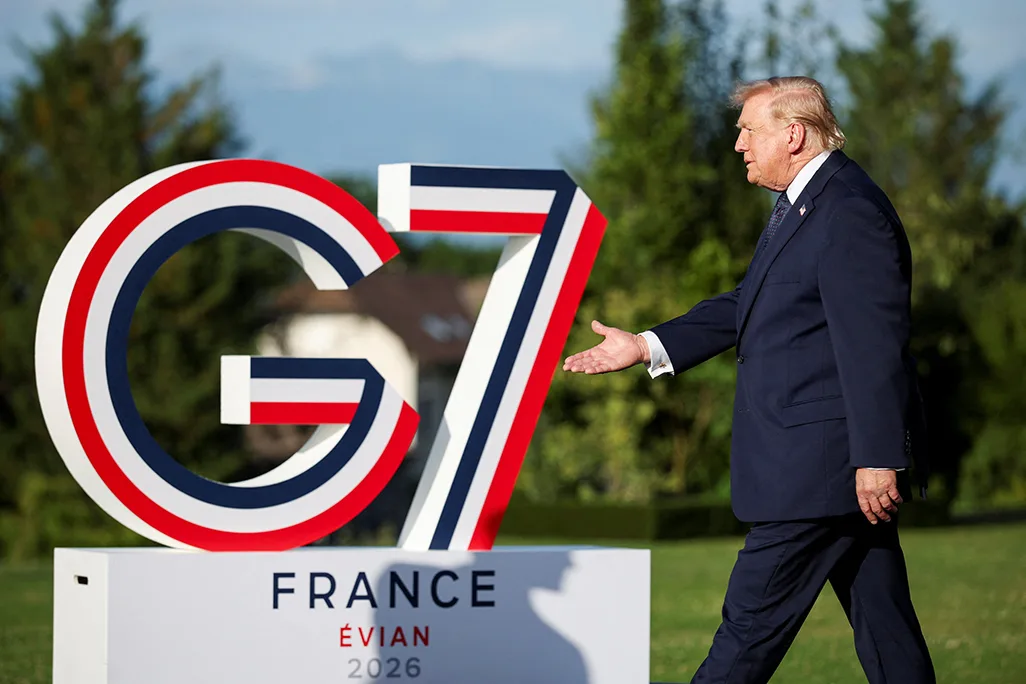
Evian-les-Bains, France. U.S. President Donald Trump told G7 leaders on Wednesday, “I’m the boss,” as the group pledged continued support for Ukraine and announced fresh sanctions against Russia. The leaders also acknowledged Ukraine’s improved position on the battlefield, which they said could strengthen Kyiv in any potential peace talks with Moscow.
Support for Ukraine and sanctions on Russia
A joint statement by G7 leaders said the group would continue backing Ukraine as its forces improve their position in the war. Ukrainian President Volodymyr Zelenskiy and his allies had arrived at the June 15-17 summit seeking to show Trump that Ukraine’s battlefield gains meant Russia was not in a position to dictate the terms of a peace settlement.
The statement and remarks from leaders indicated that Trump has become more receptive to Zelenskiy’s argument after years of skepticism. Canadian Prime Minister Mark Carney said there had been “a change in position” by the United States and Trump, describing the U.S. stance as tougher toward Russia and more realistic about conditions on the ground.
Uncertainty over U.S. commitments
Despite the shift in tone, questions remained over how far Washington would go in pressuring Moscow into peace talks. It was unclear whether Trump and Zelenskiy would hold bilateral talks during the summit.
It also remained uncertain whether the United States would allow waivers to expire on sanctions restricting Russian oil exports after Trump secured a preliminary deal with Iran.
Trump comments at summit session
Trump made his “I’m the boss” remark as he arrived to take his seat at a session on global economic security attended by G7 leaders and reporters. The session was set to focus on critical minerals supply chains and macroeconomic imbalances.
On Tuesday, Trump described his meeting with Zelenskiy and other G7 leaders as “very good.”
Iran deal and energy supply concerns
G7 leaders also welcomed the preliminary peace deal between the United States and Iran, which Trump signed on the eve of the summit, and said they were prepared to help implement it.
The leaders said they would work to diversify energy supply routes in order to reduce dependence on the Strait of Hormuz and increase energy stocks. Iran has blocked the strait for most of the duration of its war with the United States.