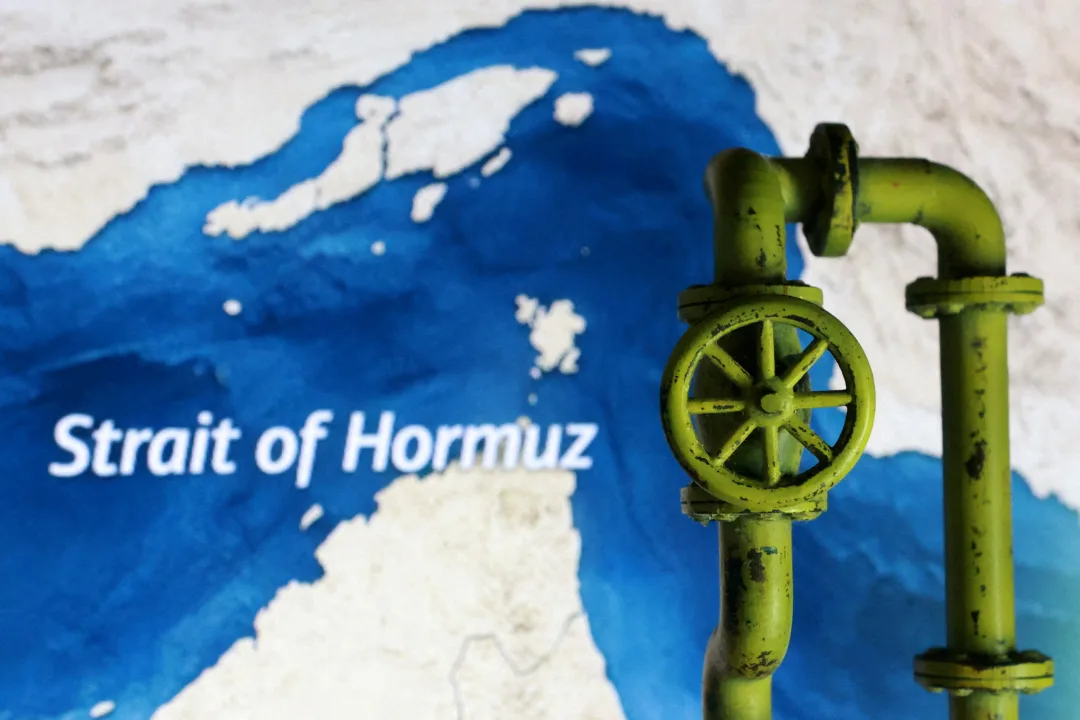
Washington, United States. With the US-Israel-Iran war now in its third month, disruptions linked to the Strait of Hormuz have sent oil prices higher and intensified supply insecurity, particularly for jet fuel. The situation is spreading fuel supply disruptions to Asia and threatening Europe.
Strait of Hormuz disruptions and supply insecurity
The shutdown of crude oil and refined products flows through the Strait of Hormuz has driven prices sharply higher and created a crisis for the jet fuel market, with supply insecurity becoming acute. While reopening the Strait of Hormuz is important, it is not expected to mean a full return to normality and would amount to a partial stabilisation under constant risk.
Uncertainty from repeated openings and closures
The repeated opening and closing of the Strait of Hormuz has been described as more destabilising than a complete closure, creating a high-frequency shock environment in which uncertainty itself becomes the main economic force. Geopolitical tensions, rather than traditional supply-and-demand fundamentals, are increasingly driving energy prices and contributing to extreme volatility.
April price moves linked to geopolitical developments
In April, following President Trump’s early-month threats to hit Iran “extremely hard,” Brent crude rose above $110 a barrel. By mid-April, prices fell to about $94 a barrel, before rising above $98 a barrel on April 16 when Trump refused to lift the blockade of Hormuz. After he welcomed news that Iran was reopening the Strait of Hormuz to commercial vessels, Brent fell to $87 a barrel, but rebounded to about $95 a barrel on Monday, April 20 after the US Navy seized an Iranian cargo ship, and rose to $99 a barrel on April 22 after the expected meeting between US and Iran negotiators in Islamabad was cancelled. Following more recent threats to the ceasefire, Brent climbed to $118 a barrel.
Risks if negotiations fail
If new talks resume without reaching a deal and President Trump follows through on threats to hit Iranian infrastructure, the situation could worsen. The risk of a prolonged conflict beyond May is described as a shortage of oil product stocks, including jet fuel, petrol and diesel, with significant economic consequences, as the stakes of no deal increase.
Market impact of persistent instability
The repeated openings and closings have contributed to sharp market swings, as markets are seen as able to manage “bad but clear” outcomes but struggling with uncertainty and constant change. The result has been heightened price volatility, a persistent geopolitical premium priced in by oil traders, and market participants holding back in anticipation of shifts. The instability is described as unsustainable, with the continuation of this pattern potentially leading to one of three outcomes.
How do you think continued uncertainty around the Strait of Hormuz will affect fuel prices in the coming months?