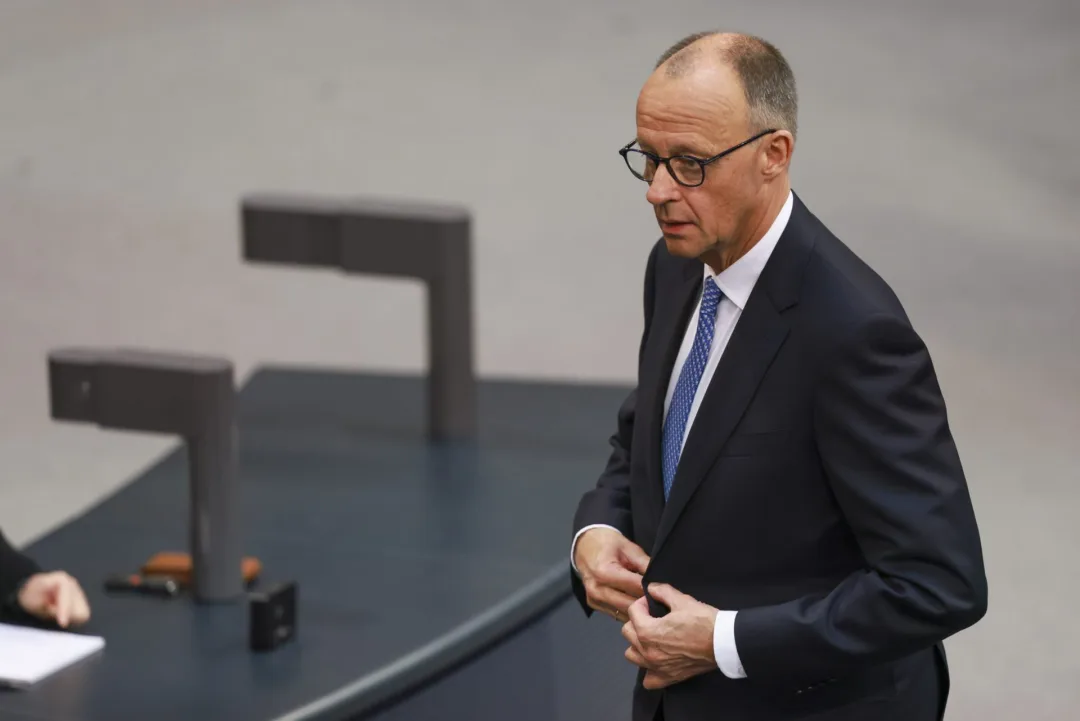
Berlin, Germany. German Chancellor Friedrich Merz said he must accept that President Donald Trump does not share his views in order to work with the United States within NATO, while insisting a planned reduction of U.S. troops in Germany is unrelated to their dispute.
Merz rejects link between dispute and troop drawdown
Merz dismissed suggestions that his criticism of U.S. war planning in Iran prompted Washington’s Friday announcement that it would reduce its military presence in Germany, its largest European base, by 5,000 soldiers. He reiterated his commitment to the transatlantic alliance.
Comments on Iran and response from Trump
Merz had questioned whether Trump had an exit plan for the Middle East and said the United States was being “embarrassed” in talks with Iran. Trump later called Merz an “ineffectual” leader.
“I have to accept that the American president has a different view on these issues than we do. But that does not change the fact that I remain convinced that the Americans are important partners for us,” Merz told public broadcaster ARD in an interview due to be aired later on Sunday.
Asked whether U.S. plans to reduce its troop presence in Germany had anything to do with the spat between the two leaders, Merz said, “There is no connection.”
Broader context of U.S. posture in Germany
Trump called for a reduced U.S. military presence in Germany during his first term and has repeatedly called on Europeans to take greater responsibility for their own security.
Friday’s announcement has also been seen as canceling a plan under Joe Biden’s administration to deploy a U.S. battalion with long-range Tomahawk missiles to Germany. The move is viewed as a blow to Berlin, which had pushed for the deployment as a deterrent against Russia while Europeans develop such weapons.
Merz said Trump had never committed to the Tomahawk plan and that it was unlikely the United States would give up such weapons systems, adding, “If I’m not mistaken, the Americans don’t have enough themselves at the moment.”
Do you think the planned U.S. troop reduction in Germany will change NATO’s security posture in Europe?