Limassol, Cyprus. Tenstorrent Chief Operating Officer Keith Witek said sovereignty in the age of artificial intelligence is increasingly a practical question of which technology capabilities a country can control, operate, secure and use to create differentiated value.
Keynote on sovereignty and AI
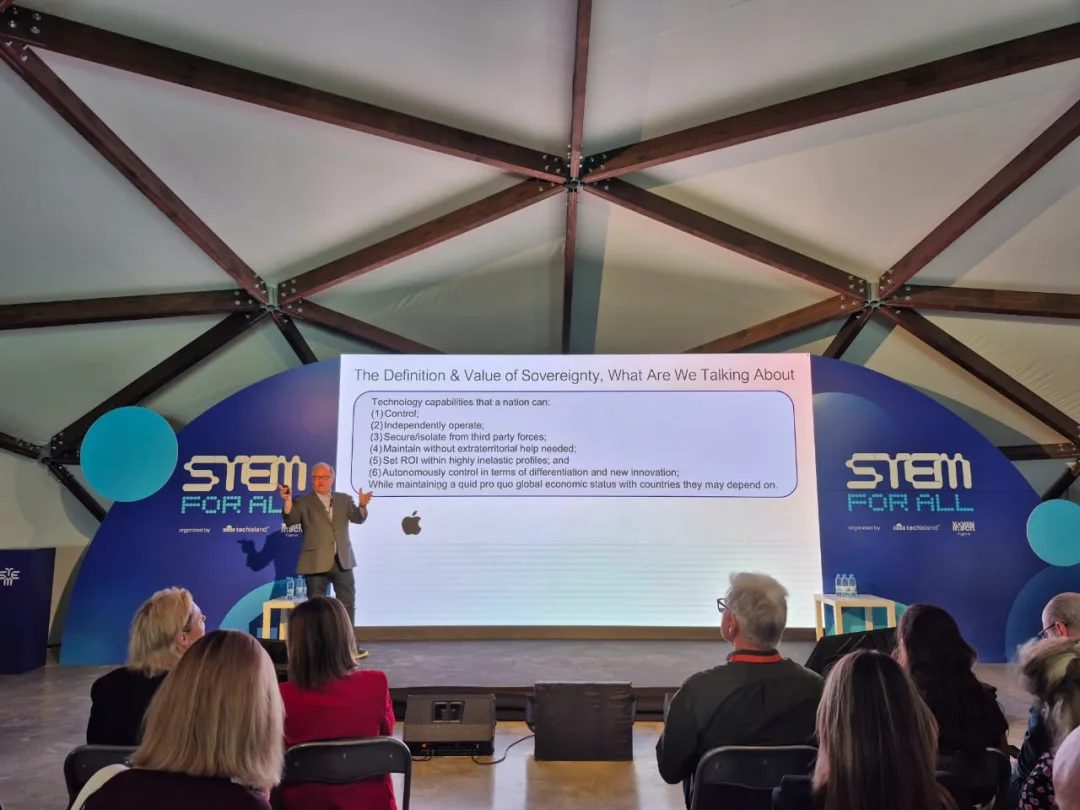
Speaking during a keynote titled “Sovereignty in the Age of AI” at the Doers Summit in Limassol, Witek said AI is forcing countries to rethink sovereignty in a world shaped by infrastructure, chips, platforms, computing power and global technology supply chains.
Computing revolutions and concentration of power
Witek said every major computing revolution, from the mainframe to the cloud, expanded access to more people. He warned AI could become the first computing revolution to reverse that trend by concentrating power among those who own the infrastructure.
Definition of sovereignty in technology terms
Witek said sovereignty refers to technology capabilities a nation can “control, independently operate, secure or isolate from third-party forces,” and maintain without extraterritorial help. He said it also means being able to “autonomously control differentiation and new innovation,” while capturing value in areas where demand remains highly inelastic.
Global relationships and economic positioning
Witek said sovereignty does not mean cutting off global economic relationships, but maintaining a “quid pro quo global economic” position with countries on which a nation may still depend while avoiding full exposure to external control. He linked this to economic and technological power, saying the world’s leading technology nations also hold strong positions in GDP, market capitalisation and global capability.
U.S. ranking in technology power and GDP
According to his presentation, the United States ranks first in technology power and first in GDP, with public technology market capitalisation of $40 trillion.
How do you think countries should balance technological independence with continued reliance on global supply chains?