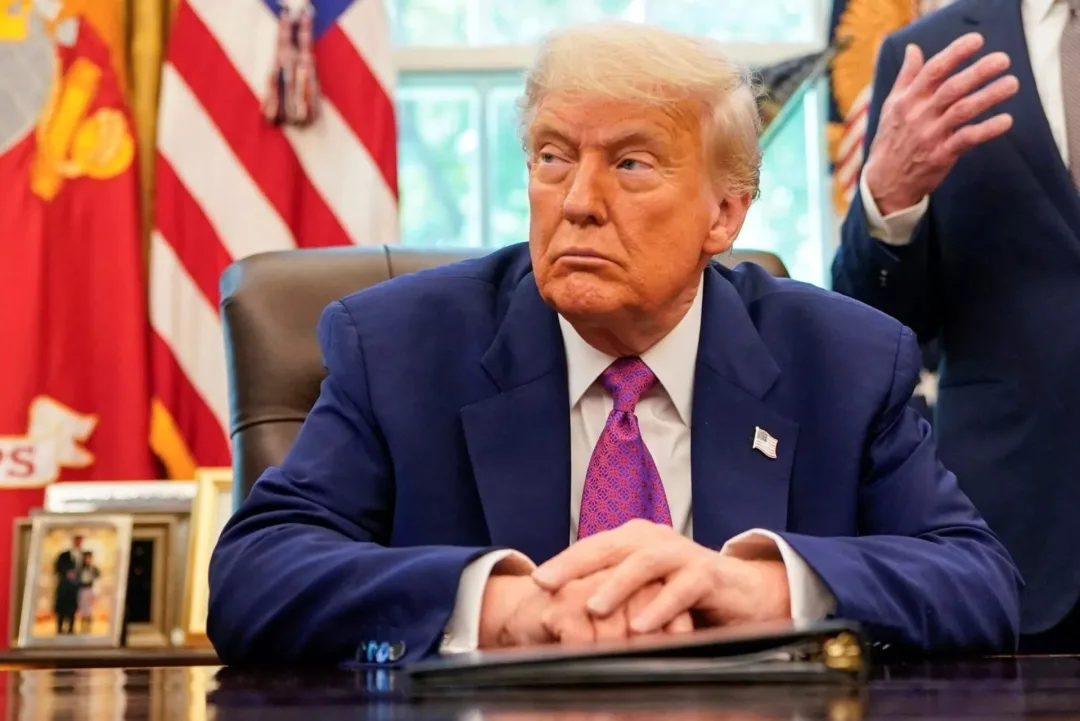
Washington, United States. US President Donald Trump warned he may allow the ceasefire with Iran to lapse by Wednesday unless a long-term agreement is reached, as Iran temporarily reopened the Strait of Hormuz and talks continued through back channels.
Trump signals possible end to ceasefire
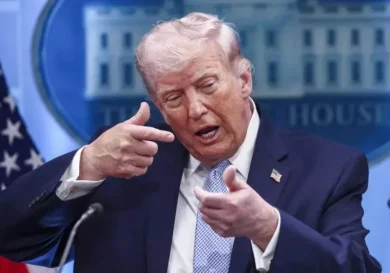
Speaking to reporters on Air Force One while returning to Washington from Phoenix, Arizona, Trump said he might not extend the ceasefire. “Maybe I won’t extend it, but the blockade is going to remain,” he said, adding, “So you have a blockade, and unfortunately we have to start dropping bombs again.”
On the same flight, Trump said there had been “some pretty good news” about Iran and that negotiations were progressing over the weekend. He said the US position was that Iran must not obtain a nuclear weapon.
Iran reopens strait under conditions as markets react
Iran’s Foreign Minister Abbas Araqchi said on Friday that the Strait of Hormuz was open to all commercial vessels for the duration of the 10-day Israel-Lebanon truce agreed on Thursday. Oil prices fell around 10 per cent and global stocks rose.
Iran’s parliament speaker and senior negotiator Mohammad Baqer Qalibaf said the strait “will not remain open” if the US port blockade continued. Iran also stipulated that all vessels must coordinate with the Islamic Revolutionary Guard Corps before crossing, a condition that did not exist before the war.
Shipping movements and warnings over mine risks
Vessel tracking data showed around 20 ships moving toward the strait on Friday evening, including container vessels, bulk carriers and tankers, though most turned back for unclear reasons.
A cruise ship, the Celestyal Discovery, crossed the strait after being stranded in Dubai and was headed to Oman on Saturday morning. Shipping companies said they needed clarification, including on the risk of mines, before resuming normal transits. The US Navy warned seafarers that the mine threat in parts of the waterway was not fully understood.
Nuclear programme remains central obstacle in talks
Iran’s nuclear programme remained the main hurdle. At talks in Islamabad last weekend, described as the highest-level US-Iran negotiations since the 1979 Islamic Revolution, the US proposed a 20-year suspension of all Iranian nuclear activity, while Tehran countered with a three- to five-year halt.
Trump told Reuters that the US would remove Iran’s enriched uranium stockpiles, while Iran’s foreign ministry said the material would not be transferred anywhere.
Disputes over assets and mediation efforts
A senior Iranian official told Reuters there was agreement on unfreezing billions of dollars in Iranian assets as part of any accord, but Trump told a rally in Arizona that “no money will exchange hands in any way, shape or form.”
Pakistani army chief Field Marshal Asim Munir, described as the key mediator, has been in Tehran since Wednesday. A Pakistani source said a meeting between the two sides could yield an initial memorandum of understanding, followed by a comprehensive agreement within 60 days. Iranian sources told Reuters that gaps remained before a preliminary deal could be reached, and senior clerics struck a defiant tone during Friday prayers. “Our people do not negotiate while being humiliated,” cleric Ahmad Khatami said.
Plans for maritime protection mission
More than a dozen countries said after a video conference on Friday that they were willing to join an international mission to protect shipping in the strait once conditions permit.
War impact on casualties and global economy
The war began on 28 February with a US-Israeli attack on Iran and has killed thousands. Analysts described it as the worst oil price shock in history, and it prompted an IMF downgrade of the global economic outlook.
What developments would you watch for to gauge whether the ceasefire will be extended beyond Wednesday?