Christodoulides proposes shorter EU budget cycle as leaders negotiate 2028–2034 framework
President Nikos Christodoulides has proposed a three- or four-year EU budget cycle, but the change would require treaty amendments and ratification by all 27 national parliaments.
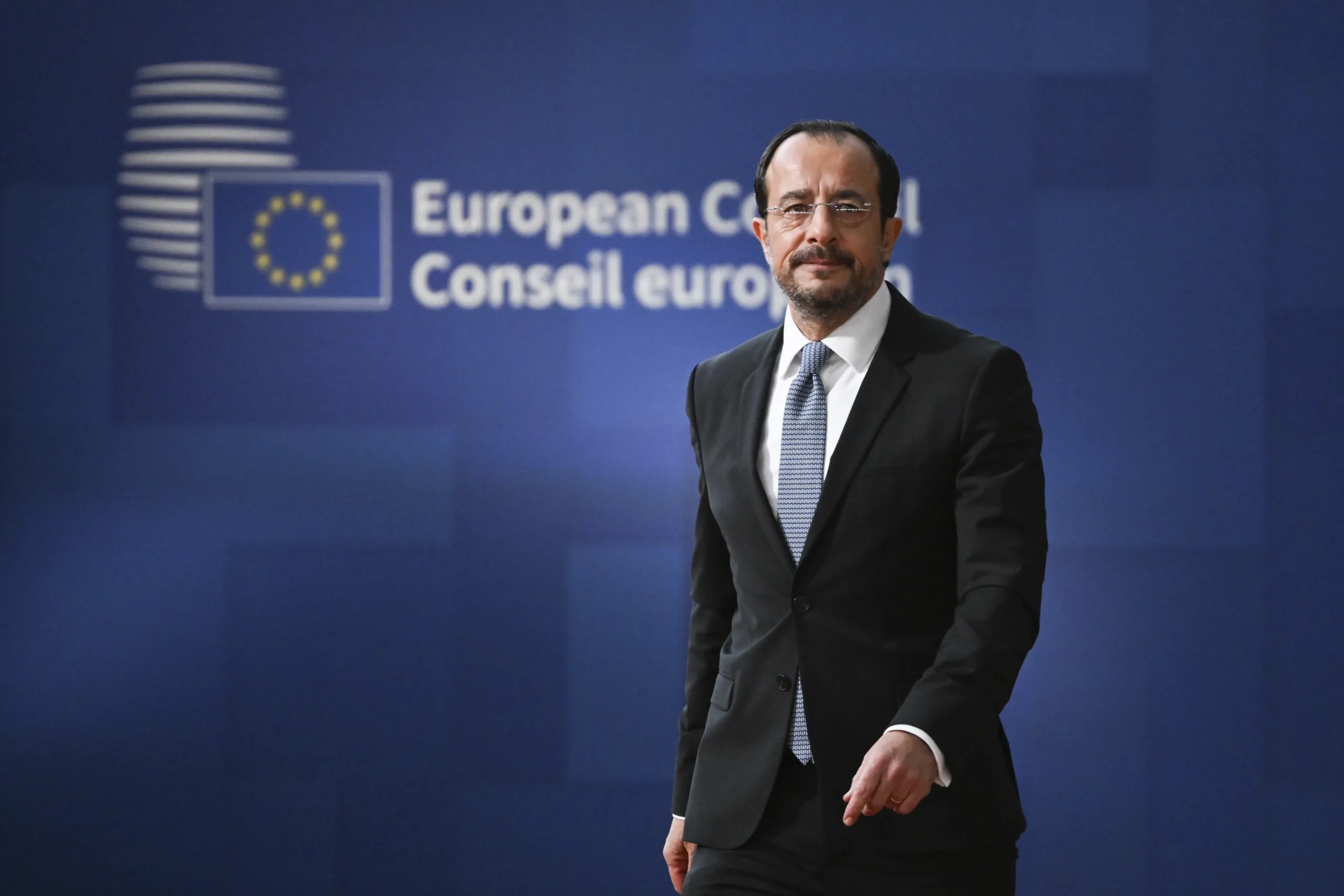
Brussels, Belgium. President Nikos Christodoulides proposed late on Thursday night that the European Union shorten its long-term budget cycle to three or four years instead of the usual seven. His call came as European government leaders continued negotiations into the night over the next multiannual financial framework, covering 2028–2034.
President questions long-term planning
Speaking to Politico, Christodoulides suggested that the length of the proposed framework could be making agreement harder to reach.
He questioned discussing spending through 2034 while still in 2026, arguing that conditions in 2030 and 2031 could not be predicted. Citing Covid and the Ukrainian war as examples of unexpected developments, he said it was impossible to determine every priority so far in advance.
A framework spanning three or four years could make it easier for member states to agree, he said, urging leaders to open a political debate on the possibility.
Proposal faces treaty obstacle
The suggestion drew a sceptical response from at least one official in Brussels. Politico reported that an EU official familiar with the negotiations described the proposal as “weird”.
The change would also require amendments to the Treaty of the Functioning of the European Union (TFEU). Its current provisions say the multiannual financial framework “shall be established for a period of at least five years”.
Under the existing process, all EU member states must approve a multiannual financial framework unanimously, after which the European Parliament must ratify it.
Christodoulides’ proposal would add another requirement before budget negotiations could begin: national parliaments across all 27 EU countries would have to ratify a treaty amendment allowing a shorter minimum budget period.
Seven-year cycle dates back to Delors
The seven-year approach became customary with the Delors II package, which set out the EU’s then financial perspective for 1993–1999. It took its name from Jacques Delors, who was European Commission president at the time.
The preceding Delors I package covered a shorter period, running from 1988 to 1992.
This news item was generated automatically by Cyprus Inform from publicly available materials. Report an error →