Christodoulides urges EU flexibility on energy bills and further ETS2 delay
President Nikos Christodoulides says Cyprus will back calls for more scope for national energy measures and a further postponement of the EU’s ETS2 scheme.
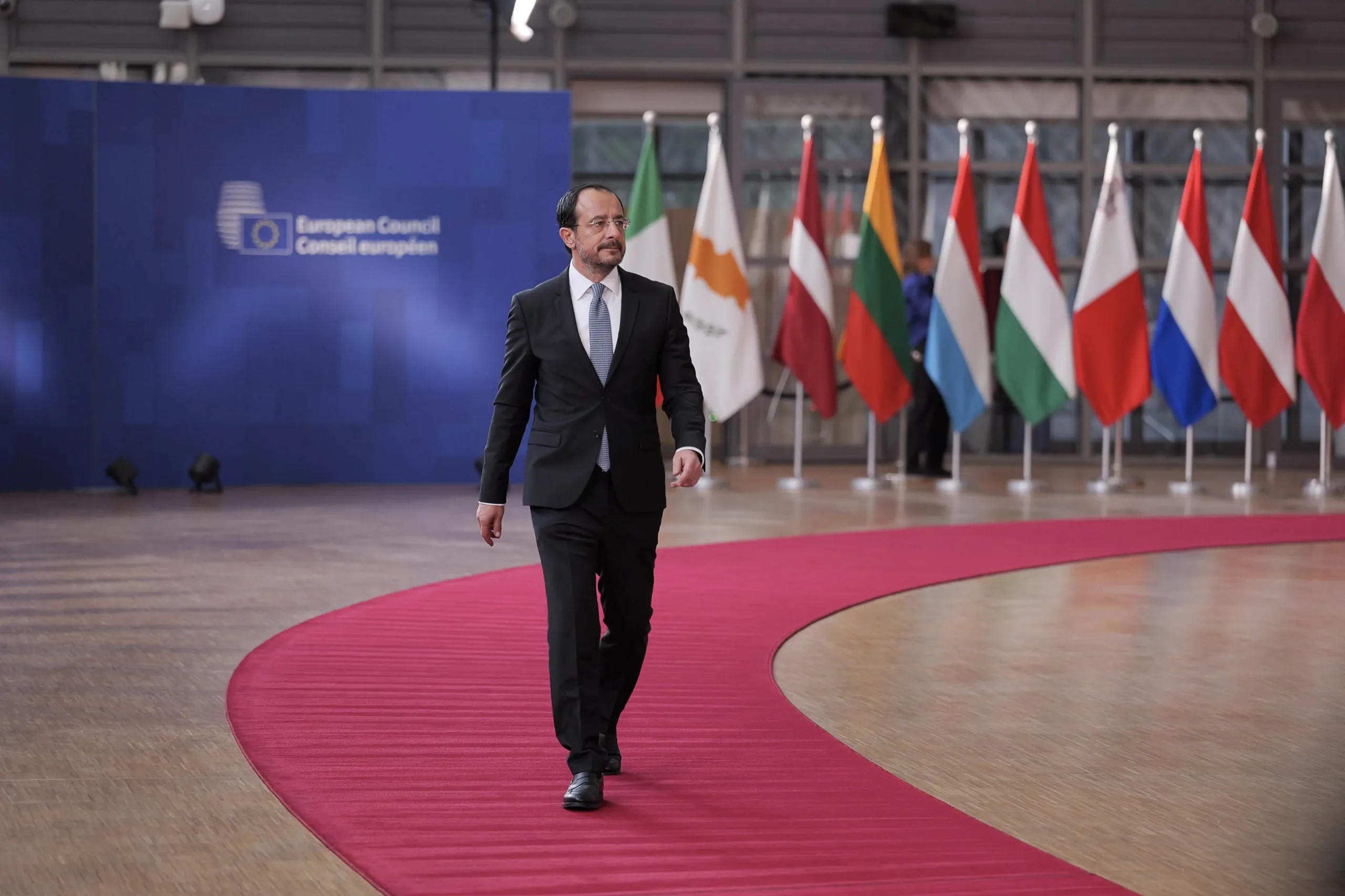
Brussels, Belgium. President Nikos Christodoulides urged the European Union on Thursday to allow greater flexibility for national measures aimed at curbing rising household energy bills. Arriving for that day’s European Council summit, he also backed postponing the implementation of ETS2 further.
Cyprus backs calls for a delay
Christodoulides said several member states were seeking both greater latitude to adopt domestic measures and an additional delay to ETS2, and that Cyprus would support those requests.
The new EU emissions trading scheme is currently scheduled for a phased introduction from this coming January through 2028. Demands to postpone its rollout have continued throughout this year, as conflicts in Europe and the Middle East have driven up energy costs.
The European Commission says ETS2 will address carbon dioxide released through burning fuels in buildings, road transport and other sectors. According to the commission, those additional sectors consist largely of small industrial operations outside the existing emissions trading scheme.
Under ETS2, member states will have to pay for greenhouse gases generated by buildings, road transport and other covered sectors. Existing obligations already apply to carbon dioxide from energy production and to nitrous oxide emissions, with the EU directing the proceeds towards investments related to energy and climate.
Italy and Czech Republic seek broader suspension
Demands for intervention also extend to the original ETS. Italian Prime Minister Giorgia Meloni and Czech Prime Minister Andrej Babis jointly wrote to the commission seeking a temporary halt to that scheme throughout Europe to curb increasing energy costs.
Their letter argued that suspending it would immediately ease the carbon-cost burden on European industry.
The two leaders also proposed considering targeted alternatives that could be put into effect immediately if support for suspension proved insufficient. They said the European Council could advance such measures to soften the current shock and supplement action already announced at EU level.
Italian defence minister criticises ETS
Italian Defence Minister Guido Crosetto voiced stronger criticism, saying that “a tax like ETS today is unjust, absurd, unsustainable in international competition, and creates inequalities because it falls indiscriminately and equally on all European end consumers”.
This news item was generated automatically by Cyprus Inform from publicly available materials. Report an error →