Families and witnesses recall 1996 killings of Isaac and Solomou
Thirty years after the killings of Tassos Isaac and Solomos Solomou, relatives, eyewitnesses and a legal expert renewed calls for justice.
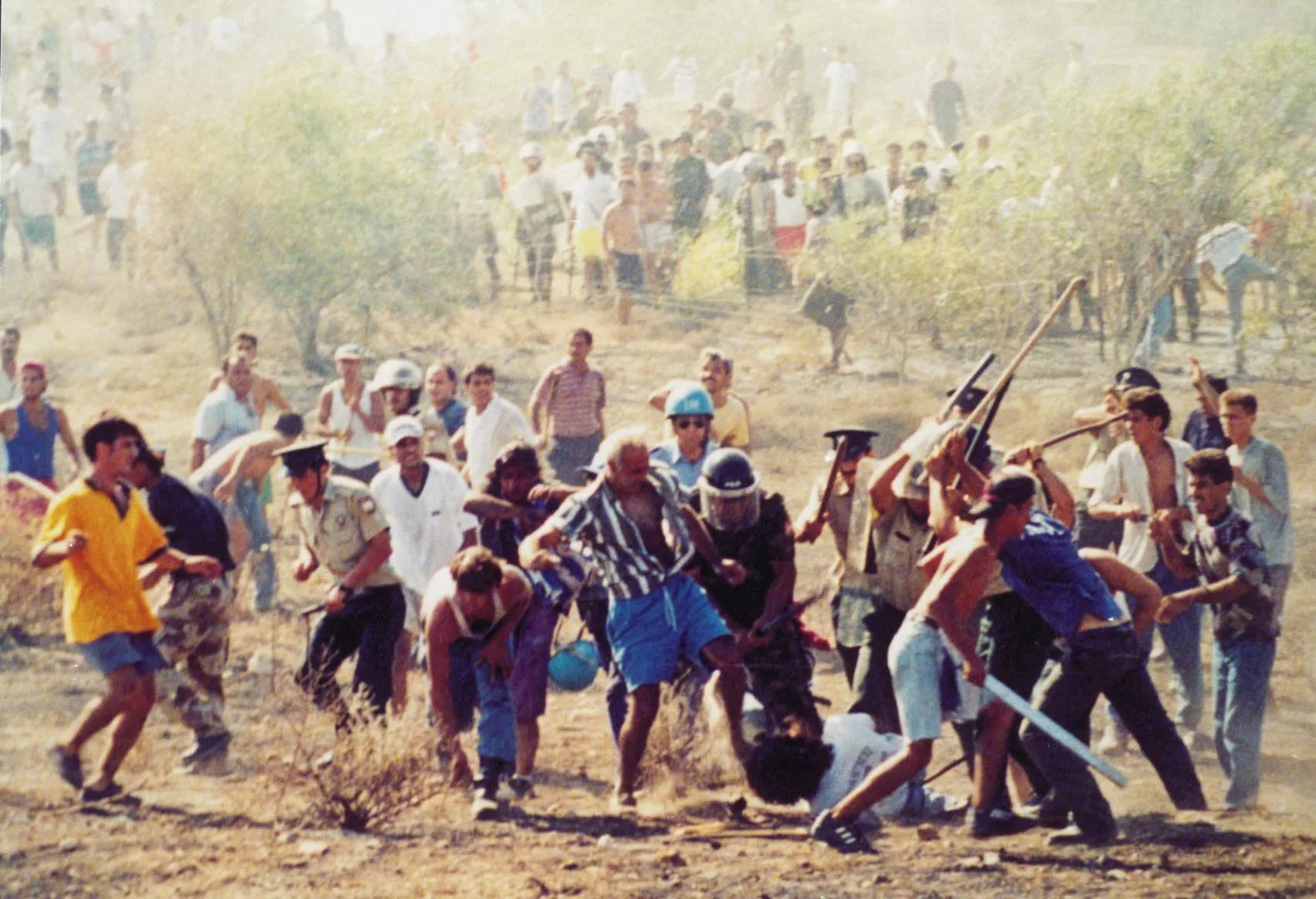
Deryneia, Cyprus. Thirty years after the killings of Tassos Isaac and Solomos Solomou, family members, eyewitnesses and legal experts have reflected on the events of August 1996, saying the passage of time has not lessened their pain or demand for justice.
Personal accounts and legal action
In a special feature for the Cyprus News Agency, Isaac’s daughter, Anastasia Isaac, and Solomou’s sister, Stella Solomou, shared personal memories of the two men.
Eyewitnesses Yiannis Antoniou, now deputy government spokesman, and Andreas Pettemerides recounted the violence they witnessed in the Deryneia buffer zone.
Kyrenia Bar Association president Nicolas Constantinides examined the legal aftermath of the killings, arguing that Cyprus should continue pursuing those responsible through all available legal avenues, including the possible issuance of European Arrest Warrants.
Events of August 1996
The anniversary marks three decades since one of the defining episodes in Cyprus’ post-1974 history.
In the summer of 1996, the Cyprus Motorcycle Federation organised a pan-European anti-occupation rally that began in Berlin and was intended to end in occupied Kyrenia.
Although the political leadership and organisers later agreed to cancel the Cyprus leg of the journey, many participants rejected the decision and continued towards the Deryneia checkpoint.
On August 11, 24-year-old Tassos Isaac became trapped in barbed wire inside the UN buffer zone and was beaten to death by Turkish Cypriots and members of the Grey Wolves.
Three days later, during Isaac’s funeral, his 26-year-old cousin Solomos Solomou climbed a flagpole at a Turkish military post in an attempt to remove the Turkish flag before being shot dead in full view of television cameras. Images of his killing were broadcast worldwide.
Family remembrance
“My father sacrificed himself for the freedom of our country,” Anastasia Isaac said.
She described his death not as a casualty of war, but as the result of a peaceful anti-occupation demonstration by people demanding freedom of movement in their own homeland.
This news item was generated automatically by Cyprus Inform from publicly available materials. Report an error →