Former Chinese Premier Zhu Rongji dies aged 97
Former Chinese Premier Zhu Rongji, known for his blunt criticism of corruption and economic mismanagement, died on Wednesday aged 97.
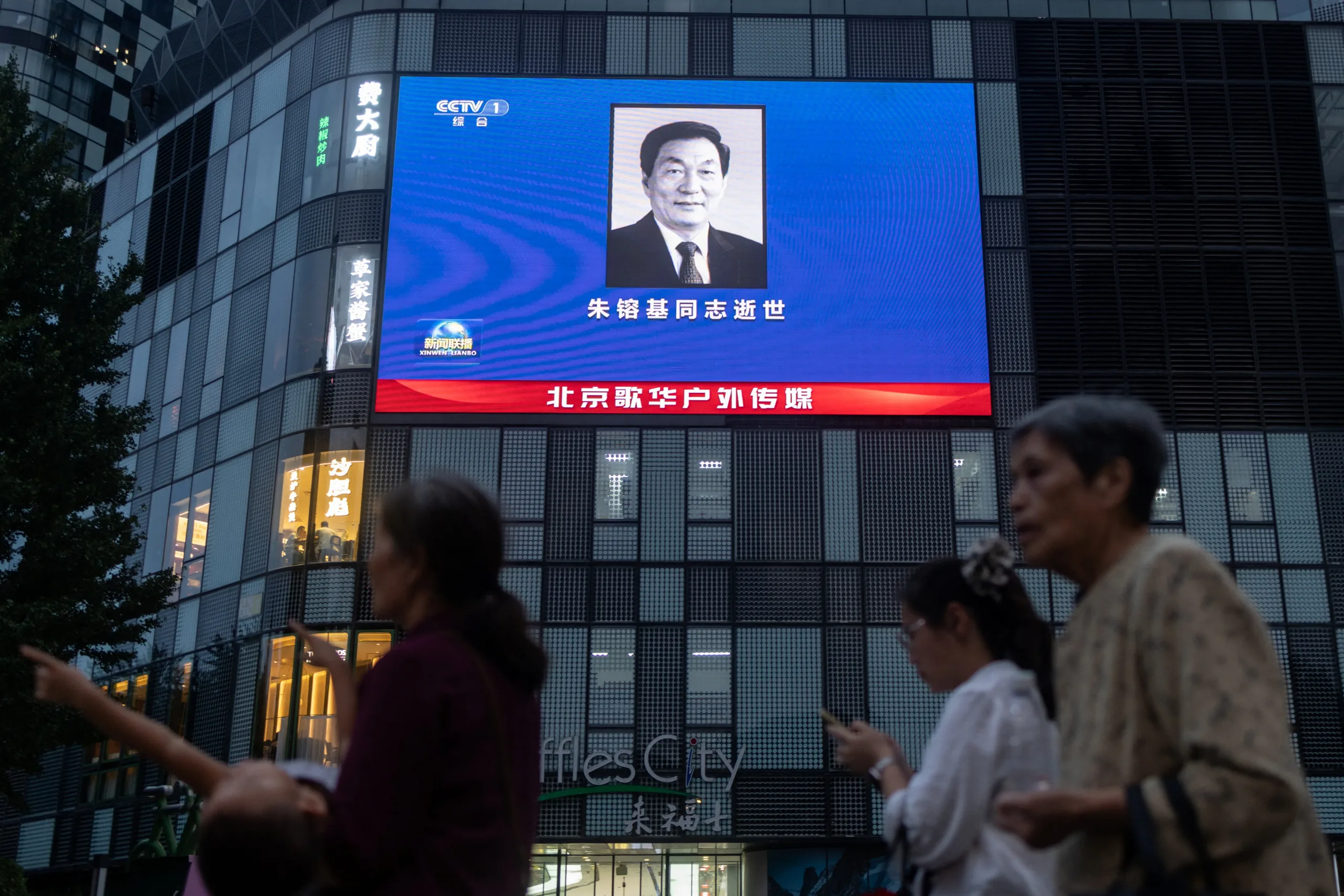
Beijing, China. Former Chinese Premier Zhu Rongji, known for his outspoken remarks on corruption, financial risk and government mismanagement, died on Wednesday aged 97. His speeches and policies helped shape China’s economic reforms during the 1990s and early 2000s.
Blunt public comments
A four-volume selection of Zhu’s speeches published in 2011 drew attention for its forthright language, including descriptions of poorly built flood dykes as “tofu dregs” constructed by “parasites” and bankers who made mistakes as “half-wits”.
The speeches, covering his time as vice premier from 1991 to 1998 and as premier until early 2003, became best-sellers in China. Readers contrasted his direct comments with the more cautious and often bland public pronouncements associated with China’s leaders at the time.
Reformist former officials and intellectuals viewed the 2,042 pages of “The Authentic Speeches of Zhu Rongji”, many of them published for the first time, as a contrast to the conservatism and conformism they saw among current leaders. Magazine editors and internet users searched the collection for comments they considered relevant to contemporary China.
Economic and social concerns
The collection addressed issues including local government debt, reckless bank lending, inflation, rapid urban growth and corruption.
“Our country faces many potential crises that could erupt at any time,” Zhu said in early 1998. “Ordinary people are discontent about us in many ways. Especially, there is corruption among officials, the gulf between rich and poor, and the way some local officials act like tyrants.”
Political career
Zhu graduated from Beijing’s Tsinghua University and joined the Communist Party in 1949, the year Mao Zedong declared the People’s Republic of China.
He was sent to the countryside during the Cultural Revolution and later returned to public life after being politically rehabilitated. He became mayor of Shanghai in 1987, overseeing the city’s early development as a global financial hub.
After moving to Beijing in 1991 to work for the central government, Zhu helped advance reforms that transformed China from a beleaguered hold-out after the collapse of Soviet-style communism in the early 1990s into an emerging superpower with rapid economic growth.
This news item was generated automatically by Cyprus Inform from publicly available materials. Report an error →