Indonesia boosts security as students plan nationwide protests
Indonesia deployed thousands of police around parliament and major cities as students prepared rallies over government policies and corruption.
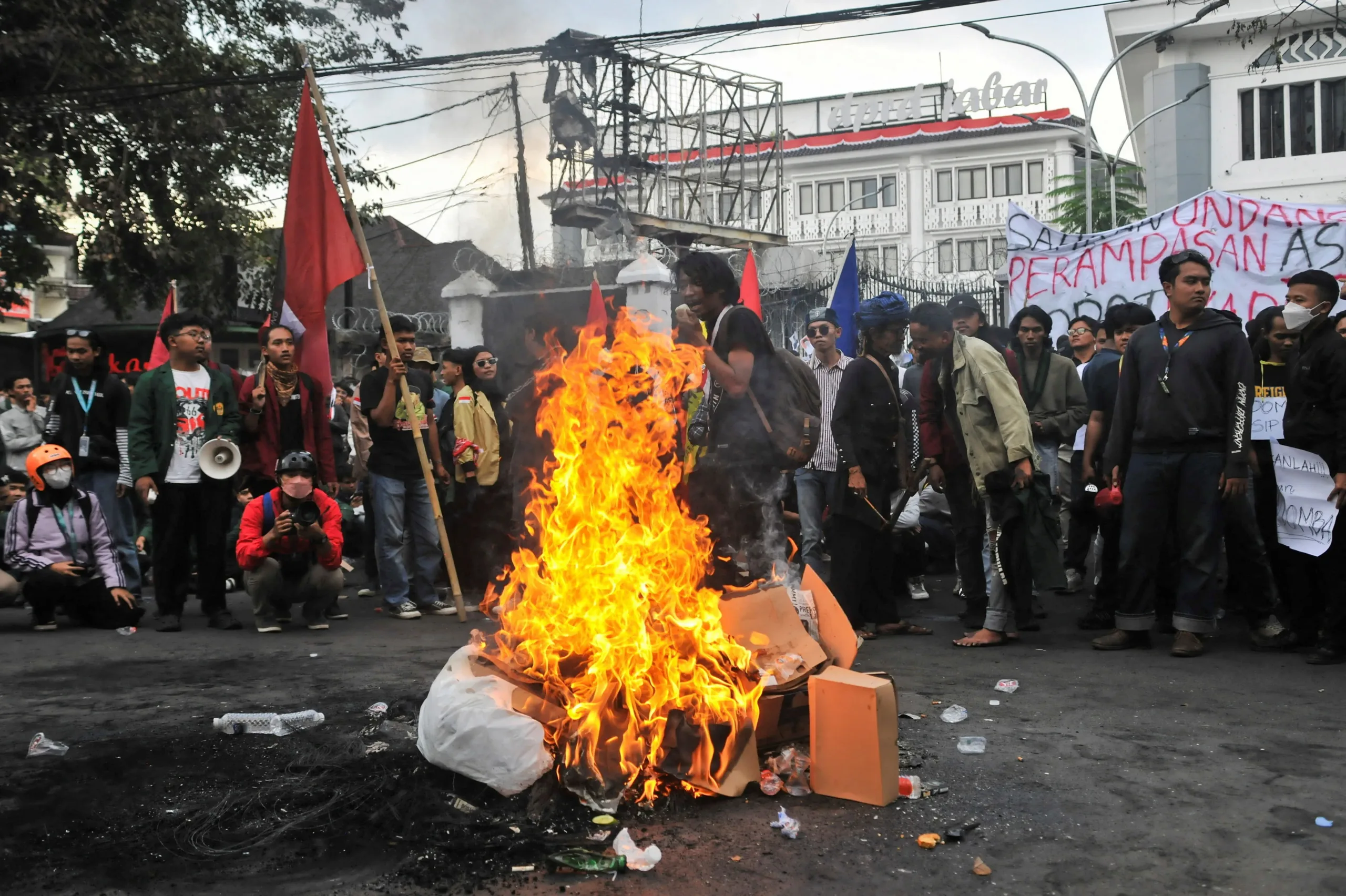
Jakarta, Indonesia. Indonesia has increased security around parliament and in major cities as students and civilians prepared to hold rallies on Thursday, one year after violent anti-government protests across the country.
At least 18,000 police officers were deployed near the parliamentary complex in Jakarta, while police buses and military trucks were seen on the capital’s main roads.
Protests planned in several cities
Students are due to rally in Jakarta, Yogyakarta and Makassar against government policies and to demand harsher penalties for corruption.
In Jakarta, three groups are expected to demonstrate, including students from several universities. Representative Kahirul Ammar said protesters would call for an end to the free meals programme and “militarisation”, as well as lower prices for staple foods.
“We chose August 27 to commemorate because last year there were riots and various other incidents. And today we want to convey our aspirations, not cause riots,” Ammar told Reuters, adding that the protests would begin on Thursday afternoon.
Security deployment
Chief security minister Djamari Chaniago said the security deployment was not intended to restrict freedom of expression.
“We will escort them so that their aspirations can be conveyed properly,” he said.
Previous unrest and policy pressure
Thousands of students and civilians took part in nationwide protests in August last year over the government’s spending priorities. Ten people were killed during the unrest, nearly 7,000 people were arrested and hundreds were sentenced.
President Prabowo Subianto’s approval rating fell to 38 per cent in August, according to a poll by investigative media organisation Tempo. His administration has faced pressure over costly populist programmes that have raised concerns among investors and the public.
The free meals programme has been a major source of discontent, with governance issues, mass food poisoning and other legal challenges reported.
This news item was generated automatically by Cyprus Inform from publicly available materials. Report an error →