Israel revokes diplomatic status of Dutch envoys to Palestinian Authority
Israel said Dutch diplomats representing the Netherlands in Ramallah must surrender their diplomatic documents after a Dutch ban on imports from Israeli settlements.
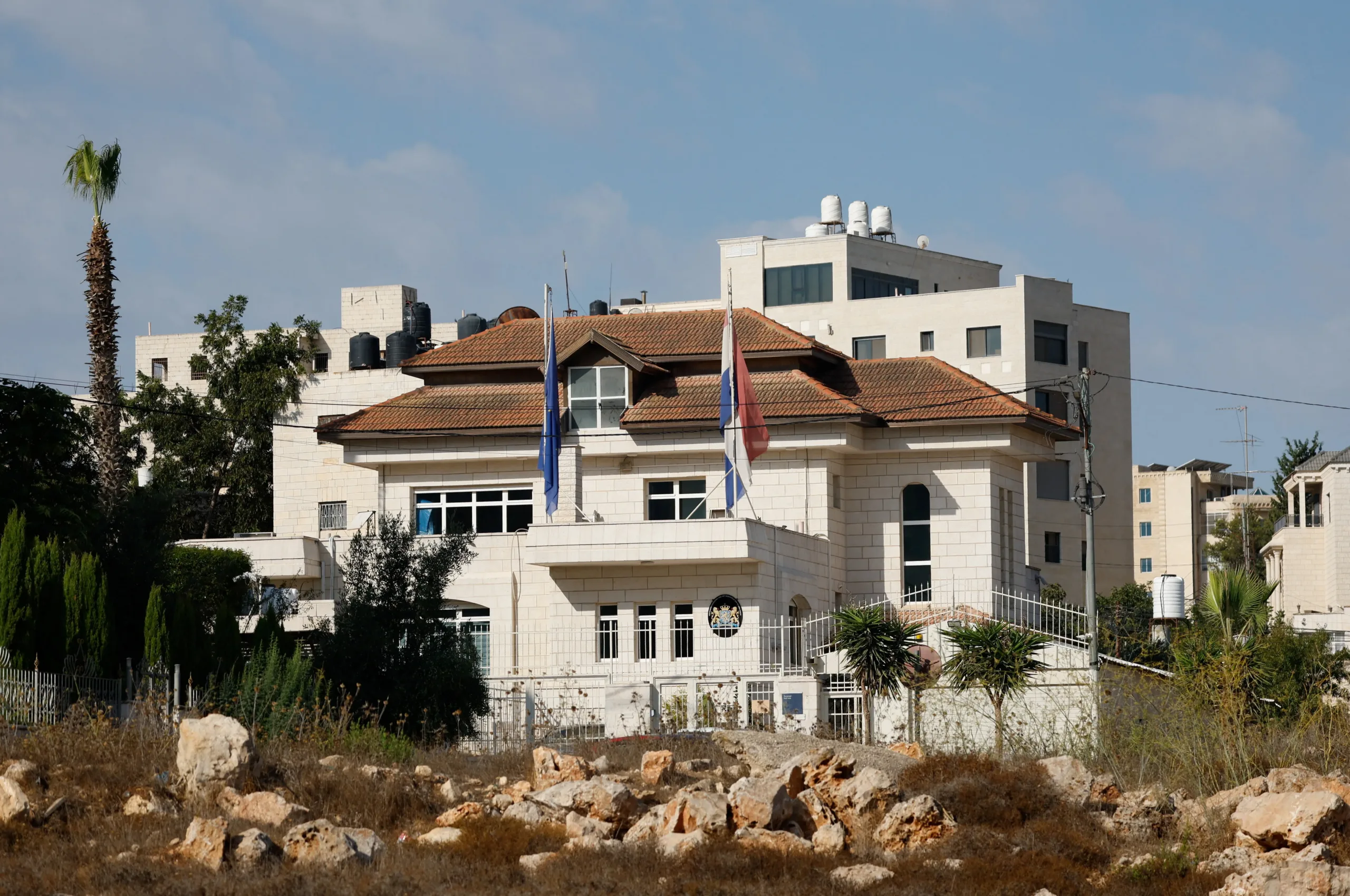
Ramallah, Palestine. Israel said it was revoking the diplomatic status of Dutch diplomats representing the Netherlands at the Ramallah-based Palestinian Authority in response to Dutch sanctions targeting Israeli settlements in the occupied West Bank.
Dutch import ban
The Netherlands’ ban on imports of goods produced in the settlements came into effect last week. Dutch Foreign Minister Tom Berendsen said on Monday that he regretted Israel’s “unnecessary” decision and that the Netherlands was weighing its response.
“Our temporary sanctions are not targeted against Israel, but stem from our obligation to not contribute to the unlawful situation of the illegal settlements,” he said in a statement.
Diplomatic privileges
Israeli Foreign Minister Gideon Saar said on X that the Dutch diplomats must return their Israeli-issued diplomatic documentation within seven days, when their diplomatic privileges and immunities are due to expire.
“Any country that acts in a hostile and unilateral manner against Israel will lose influence and relevance in the region,” Saar said.
Earlier this month, Israel ordered the closure of the British Consulate in East Jerusalem, Britain’s representative with the Palestinian Authority, after London announced similar sanctions banning imports of goods from settlements. In August, Israel barred Dutch diplomats from a US-led coordination centre for Gaza based in Israel over what its foreign minister described as “anti-Israel measures.”
Many countries, including the Netherlands, have long had diplomats representing them with the Palestinian Authority in Ramallah while living in East Jerusalem. Israel has traditionally accredited those diplomats and granted them certain privileges under the Vienna Convention on the treatment of diplomatic missions.
This news item was generated automatically by Cyprus Inform from publicly available materials. Report an error →