Agios Georgios Mavrovouniou Monastery, Larnaca: history and visiting
About the place
Checked: 25 October 2026.
Agios Georgios Mavrovouniou Monastery: what it is and where
Agios Georgios Mavrovouniou Monastery (Μονή Αγίου Γεωργίου Μαυροβουνίου, Moni Agiou Georgiou Mavrovouniou) is a working Orthodox monastery for men near the village of Troulloi (Τρούλλοι) in the Larnaca district. According to the Church of Cyprus, it belongs to the Holy Metropolis of Kition, and its abbot is Archimandrite Symeon. The monastery’s feast days are 23 April and 3 November.
Mavrovouni means ‘black mountain’ in Greek, which is why older translations called it the monastery at the Black Mountain. The name refers to the area near Troulloi, not to a separate mountain peak. The monastery should not be confused with Stavrovouni, another well-known monastery in the Larnaca district.
This is not a museum but a place of prayer and the home of a small monastic community that was revived in the late 20th century. People come for the Sunday services, for the feasts of St George and for a quiet visit to the church. Before you go, it is best to check with the monastery when it is convenient to come.
History: what is known and what remains tradition
The exact date of the monastery’s foundation has not been established from verified sources. In his book about the monastery, the current abbot speaks of a monastery existing here as early as the Byzantine period, and this should be read as church tradition and the author’s own view. We do not give the dates found on tourist websites, because they could not be confirmed.
More reliable evidence dates from the 18th century. According to the abbot, the church held an icon of St John the Baptist donated in 1702, as well as a memorial inscription to the priest Gerasimos, who died in 1782. In the 20th century the monastery was left empty, and for a long time its church had no iconostasis and no icons. According to the abbot, Archbishop Makarios transferred most of the monastery’s land to the state to support the rural clergy, and only the plot around the buildings stayed with the monastery.
In the winter of 1963 the south wall of the church collapsed together with the roof, and only the sanctuary apse survived. The following year the church was rebuilt as it had been. According to the abbot’s text, monastic life at the monastery has continued since Easter 1996; some other sources give 1994 as the year its revival began.
What to see at the monastery
At the heart of the monastery is the old church of St George, rebuilt after the 1963 collapse. The monastery buildings stand around it, and, according to the abbot, some of the icons and church plate returned to the church after monastic life resumed.
Because of the large number of worshippers on Sundays, especially young people, the brotherhood decided to build a new monastery-type church with roughly twice the capacity. According to a 2017 publication, the lower level of the new church had already been completed and fitted out as a chapel dedicated to the Optina Elders. Ask on site how far construction has progressed.
The monastery publishes accounts of miracles associated with St George as testimonies of the faithful. We give them as part of church tradition, not as verified facts. For many pilgrims, what matters most here is prayer before the icon of St George and taking part in the services. According to the Church of Cyprus directory, besides the abbot the brotherhood includes hieromonks, monks and novices; service times are best checked with them in advance.
Getting there and planning your visit
The monastery is in the countryside near the village of Troulloi in the Larnaca district. The easiest way to get there is by car: enter the Greek or English name of the monastery in your sat-nav and check the route against a map before you set off. Public transport to places like this is usually limited, so check the route in advance.
The busiest times are Sundays and the feast days, 23 April and 3 November. If 23 April falls before Easter, the feast of St George may be moved in Orthodox tradition, so check the date of the feast-day service with the monastery.
Visiting hours, service times and rules for groups are set by the monastery itself. The monastery’s contact details are published in the directory of monasteries on the Church of Cyprus website, in the section for the Holy Metropolis of Kition. If you are coming as a group, let the monastery know in advance.
Etiquette, dress code and season
As at other monasteries in Cyprus, come in clothes that cover you: shoulders and knees should be covered, and women are better off choosing a skirt or dress below the knee and bringing a light scarf. In the church, people speak quietly, put their phones on silent and do not disturb the service.
Take photographs or video inside the church and on the grounds only with the brotherhood’s permission. Do not go into the monks’ living or working quarters, and respect their daily routine. If you are offered refreshments after the service, it is a sign of hospitality, not a paid service.
Summers in the Larnaca district are hot, so morning or evening is better for the trip. In spring and autumn the weather is milder, but on feast days there are often many cars and people at the monastery. Take water and shoes that are comfortable for walking around the courtyard and on uneven paths.
What is nearby
Also in the Larnaca district is Stavrovouni Monastery, near the village of Pyrga, which likewise belongs to the Holy Metropolis of Kition. It is a different monastery with its own schedule and strict visiting rules, so check these separately.
The island’s other monasteries, their rules and their feast days are brought together in our overview of the monasteries of Cyprus. It can also help you choose which monasteries to combine in one trip.
Our Larnaca guide covers the city itself, its churches, the seafront and the surrounding area. It is useful if you are combining a visit to the monastery with a stay in the city.
What to check before you go
Check with the monastery the times of the Sunday Liturgy and of feast-day services, especially on 23 April and 3 November, and in years when the feast of St George is moved. Service times can change, and old information on the internet is no guide to them.
Ask what hours the monastery receives visitors on ordinary days, whether you can come as a group and whether there are restrictions on photography and filming. For groups and pilgrimages, make arrangements in advance.
Check the route on an up-to-date map and check the weather forecast, and on feast days allow time for parking. If seeing the new church matters to you, ask the brotherhood whether it is open to visitors and what work is still going on.
Continue planning
- Monasteries in Cyprus
- Larnaca: what to see, where to stay and how to plan your trip
- The Church of Saint Lazarus in Larnaca: history and a visit
Official sources
- Church of Cyprus: Holy Monastery of Agios Georgios Mavrovouniou (Metropolis of Kition)
- Archimandrite Symeon on the monastery in the 20th century (Pemptousia, 2017)
- Pemptousia: excerpt from the abbot's book on the monastery's revival (2017)
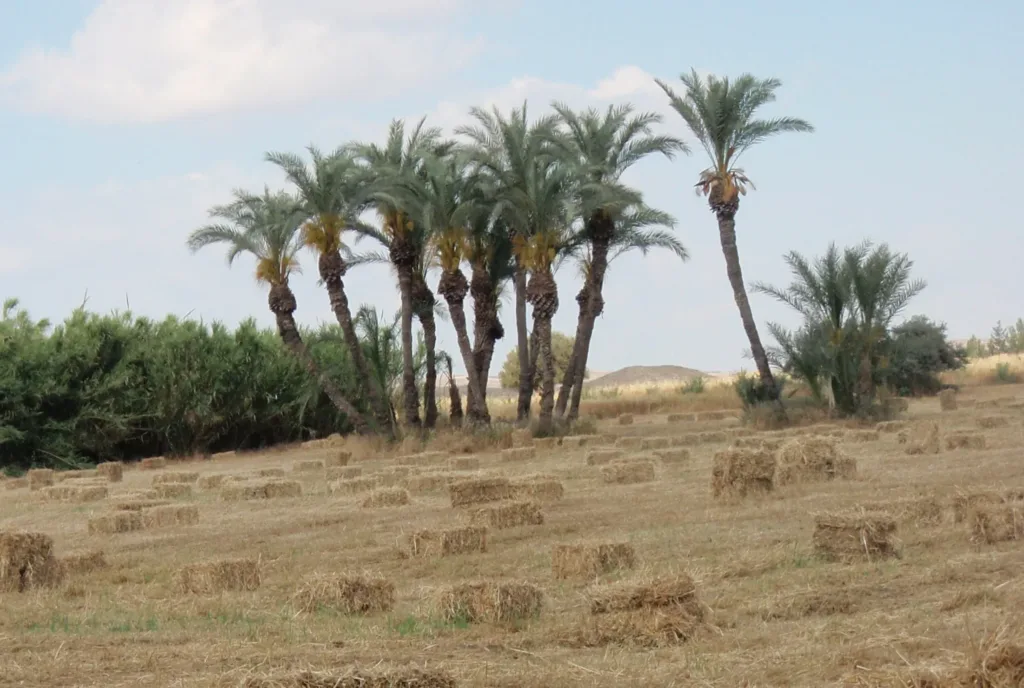
The grounds outside the Monastery of St George Mavrovouniou · Photo: ant0ni0c · CC BY-SA 3.0 · converted to WebP and resized.
