Famagusta at night. A ghostly reality
Description
If you have chosen to stay at one of the hotels in Ayia Napa or Protaras, a visit to Famagusta should be a must on your cultural itinerary in Cyprus.
Day trips under the scorching Cypriot sun can be quite a challenge, but given Famagusta’s proximity to the resorts mentioned above, you can plan this excursion for the evening. This will add a touch of colour and a hint of mystery to the experience.
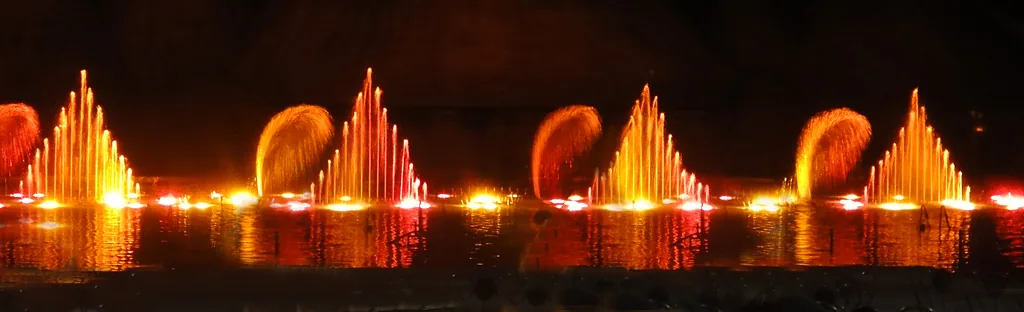
‘Dancing Fountains’. On the way to Famagusta
Despite the peaceful atmosphere in so-called Northern Cyprus, I would still recommend undertaking such a trip as part of an organised tour. I don’t think many people would enjoy a night-time adventure where, having missed the last bus, they’d have to spend the night in an unfamiliar town on Turkish territory.
For those planning to travel to Famagusta from Limassol, I’d advise combining this trip with a visit to the stunning ‘Dancing Fountains’ show, which takes place daily in Protaras during the summer. This spectacle creates a special festive atmosphere.
The show starts at 9.00 pm. At weekends, large crowds gather here, so it’s best to arrive early to secure good seats.
A creation by the great Leonardo
Evening tours of Famagusta 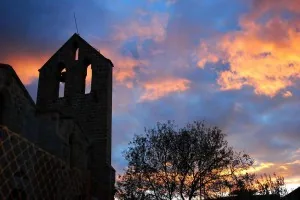 usually start at 4.00 pm. So, after spending your day by the sea, soaking up the sun and enjoying some water activities, you can set off to explore the local sights with a clear conscience.
After crossing the border between the Greek and Turkish parts of the island, we head straight for Famagusta.
Until 1291, Famagusta was a fishing village. There is a theory that the great Leonardo da Vinci had a hand in the town’s layout. As Famagusta Bay is quite deep, large ships often moored at the island’s eastern shore.
Following the arrival of the Crusaders in Cyprus, the city became one of the wealthiest centres of the Christian world. During the period of Venetian rule, the port city of Famagusta enjoyed its ‘golden age’, serving as the most important trading centre in the eastern Mediterranean. The thick, fortified walls of the old town withstood numerous sieges over the centuries.
Varosha. A ghost of former grandeur
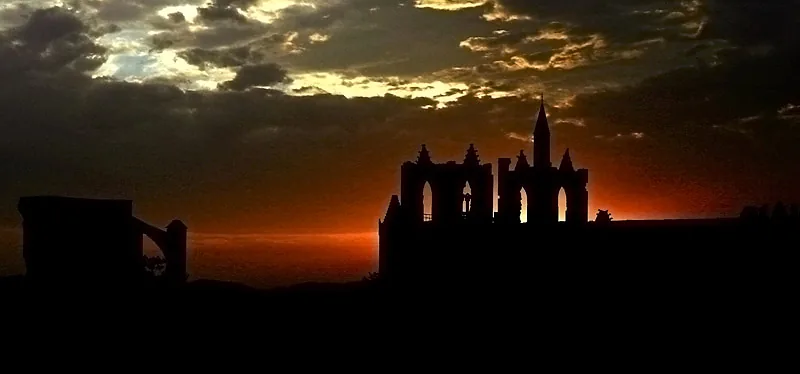 As the city’s rulers changed, so too did the city’s order. Christian places of worship were converted into Muslim mosques, and new buildings were erected in place of the old ones.
In the 1960s, the city expanded significantly. Varosha, a coastal district that was ultra-modern for its time, became a prestigious tourist centre in the Mediterranean.
By early 1974, the city’s population stood at 39,000. The tragic events that followed and the partition of the island led to the once-prestigious district ‘dying out’ and becoming part of the demarcation line. The empty windows of dilapidated hotels gaze gloomily from behind the barbed wire.
The 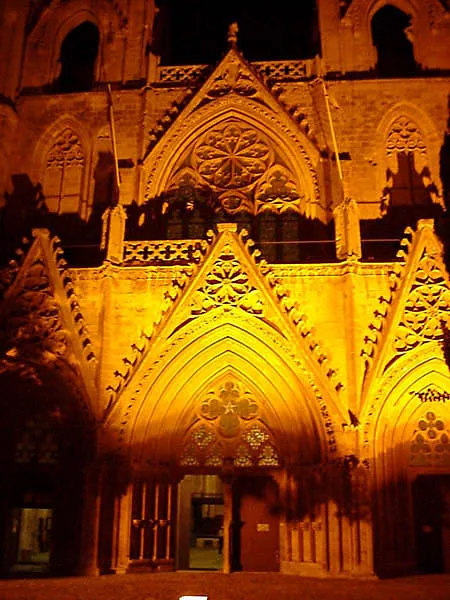 Old Town. The Cathedral-Mosque and Othello’s Castle
The architectural centrepiece of the Old Town is undoubtedly the Gothic Cathedral of St Nicholas, modelled on Notre-Dame de Paris. As a result of barbaric traditions, the cathedral was converted into the Lala Mustafa Pasha Mosque.
Provided you observe the Islamic rules of conduct in a mosque, you may enter the cathedral without hindrance and view its interior. Alas, little remains here of its former splendour.
Next, after visiting Castello Castle and Othello’s Tower, which form part of the defensive wall surrounding the city, we learnt the story that inspired Shakespeare’s tragedy about Othello and Desdemona.
Then, strolling through the narrow streets of the old town, we explored other surviving architectural monuments.
Salamina. The Monastery of St Barnabas
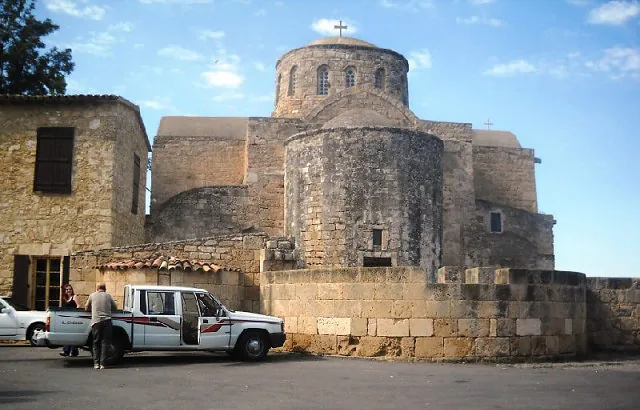 Our next stop was the Monastery of Saint Barnabas the Apostle – the most revered Christian shrine in Northern Cyprus.
The monastery is situated near the ruins of the ancient city of Salamis – the apostle’s birthplace. After spending several years in Palestine, Saint Barnabas returned to Cyprus with the Apostle Paul and began preaching Christianity to the local population. Soon, the Apostle Barnabas became the first Archbishop of Salamis. Members of the large local Jewish community could not forgive the Apostle for converting to the Christian faith, and Saint Barnabas was martyred at the hands of enraged fanatics.
It was not until the 5th century that the apostle’s relics were discovered, and Emperor Zeno ordered a church to be built on the site of his grave. Of the original building, only the foundations and a few fragments have survived; these are now kept in the monastery’s main church.
The building dates from the mid-18th century. The monastery grounds also house a historical museum, which holds artefacts from various historical periods.
According to legend, the city of Salamis was founded after the Trojan War by the famous archer Teucer, who was mentioned by Homer in his *Iliad*.
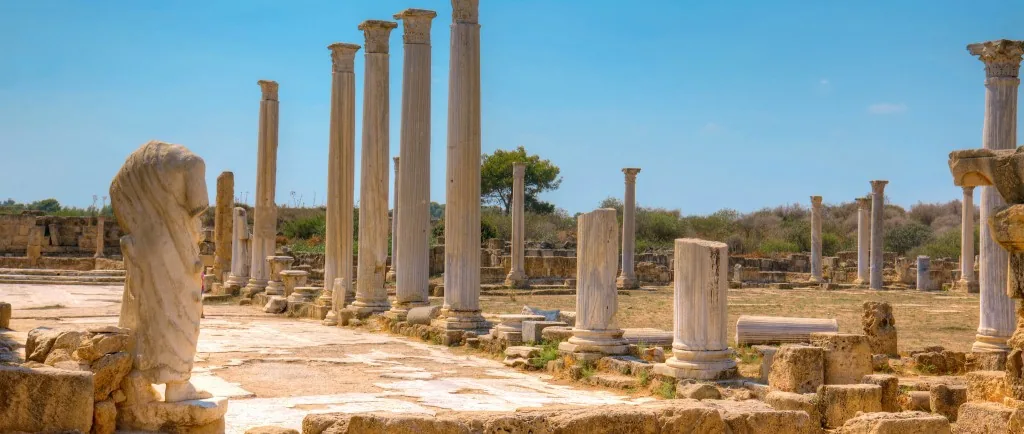
In ancient times, Salamis was the largest city in Cyprus. For this reason, the capture of the city by an enemy meant de facto control over the entire island. Between the 1st century BC and the 2nd century AD, Salamis was severely damaged as a result of Jewish uprisings, which led to its decline. The only remnant of its former grandeur is the open-air theatre that has survived to this day.
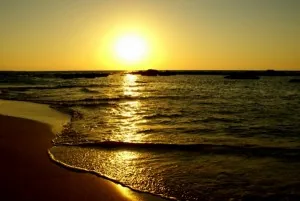 Sunset on the beach of the ancient city
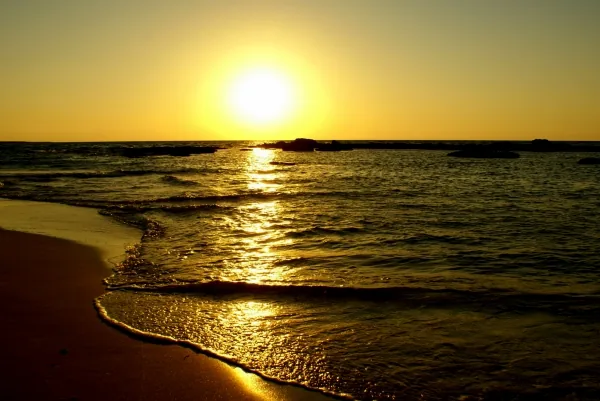
As you bathe on the golden beaches of the ancient city in the red rays of the setting sun, you cannot help but reflect on how quickly time flies, sweeping away cities and entire civilisations in its wake. In time, today’s modern metropolises will turn to ruins, and our lives will remain only on the pages of history, and in the memories of our descendants…
Tour price:
- adults €45;
- child: 35 euros.
To book a tour, you can fill in the online booking form, email us at: or call us on: +357 25 310 692.