Students and teachers rally across Greece for more education funding
Thousands demonstrated across Greece on Wednesday, seeking greater education funding, improved facilities and smaller classes amid mounting living costs.
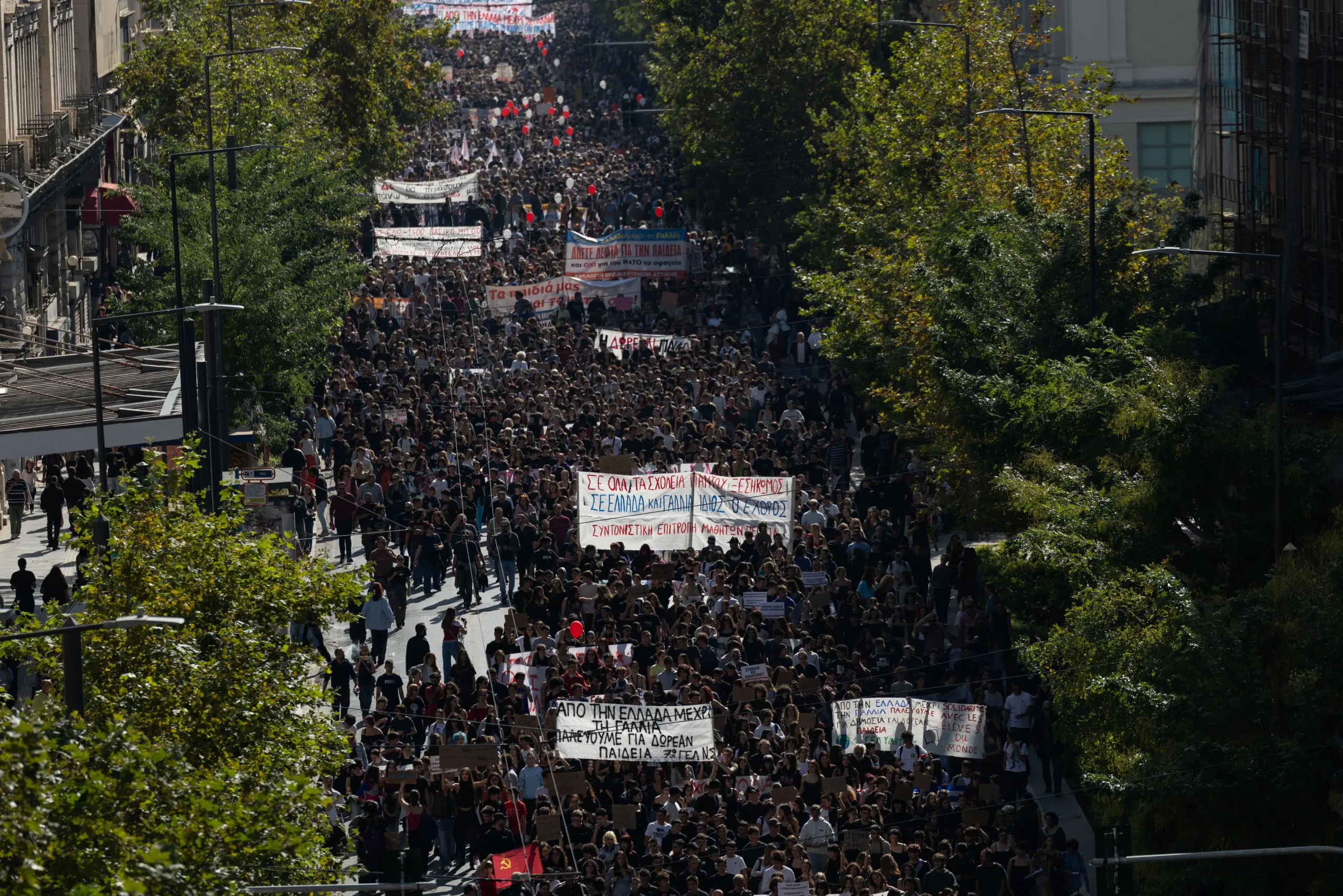
Athens, Greece. Thousands of students and teachers demonstrated throughout Greece on Wednesday to demand increased government spending on education, improved facilities and smaller classes. The rallies echoed demonstrations elsewhere in Europe over living costs and school conditions.
Peaceful rallies and overnight protest
Police estimated that around 10,000 people, among them university and school students, demonstrated peacefully in Athens’ centre and suburbs. Rallies also took place in other Greek cities, with participants expressing solidarity with expanding protests in France and elsewhere in Europe against surging living expenses and what demonstrators described as deteriorating schools.
Before Wednesday’s march, students camped overnight in tents in Syntagma Square in central Athens. Outside parliament, demonstrators chanted demands for free public education in Greece and France.
Some primary school teachers and doctors also stopped work over wages and staffing shortages, disrupting public schools and hospitals.
Government response on student housing
Before the demonstrations, Education Minister Sofia Zacharaki said she was listening to students’ concerns. Acknowledging the strain that housing expenses were placing on households in Greece, she said work worth over €733 million ($823 million) was underway to build student accommodation and improve facilities.
The protests increase pressure on the centre-right administration led by Prime Minister Kyriakos Mitsotakis ahead of elections scheduled for mid-2027. Greeks continue to face wage stagnation, expensive rents and increasing energy bills years after the debt crisis.
Wages and rents strain households
Greece has emerged from its 2009-2018 debt crisis, during which austerity measures reduced salaries and education budgets in return for three international rescue packages totalling approximately €290 billion.
Although pay has risen since then, many Greeks still have purchasing power ranked among the EU’s lowest. Increasing inflation and sharp fuel price rises associated with the Iran war have further eroded it.
At €1,500, the average monthly salary is unchanged from its 2009 level. Rapidly increasing urban rents have also left many young Greeks unable to afford housing.
“Surviving here is very difficult, the rent is really high, the houses are really small. Our parents can’t make ends meet to pay for our rent, the electricity, for our life here,” said Georgia Foukidou, a 21-year-old university student attending the Athens demonstration.
Protests elsewhere in Europe
The Greek demonstrations come after several days of protests in France and Albania. Anger there over mounting living expenses and perceived corruption has resulted in clashes and extensive damage to property.
This news item was generated automatically by Cyprus Inform from publicly available materials. Report an error →