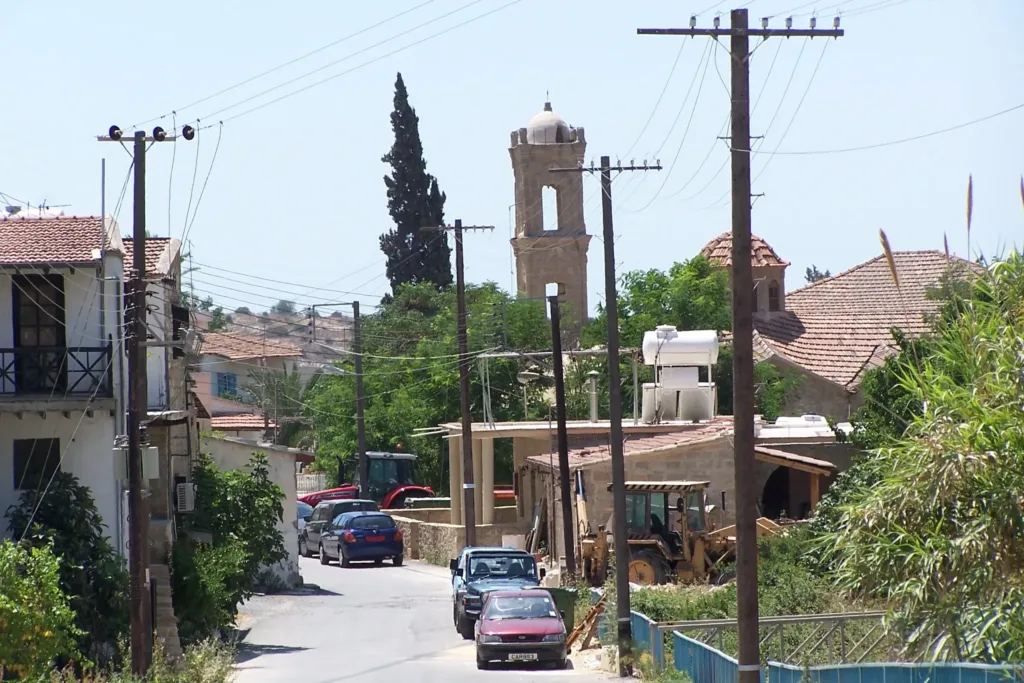
Tochni: a rural getaway and a tour of the village
About the place
Checked: 1 October 2026.
Tochni for a countryside break
Tochni is a good place to explore traditional stone village architecture and enjoy a peaceful break in the Larnaca area. It’s a great spot to combine a short walk, lunch and a stay in a traditional house if you fancy staying a while. For a day trip, there’s no need to stay overnight: simply explore the main streets and the sights that interest you.
The official tourist guide attributes the village’s character to the local stone used in its construction. It is the houses, the alleyways and the landscape that make a stroll through the village so rewarding. Tochni is worth visiting as a destination in its own right, rather than as a way to get a comprehensive overview of all Cyprus’s traditional villages in a single day.
First, decide what matters most to you: a stroll around the village, relaxing at home, or a cycle ride around the region. These options require different amounts of time and preparation. If you mix them together without a plan, the walking part may well end up being nothing more than a brief interlude between checking in and setting off on a route that’s too challenging for your level.
How to plan a walking route
Start from a designated parking space and mark out the route to key landmarks in the town centre. Streets on slopes may be connected by steps, and the nearest passageway shown on the map isn’t always convenient if you’re carrying luggage or a pushchair. It’s better to choose a short loop with a clear return route than to try to go down every side street.
Take a look at the stonework, the shape of the entrances, the wooden features and the position of the houses in relation to the street. Tourist accommodation is situated alongside ordinary residential properties, so entry rules vary. An open gate or a courtyard visible from the side street does not mean you are allowed to go inside to take photographs.
In hot weather, spread your walk out between the cooler parts of the day and take breaks indoors or in the shade. If anyone finds walking difficult, check the gradients and steps along the specific route. Don’t assume that the whole village is accessible based on a single photograph: the approach to the building you’re interested in may differ from that of the neighbouring street.
Churches and local legends
Among Tochni’s cultural landmarks, the official description mentions the Orthodox Church of Saints Constantine and Helena and the remains of a Latin church. These sites reflect different layers of the village’s heritage. It is helpful to consider them in the light of the description of the monument itself, rather than automatically grouping them together as a single building.
The legend linking the church’s foundation to Saint Helena should be regarded as a religious tradition, rather than a documented date for the construction of the present building. For architectural history, specific details about the surviving structure are required. This distinction makes the account more accurate without detracting from the local cultural memory.
Before entering, please check access arrangements and photography rules. In an active place of worship, services may be taking place and there may be restrictions on entry; even ruins are not necessarily open areas where you can walk freely between the structures. Please respect barriers and on-site signage, and view restricted areas from authorised public viewing points.
What does a holiday in a traditional house involve?
Staying in Tochni allows you to explore the village in the evening and in the morning, when there’s no need to rush to your next stop. However, the term ‘agritourism’ does not cover all the amenities and services on offer. One property may be a detached house, whilst another may be part of a complex with communal areas; be sure to compare the actual booking conditions.
Ask for directions from the car park, the number of steps and the location of the bedroom in relation to the entrance. If you are travelling with children, check the safety fencing on the terrace, access to the communal swimming pool and the rules for using it, where such a facility is advertised. A photograph of the courtyard does not confirm that the entire area is exclusive to your room.
Make sure to check the check-in time, key collection, kitchen facilities and whether there are places to eat nearby. In rural accommodation, the host isn’t necessarily on hand around the clock. Arranging a meeting in advance and having their contact details to hand will make your arrival much smoother, especially if you’re arriving after dark.
A cycling scenario
The official tourism board publishes cycle routes through the region’s traditional villages. The presence of Tochni in this context does not make any trip easy for a beginner: the distance, elevation gain and road conditions need to be assessed using a specific route map, rather than judging by the village’s peaceful appearance.
When hiring a bike, check the type of bike, its condition, whether a helmet is provided, what assistance is available in the event of a breakdown, and the return policy. Before setting off, check the weather forecast and whether you can top up your water supplies. For a group with varying levels of fitness, it is advisable to choose a shorter, tried-and-tested route or to save the cycle ride for a separate day.
Pedestrian lanes, stairs and private courtyards are not cycling routes. Within the village, follow traffic rules and consider residents; where cycling is prohibited or impractical, walk with your bicycle. Do not use a sports route for a short family outing without assessing its surface and difficulty.
Lunch and nearby attractions
You can fit in lunch between your walk and check-in, or on the way back. Check the kitchen’s opening hours and the current menu, especially if you’re after a set menu or are travelling in a group. Just because a place is in the countryside doesn’t mean every establishment is open all day or accepts walk-ins without a booking.
If you wish to include another village in the Larnaca district, choose it based on its own merits rather than simply to increase the number of stops. For a cultural site, you’ll need confirmed access; for a workshop, you’ll need to arrange a visit in advance. Tochni and the neighbouring destination should retain their own distinct purpose within the itinerary, rather than simply repeating the same walk.
Don’t rely on the standard journey times given in an old guidebook. Your starting point, the route you choose and traffic conditions will all affect your journey. If you’re driving yourself, allow some extra time before heading back; if you’ve booked a transfer, make sure to provide the exact meeting address so you don’t have to search for the car on different levels of the village.
What to check before setting off
Make a note of the car park address, the starting point of your walk and the contact details for your accommodation, if you’ve booked it. Check the weather forecast and make sure you have suitable clothing; take some water and wear comfortable shoes. If your plans include cycling or a long walk beyond the village, prepare for this separately: a normal short visit is no substitute for such preparation.
If you are not travelling by car, first check the transport options for both the outward and return journeys, as well as the distance from the bus stop to your destination. The last convenient service may not coincide with your dinner or check-in times. It is advisable to arrange taxis and transfers in advance, specifying the drop-off point, waiting time and the point of the subsequent meeting.
The main itinerary for Tochni can remain simple: cobbled streets, a cultural highlight and a leisurely stop for a meal. Accommodation and the cycling programme are ways to extend your trip, if they suit your interests. Choose them based on verified details, whilst setting aside time for the village itself and the people who live there.
Continue planning
Official sources
- Visit Cyprus — official destination description
- Primary source: heritage or practical information
- CYSTAT — population census, 1 October 2021
Photo: Torero at Dutch Wikipedia · CC BY-SA 3.0 · converted to WebP and resized.
