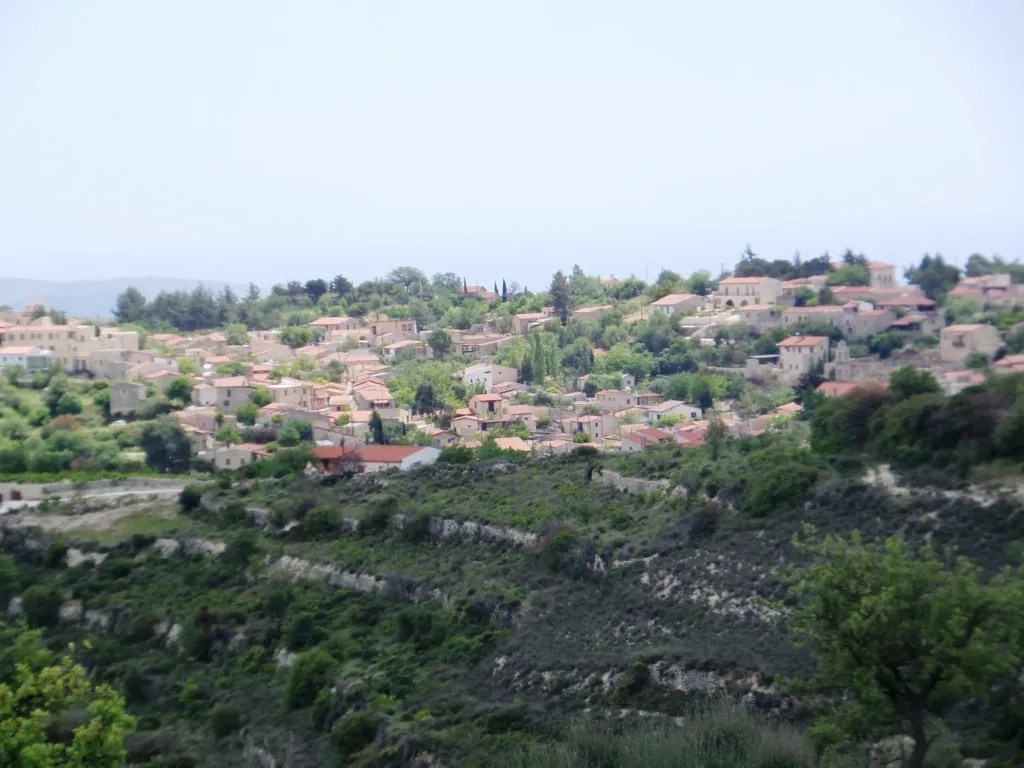
Lofou: architecture, a walk and practical tips
About the place
Checked: 1 October 2026.
A walk amongst the stone houses
Lofou is the place to choose if you want to see traditional rural architecture and spend time wandering through the narrow streets without a packed programme of museum visits. Your visit will mainly consist of a stroll, exploring public buildings and stopping for a bite to eat. For a day like this, a comfortable walking route is more important than a long list of places to visit.
The village is situated in the Limassol district and is associated with the rural wine-growing landscape. The stone buildings, cobbled lanes and the terrain create a distinctive character, yet Lofou remains a living community. Here, it is worth looking not only at individual façades, but also at how the house, the street and the hillside are interconnected.
For a short visit, choose a short walk around the village with a break at a convenient public spot. If you’re planning to visit a museum, a church or an evening event, add these once you’ve confirmed access. You don’t need to book a guided tour of the village: you can explore the permitted streets at your own pace.
How to appreciate architecture
Start by parking without blocking residents’ driveways or entrances, then continue on foot. Narrow streets aren’t the best place to look for the perfect shot from your car. Make a note of where to return to and a few landmarks so that your walk doesn’t end with you trying to squeeze through the most awkward of passages.
Take note of the stonework, doorways, wooden features and the spaces between the houses. Even without entering the buildings, you can compare the architectural styles along different sections of the street. Don’t go through a gate just for a better view: a beautiful courtyard might be part of a private residence, whilst an open door could simply be part of everyday life.
It’s more enjoyable to walk in short loops, so you can always return to a familiar spot. Cobblestones, slopes and steps require sturdy footwear. If access with a pushchair is important, check in advance which specific paths and entrances are accessible; photographs of the village do not allow you to gauge the effort required for the return climb.
Public buildings and monuments
The official tourist guide to Lofou highlights the old school, the small agricultural museum and the Church of the Annunciation. These help to link the architecture to the life of the village, rather than viewing it merely as a backdrop. Different conditions may apply for viewing the building from the outside and visiting the collection.
The old school is of interest as a landmark amongst the residential buildings. If the museum is open, its exhibits can enhance a walk by providing an insight into the local economy. However, the fact that a venue is listed in a tourist guide does not guarantee that it is open every day: it is best to check opening times and any possible closures before you visit.
When visiting a place of worship, please show respect for its religious purpose. Check whether the interior is open to the public, whether photography is permitted, and whether your visit will coincide with a service. There is no need to circumvent restrictions by using a side entrance: if the interior is closed to the public, viewing the building from the outside remains a perfectly acceptable way to appreciate its architecture.
The spring and the rural landscape
Among the landmarks in Lofou, the official description mentions the Elitji spring. Such a site illustrates how the water supply was linked to the layout of the village. Do not assume that a historical spring guarantees drinking water: its current suitability and permitted uses must be verified separately.
Near the village, the landscape, characterised by vineyards and almond groves, is well worth seeing. View it from the public footpath; do not enter the plantations or private land without permission. Agricultural land is a working area; even if there are no fences, the crops and paths are not open to the public.
If you fancy venturing beyond the village streets, choose a specific, verified route with a known return point. Don’t just follow a random dirt track simply for the sake of the view of the hills. A walk around Lofou and a hike in the surrounding countryside require different levels of preparation, particularly in hot weather or after rainfall.
Wine, food and events
The fact that Lofou is linked to a wine-growing region does not mean that every shop offers a tour of a winery. For wine tastings, please check the address, booking details, the programme and transport options for the return journey. The driver must plan the journey without consuming alcohol; a visit to a wine-themed attraction is possible even without a tasting.
If you’re buying local produce, ask about the producer and storage conditions. When choosing a gift, clear labelling and ease of transport are important, not just attractive packaging. Don’t take the word ‘rustic’ at face value as confirmation that the product comes from Lofou: you’ll need to check this with the seller.
Please check the organiser’s programme for the selected year for details of seasonal festivals and cultural events. An old announcement does not confirm the new date, opening hours or parking availability. When travelling to an event, allow extra time for the journey and lunch; a leisurely visit on a weekday offers a different way to explore the streets.
Food and rural accommodation
A break at a tavern can be the highlight of the day after a walk. Check the kitchen’s opening hours, how to order and the current menu. Meze is not a standard set menu in all establishments; if anyone in your group has dietary restrictions, discuss the contents before confirming your order, rather than after it has been served.
When looking for overnight accommodation, compare the location of the properties and how easy they are to access from the car park. In traditional buildings, you may find steps, multiple levels and limited access. Ask where guests are checked in, how to get your luggage to your room, and what facilities are available if you are travelling with a child or someone who has difficulty walking.
Check the heating or cooling arrangements separately, depending on the season, as well as check-in times and cancellation policies. A stone façade does not necessarily indicate comfort inside, and the term ‘agritourism’ does not guarantee that you will be involved in farm work. If you’re interested in a specific activity, arrange it as a separate service, rather than assuming it’s included in your accommodation.
A practical itinerary for the visit
Before you set off, check the weather forecast and your chosen route, then save the car park details and contact information for your destination. For your walk, take some water and shoes with sturdy soles. On uneven cobbled streets, comfort is usually more important than smart shoes, especially when the route includes an uphill return or a section after it has rained.
If you’re travelling without a car, please confirm your return transport and drop-off point in advance. Don’t assume that just because there’s a service to the village, you’ll be able to stay for the evening event. For your transfer, please agree on a meeting point: the narrow alleyway by the door of your accommodation may be difficult for a large vehicle to access.
You can finish the main route after a walk and lunch, leaving the surrounding wine-growing villages for another day. Lofou doesn’t need a set list of paid attractions to be interesting. Its inherent appeal lies in the architecture of the living village, its public landmarks and the way its streets connect with the rural landscape.
Continue planning
Official sources
- Visit Cyprus — official destination description
- Primary source: heritage or practical information
- CYSTAT — population census, 1 October 2021
Photo: Xaris333 · CC BY-SA 4.0 · converted to WebP and resized.
