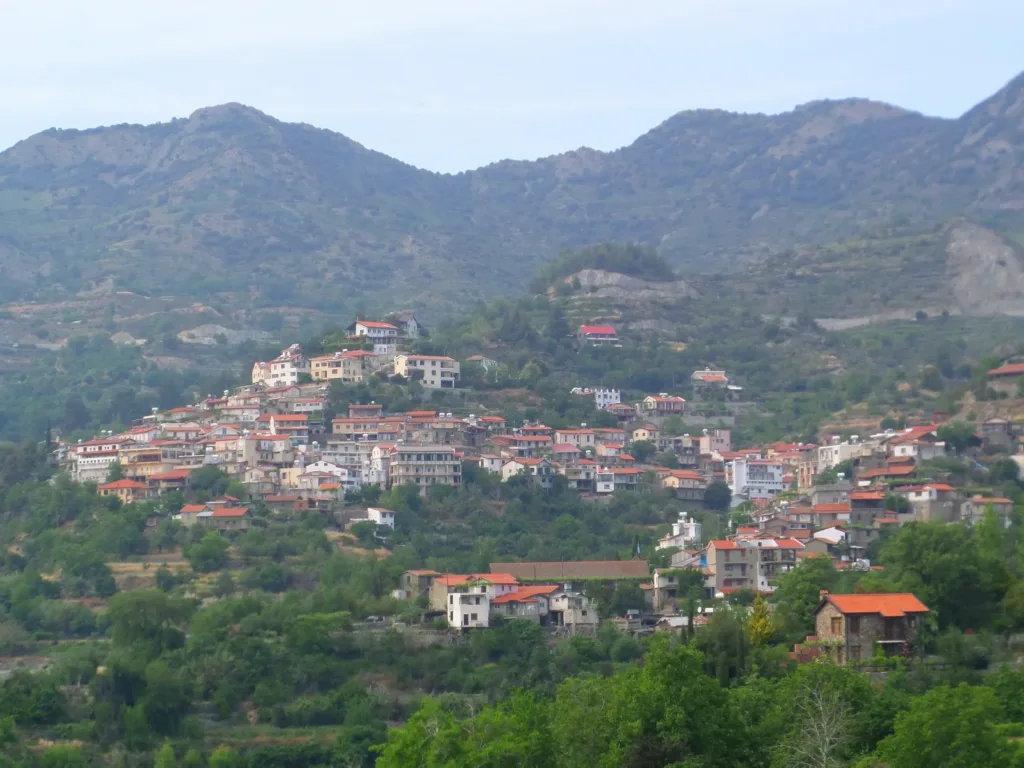
Agros: a stroll through the village, crafts and an itinerary
About the place
Checked: 1 October 2026.
Why visit Agros?
Agros is well worth a visit if you want to discover the crafts and flavours of mountainous Cyprus: here, a stroll through the village can be combined with visits to producers of rose-based products, traditional sweets and meat specialities. It’s best to plan such a visit around the workshop you’re most interested in, leaving time for lunch and to explore the streets between stops.
The village is situated in the Pitsilia region of the Troodos Mountains. It is a destination in its own right, with its own unique character, rather than just a mandatory stop on any mountain route. If you’re only interested in seeing stone houses, other villages will do just as well; what makes Agros special is its combination of a lively village atmosphere and local produce.
For a short visit, it’s best to plan a walk and one appointment that’s been confirmed in advance. For a leisurely day, add in a tasting or some shopping, but don’t expect to be able to visit all the workshops without booking in advance. It’s worth staying overnight if you want to spend the evening in the village and avoid a late drive home along the mountain road.
How to plan a walk
Start from a place where you are allowed to park your car, and check the route to your chosen workshop. The streets and businesses are situated on slopes, so locations that appear close on the map may involve an uphill walk. Break your journey down into a walking section and separate stretches, rather than trying to visit all the addresses in one go.
When exploring for the first time, it’s a good idea to alternate between wide streets and short detours into residential side streets. Take note of the stone façades, balconies and how the houses relate to the terrain. Private courtyards are not tourist attractions: take photographs from the public street and ask for permission before entering.
Plan your return route to the car before you head too far down the slope. If there are young children in the group or someone who has difficulty walking, check in advance whether a particular entrance is accessible, whether there are any steps, and whether it is possible to alight nearby. A general description of the village does not confirm that all its streets are accessible.
Roses and the work of the workshops
Rose-based products are one of the region’s most recognisable local crafts. Rose water, cosmetics and scented products are available for purchase; a production demonstration and a standard shop visit may be different experiences. When enquiring, please check whether the workshop will be open and what visitors will be allowed to see.
The flowering period, petal harvesting and seasonal events depend on the calendar and conditions of the particular year. A visit outside the harvesting period does not make a trip to Agros pointless, but you cannot expect the plantations to be operational or the entire process to be demonstrated on any given day. Please check the festival dates with the organiser before booking your trip.
Choose a product based on its intended use and labelling. Edible rose water and cosmetic products are not interchangeable; claims of therapeutic benefits should not be the deciding factor when making a purchase. If the ingredients, fragrances or storage conditions are important to you, ask to see this information on the packaging rather than relying on a verbal description.
Sweets and meat specialities
In Agros, visitors can sample traditional sweets and pork products, including lountza and hiromeri. The highlight of the visit lies in the local production methods and the variety of flavours. There’s no need to buy a large selection: first, check the ingredients, whether tasting is available, and the transport requirements for your chosen product.
Glyko is a sweet preserve that is usually served in small portions. Fruits or vegetables in syrup that are unfamiliar to a guest can provide a conversation starter about home cooking. The fact that a version without added sugar is available does not automatically make the product suitable for someone with a medical condition or following a special diet.
Meat products vary in terms of how they are processed and how they are consumed. Follow the manufacturer’s instructions, particularly if the product requires cooking or refrigeration. For gifts, it is best to choose hermetically sealed products with clear labelling; you should check separately whether they can be imported into the destination country.
Lunch and the duration of the visit
After visiting the workshop, allow time for lunch in the village. If you’d like to try some meze, check how many people the set menu is intended for and which dishes it includes. The serving style and price are determined by the specific establishment; old prices from travel notes are not a reliable guide to today’s bill.
If you have a busy schedule, it’s a good idea to choose a place to eat that’s close to the walking part of your route. Booking in advance is particularly useful if your trip coincides with an event or if you’re travelling as a large group. Before ordering, please let them know about any dietary restrictions and check whether the kitchen can accommodate them in the dishes you’ve chosen.
For an overnight stay, compare not only the photos of the room but also the location of the accommodation. Check the parking facilities, the distance from the car, heating or air conditioning depending on the season, and check-in times. A country cottage and a large hotel offer different facilities; the term ‘agritourism’ does not in itself describe the level of comfort.
The road, the weather and the season
The route to Agros passes through mountainous terrain. Before setting off, check the weather forecast, road conditions and the route suggested by your sat-nav, particularly in winter weather. Don’t take a shortcut through unfamiliar narrow lanes just to save a little time; allowing plenty of time for the journey is more important than a packed list of stops.
For the walk, you’ll need shoes with sturdy soles, water and clothing suitable for the weather forecast. The mountainous location does not guarantee cool temperatures on every summer’s day, and you may need an extra layer of clothing in the evening. It is best to plan a long walking route separately from a stroll around the village, taking the group’s capabilities into account.
If you’re planning to travel without a car, first confirm your return journey and your drop-off point. Just because there’s a service to a town doesn’t necessarily mean there’ll be a convenient connection to the workshop or an evening return journey. Any transfer you book should also include clear details of the meeting time, address and waiting arrangements.
What to check before you set off
Please contact your chosen manufacturer in advance to confirm the time of your visit, the language in which the tour will be conducted, the size of your group, and whether booking is required. Please specify whether you are interested in a demonstration, a purchase, or both. This will make it easier to distinguish between normal opening hours and the times when staff are available to welcome visitors.
Make a note of the addresses, contact details and a map showing the way back to your car. If the event is cancelled or the workshop turns out to be closed, have a backup plan: a walk and lunch without any compulsory shopping. Check for the latest information directly with the organiser, and verify details about the village against the official tourist guide.
Agros is best experienced by focusing on a single chosen theme — roses, sweets or meat specialities — and taking your time to explore the village. Don’t turn your visit into a race from one shop to the next. For your next trip, you could choose another village in the Troodos Mountains with a different focus, so as not to repeat the same set of experiences.
Continue planning
Official sources
Photo: Xaris333 · CC BY-SA 4.0 · converted to WebP and resized.
