Tombs of the Kings, Paphos: history, what to see and visiting tips
About the place
Checked: 25 October 2026.
Tombs of the Kings in Paphos: what the site is and where to find it
The Tombs of the Kings (Τάφοι των Βασιλέων, Tafoi ton Vasileon) are a large ancient necropolis in Kato Paphos, north of the ruins of the ancient city of Nea Paphos. They are underground tombs cut into the rock in the Hellenistic and Roman periods. The site is managed by the Department of Antiquities of Cyprus, and the necropolis is part of the Paphos UNESCO World Heritage Site.
The name does not mean that kings were buried here. According to the Department of Antiquities, kingship in Cyprus was abolished in 312 BC, and the necropolis owes its name to the imposing look of its burial monuments. Those buried here were senior officials, prominent figures of the Ptolemaic period and their families.
The Paphos UNESCO site was inscribed on the World Heritage List in 1980 and consists of two areas: Kato Paphos, with the ruins of Nea Paphos and the necropolis, and the village of Kouklia, with the Sanctuary of Aphrodite. The Tombs of the Kings are one part of this site, which is why a visit is often combined with the Kato Paphos Archaeological Park.
History of the necropolis
According to the Department of Antiquities, the necropolis came into being in the Hellenistic period, in the 3rd century BC, for the newly founded city of Nea Paphos. Burials continued here throughout the Hellenistic and Roman periods, until the early 4th century AD. Popular guidebooks sometimes give different dates, so the Department’s dates are used here.
The architecture of the tombs is compared to Hellenistic examples from Alexandria, Delos, Pergamon and Priene. Visit Cyprus specifically highlights the similarity with the tombs of Alexandria and attributes this to the close ties between the two cities during the Hellenistic period. In a scholarly publication by the Department, the monument is explicitly referred to as the Ptolemaic necropolis of Paphos.
Later the first Christians also buried their dead here, and part of the rock was quarried for stone. In the Middle Ages people lived in some of the tombs and altered them to suit their needs. In the late 19th century the tombs were plundered by Luigi Palma di Cesnola, and the Department of Antiquities did not begin systematic excavations until 1977.
How the tombs are laid out and what to see
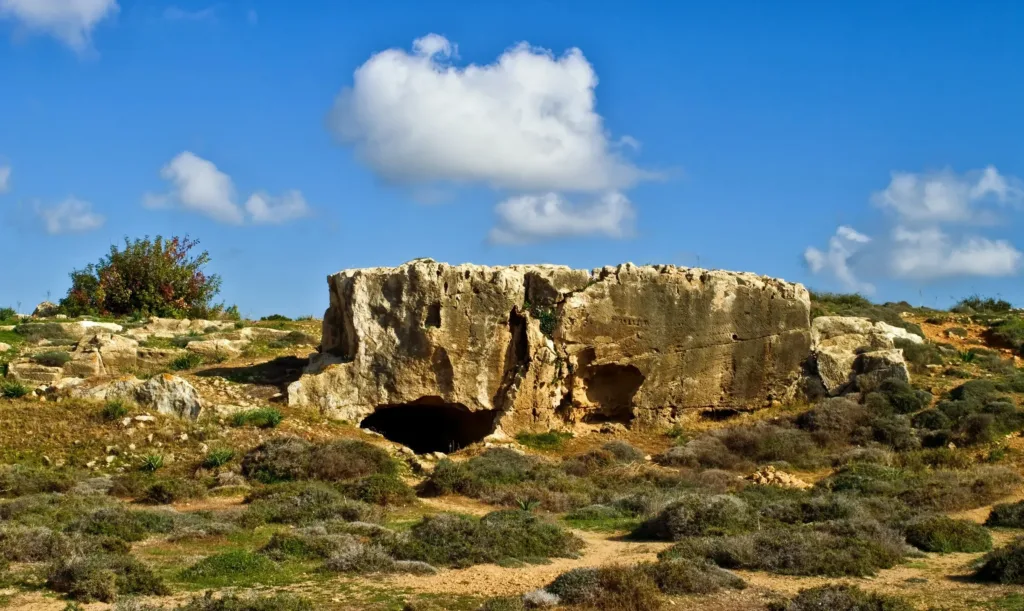
Most of the large tombs follow the same plan: an open-air rectangular courtyard is cut out below ground, surrounded by porticoes on Doric columns or pillars. Burial chambers and loculi, narrow niches for single burials, are cut into the walls of the porticoes. The walls were once painted, but only small fragments of the frescoes survive.
As Visit Cyprus describes it, some of the tombs copy the layout of houses of the living: the chambers open onto an inner courtyard with a colonnade, like the rooms of a house. These tombs with columns are the main sights. The Department of Antiquities’ excavations uncovered eight large tomb complexes, and some of them have been partly restored.
Tomb No. 8, first excavated in 1979, stands apart. It was cut into the rock around an open courtyard, and the entrance is reached by a monumental flight of steps. Eighteen burials, gold myrtle leaves and amphorae from Rhodes were found in the tomb. Because of its unusual architecture, scholars debate whether it may have been the tomb of the last Ptolemaic king of Cyprus, but this remains a hypothesis.
Getting there and planning your visit
The tombs are in Kato Paphos, in the northern part of the city’s coastal district, and can be reached by car, taxi or city bus. The easiest way to find them is by sat-nav and the Tombs of the Kings signs. Check the current bus routes with the city bus operator before you travel.
Opening hours and ticket prices are set by the Department of Antiquities. Summer and winter hours differ, in summer the last ticket is sold some time before closing, and hours may change on holidays. The Department also issues combined entry cards for its museums and monuments, which you can ask about at the ticket office.
The necropolis covers a large area and the tombs are spread across it, so allow time for an unhurried visit. It is best to come in the morning or towards evening, when the sun is lower. If you plan to see the Kato Paphos Archaeological Park on the same day, start with whichever site has less shade, before the heat sets in.
Safety, heat and etiquette
The Department of Antiquities states plainly that visits are at your own risk. Stone steps lead down to the tombs, the ground is uneven, and you need to take care at the edges of the rock-cut courtyards. You will need sturdy closed shoes, and it is best to keep small children close.
The necropolis is on an open, stony site by the sea, where it gets very hot in summer. Take water, a hat and sun cream, and in the hottest months do not plan your visit for midday. For more on coping with the heat and sun in Cyprus, see our separate article on heat and UV.
According to the Department, the ticket office and the grounds are accessible to wheelchair users, but the tombs themselves can only be seen from above. Remember that this is a burial place and a protected monument: do not climb on columns or walls, do not take away stones or potsherds, and do not leave litter.
What is nearby
The closest related site is the Kato Paphos Archaeological Park with its Roman mosaics, which belongs to the same part of the UNESCO site in the town. Our separate overview covers the archaeology of Cyprus and its World Heritage sites in more detail.
By the harbour of Kato Paphos stands Paphos Castle, which has its own article. Finds from excavations across the area are kept in the city’s museums, which we cover in our overview of Paphos museums.
The second part of the UNESCO site is the Sanctuary of Aphrodite in the village of Kouklia, east of Paphos, which has its own guide. For a general overview of the city, its districts and its other sights, see our Paphos guide.
What to check before you go
Before you go, check the Department of Antiquities website for the current opening hours, ticket prices and the holidays on which the monument is closed or keeps special hours. Opening times and prices in old guidebooks and on third-party websites may be out of date.
If someone in your group uses a wheelchair or has difficulty walking, check with the Department of Antiquities in advance which areas are currently accessible. Some tombs may be temporarily closed for conservation or excavation, so it is also worth asking about this at the ticket office.
If you are planning professional photography or filming, check the rules for shooting at the monument with the Department of Antiquities in advance. In the hot season, check the weather forecast and any high-temperature warnings, and choose the time of your visit with the heat in mind.
Continue planning
- Paphos: archaeology, neighbourhoods, beaches and itineraries
- Archaeology and UNESCO Sites in Cyprus: A Practical Guide
- Paphos museums: finds, collections and links to archaeological sites
Official sources
- Cyprus Department of Antiquities: Tombs of the Kings
- UNESCO World Heritage Centre: Paphos
- Department of Antiquities: Tombs of the Kings excavation volume (2026)
A rock-cut tomb in the Tombs of the Kings necropolis · Photo: Nikodem Nijaki · CC BY-SA 3.0 · converted to WebP and resized.
