Paphos museums: finds, collections and links to archaeological sites
How to choose a museum in Paphos, understand the origins of the exhibits, and avoid confusing the museum galleries with the UNESCO World Heritage Site.
Checked: 27 September 2026.
Museums and archaeological sites in Paphos
Paphos is renowned for its archaeological sites, but the museum collection and the excavation site serve different purposes. At the local museum, artefacts are collected, preserved and labelled; in the park and other locations, visitors can see the architecture and landscape. The choice depends on whether you want to examine the artefacts in detail or spend time at an open-air site.
For your first visit, start with the local archaeological museum and one monument linked to the period you’re interested in. Don’t plan to visit several large open-air sites as part of a short walk through the town centre. The journey, the sun and the time needed to read the information will significantly affect your itinerary, particularly for families and people with reduced mobility.
The list below is for guidance only and does not guarantee that each site will be open. Please check opening times, exhibitions, ticket prices and availability with the relevant organisation or the Department of Antiquities before travelling. If an old guidebook gives different opening times or prices, do not simply assume the figures are correct without verifying them first.
District Archaeological Museum
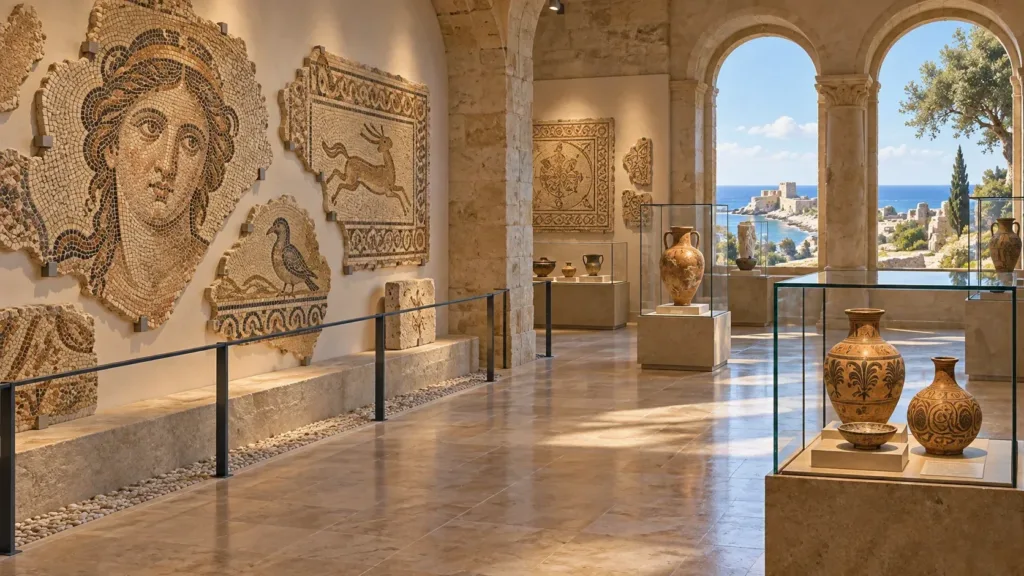
The Pafos District Archaeological Museum houses artefacts from various parts of the region. The official Visit Cyprus brochure describes the collection, which spans from the Neolithic period to later eras, and specifies the origins of the artefacts from Palepafos, Nea Pafos, Marion-Arsinoe and other sites. The exhibits are arranged by theme and period, which helps visitors to compare different eras.
At the museum, it is worth looking not only at the famous depiction of Aphrodite, but also at the inscriptions on everyday objects: vessels, coins and inscriptions. These provide a glimpse into the region’s daily life and interactions without the need to attribute a mythical connection to every single object. The words ‘from Paphos’ in the description may refer to the area rather than to a single street in the present-day town.
Before your visit, please check which galleries are open, whether guided tours are available, and whether your group is eligible for admission. The current exhibition may not necessarily match the photographs in the older article. If you plan to visit the excavation sites afterwards, make a note of the names of the find sites and the date: this way, your tour of the monument will tie in with the collection you have seen.
Paphos on the UNESCO list
The UNESCO World Heritage Site ‘Paphos’ comprises several components, including Nea Paphos and Palepaphos in Kouklia. The official website lists the architectural remains and famous mosaics; it explains the cultural significance of the monuments. The district museum is useful for understanding the finds, but the building itself should not automatically be considered part of the protected area.
The mosaics feature scenes from ancient mythology. Depictions of deities reflect the cultural traditions and art of their time; they do not prove that the events of the myths actually took place. This approach helps to reconcile an interest in legends with respect for archaeological evidence.
UNESCO status does not address practical matters regarding tickets, entry and accessibility for each trail. Before you travel, check the information provided by the managing organisation for the specific part of the site. Do not lump different parts of Paphos together under a single address: city tours and the trip to Kouklia require separate time allocations.
Byzantine and local collections
The Paphos region is home to museums of ecclesiastical art, ethnographic collections and small local exhibitions. These may feature icons, handicrafts, scenes of village life and family archives. Unlike a major archaeological museum, such institutions often focus on a specific theme; check whether this is of interest to your group.
The former names of institutions and the locations of collections may have changed. Before describing them as currently open, find their current official address and confirmation that the galleries are open to the public. If a direct source is unavailable, it is better to list the venue as an option for further verification than to promise a visitor a specific exhibition.
Religious traditions, museum attributions and modern tourist names all constitute different types of information. When describing an icon or artefact, state the basis for its dating; refer to a legend as such. If a museum is situated within an active church, the visiting rules may differ from those of a standard gallery.
Itinerary by interest
Archaeology enthusiasts will find it convenient to combine a visit to the local museum with one of the UNESCO site’s attractions, allowing plenty of time for the journey and the tour. For those interested in city life and local culture, a small ethnographic exhibition and a stroll through the neighbouring neighbourhoods would be ideal. Both trips can be done independently and do not need to be squeezed into a single day.
In hot weather, open-air monuments require water, protection from the sun and regular breaks. Uneven surfaces, slopes and a lack of shade along parts of the route can influence your choice more than the distance shown on the map. Check the accessible routes for a specific monument, rather than making assumptions about the entire UNESCO site based on a single photograph of the entrance.
If it’s a short trip, choose a theme in advance: archaeology, mosaics, ecclesiastical art or local way of life. Comparing two different collections can be more rewarding than a cursory glance at many. On the map, mark not only the museums but also transport stops, your return time and an alternative plan in case they are closed.
How to read information about finds
For each exhibit, specify the place of discovery, the period, the material and the current location. A museum label may state that the attribution is tentative; the description should not present it as a definitive assertion. In the case of ancient Paphos, it is particularly important to distinguish the remains of the settlement and religious practices from later accounts of Aphrodite.
The official UNESCO register describes the value and boundaries of the site, whilst the museum record card details the collection and practical information. These are different primary sources. If you wish to verify a specific date, start with a publication from the Department of Antiquities or a museum catalogue. A popular article may help to raise a question, but does not in itself confirm a scientific conclusion.
When taking photographs of an exhibit, please retain the caption and observe the museum’s rules. An image without a source reference can easily be misleading, especially when it is subsequently linked to another artefact. For children, you could select a few items and look for similar ones at the excavation site, explaining that many finds have been moved to the museum for safekeeping.
What to check before your journey
Find the official website for your chosen museum and the specific archaeological site. Check the opening hours, admission prices or any concessions, accessibility, photography policies and transport links for your visit date. Opening times may vary on public holidays. Do not rely on unconfirmed information from old guides or on the ‘open’ status shown in third-party directories.
For a full day out, make alternative plans in case the venue is closed, the weather changes or you get tired. If you need a guided tour in a specific language or assistance with access, make arrangements with the venue in advance.
The sources for this review were checked on 27 September 2026: the official district museum listed on the Visit Cyprus register and the Paphos site entry on the UNESCO register. Dates, prices and exhibitions should be checked again before visiting. The museum, the archaeological site and the legend of Aphrodite complement one another when their respective contexts are explained clearly.
Continue planning
- Limassol’s museums: collections, the old town and a day’s itinerary
- Museums in Ayia Napa: Thalassa and maritime heritage
- Cypriot Mythology: Places, Legends and Archaeological Findings