Limassol’s museums: collections, the old town and a day’s itinerary
Archaeology, the city castle, theatre and themed exhibitions: exploring Limassol’s museums and day trips to the region’s historical sites.
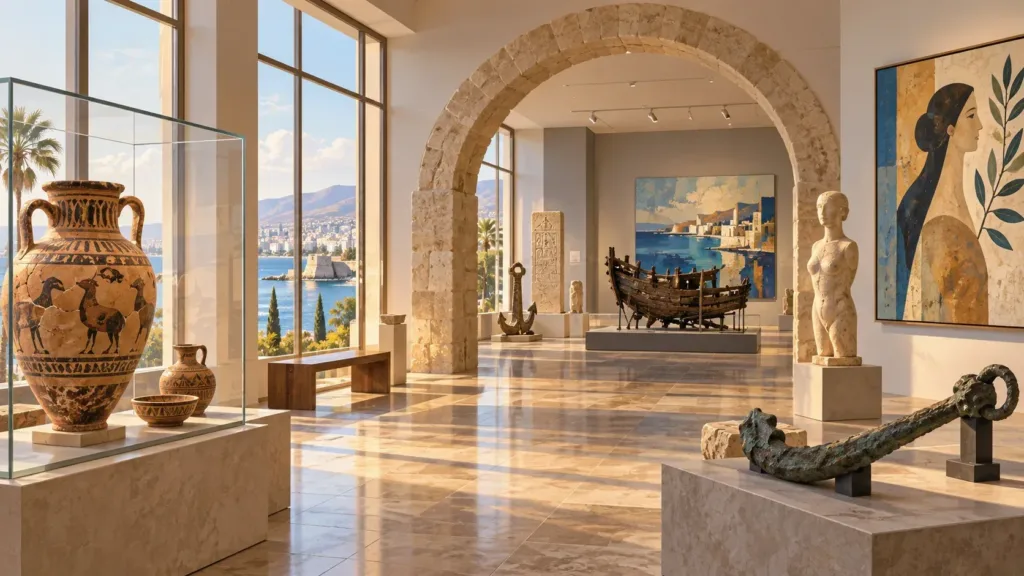
Checked: 27 September 2026.
Museums in Limassol: where to start
A day out visiting museums in Limassol can be centred around archaeology, the city’s history, the theatre or a specific themed collection. Not all the interesting sites are right in the city centre: ancient Curium and Amathus are part of the wider region and require a separate trip. First, choose a theme and the time you have available, then decide how many places you can realistically visit.
The district’s archaeological museum displays finds from different eras and various excavation sites. The medieval castle in the old town centre is linked to a different historical narrative, whilst the theatre museum is linked to the development of the performing arts. These are not interchangeable stops.
The official Visit Cyprus directory helps you draw up a preliminary list, but does not confirm the current opening hours of each venue. Before setting off, check the address, exhibitions, admission requirements and availability via the museum’s website or by contacting them directly. The temporary closure of a single gallery shouldn’t derail your entire plan: make sure you have an alternative nearby.
The District Archaeological Museum
The Limassol District Archaeological Museum houses artefacts found at various sites across the region. According to the official description on Visit Cyprus, the collection spans the period from the Neolithic to Roman times. Take note of the origin and dating of each exhibit: the name of the town in the museum’s title does not mean that all the artefacts were found within the boundaries of the present-day town.
The museum is a useful way to prepare for a trip to Kourion or Amathus. In the display case, you can examine the shape and purpose of an artefact, whilst at the archaeological site you can see the layout and the environment in which people lived. However, the museum and the excavation site are in different locations; to get between them, you will need transport and will have to check the specific entry requirements for each.
If your child finds it difficult to read long captions, choose a few objects and discuss what they might have been used for. Please check with the museum before your visit regarding photography rules and whether guided tours are available.
The Old Town and the medieval layer
In Limassol’s historic centre, you can combine a visit to the museum with a stroll through the streets and the old harbour. The official Visit Cyprus walking route includes Limassol Castle, which today houses an exhibition on medieval history. The exterior and interior offer visitors very different experiences; simply walking past the building is not the same as viewing the collection.
Historical accounts of the castle are often shrouded in legend. To substantiate claims about specific events, one needs museum exhibits and specialist research, rather than the same old tourist tales. At the museum, compare the history of the building itself, the origins of the artefacts on display, and the legends associated with the site: sources can shed light on each of these topics without confirming the events described in the legends.
The old town is best explored on foot, but the heat, narrow pavements and steps may force you to alter your route. Check the accessibility, availability of a lift and rest areas at your chosen museum. If visiting several venues, compare their opening times: just because they all share the same geographical name, ‘Limassol’, does not mean they have the same opening hours.
Theatre, crafts and special collections
Specialist museums explore themes not covered by the archaeological timeline. A theatre collection offers an insight into costumes, playbills and life on stage; collections focusing on crafts or local industry shed light on everyday work. Choose them based on your interests, rather than for the sake of a long list of ‘must-see’ stops.
Some of the themed attractions are located off the main route, and some of the old names listed in guidebooks may refer to exhibitions that have since changed. Before you go, please check that the specific venue is open, that the collection is on display, and confirm the address. Do not apply descriptions of past exhibitions to current ones without confirmation from the organiser.
The KIPRINFORM website features a separate entry for the vintage car museum; it answers a specific question about this collection. The general guide to Limassol’s museums is intended to help compare different types of visits and provide a link to the detailed page, rather than simply repeating its content. The same applies to the wine museum in the wider area.
Kourion and Amathus: Beyond the Museum
Kourion and Amathus are archaeological sites in the region, not exhibition halls in the local museum. It makes sense to set aside a separate day for them if you are interested in the open landscape, the layout of the ancient settlement and the context of the artefacts found there. In a museum, an artefact is protected and labelled; at the site, the terrain, distance and condition of the monument are what matter.
Compare only verified information: the period to which the site belongs, the purpose of the structure and its protection status. Do not automatically refer to every ancient site as a UNESCO site. To check its status, use the World Heritage List and materials from the Department of Antiquities; for opening hours and ticket prices, refer to the site’s current official information.
Visiting open-air archaeological sites requires sun protection, drinking water and footwear suitable for uneven ground. Families with young children and people with reduced mobility should check the actual accessibility of individual paths. The journey from the city centre and the time needed for the tour mean that trying to fit in two large sites and several museums in one short day is not a good idea.
How to plan a route
If you have a few hours, choose one museum in the city and go for a walk in the surrounding area. For a full day, you could add a second venue with a different collection, whilst allowing time for lunch and travel. First, mark on the map the venues that are actually open on the day you’ve chosen; then work out your route. The names of museums in neighbouring areas may sound similar.
From an archaeological perspective, the combination of a ‘district museum and a separate trip to a historical site’ makes sense. For learning about the town’s history, a museum in the old town centre and a walk along the official route would be suitable. For a family visit, it is better to have a single interactive or visual exhibition than several galleries in succession.
Don’t rely on old prices, opening hours or promises of free admission. Exhibitions may be temporary, opening hours may vary during public holidays, and smaller collections may be accessible by appointment only. If in doubt, contact the organiser and have a plan B ready: a stroll through the city centre or a visit to another open venue will ensure you still make the most of your day.
Checking the facts before you go
Check the official address, opening hours for the date you require, your ticket, booking details, the language of the tour, accessibility and photography rules. If the information on the booking platform differs from that provided by the museum, rely on the institution’s direct confirmation. For archaeological sites, assess the journey and weather conditions separately. The list of suitable locations varies by season and should not be treated as a fixed timetable.
In the exhibition hall, read the captions accompanying the artefacts and distinguish between the facts of the discovery, the scientific interpretation and popular legend. The dating given in the museum catalogue carries more weight than the old promotional wording. If the catalogue describes an event with caution, such a qualification makes sense: an analogy with a neighbouring town does not turn an assumption into a confirmed fact.
The sources for this page were checked on 27 September 2026: the official Visit Cyprus museum register, the district archaeological museum’s information sheet, and the city walking route. You should check the opening times of these sites again just before your trip. A well-planned itinerary combines your chosen collection with current opening times and access conditions.
Continue planning
- Museums in Nicosia: what to choose and how to plan your visit
- Paphos museums: finds, collections and links to archaeological sites
- The Limassol Carnival: tradition and the annual programme