A school-based study of Russian-speaking migrants in Limassol
During the February half-term holidays, the ‘Intellectual’ School in Moscow is holding its annual educational field workshop in Cyprus. The workshop comprises humanities and biology streams. This year, as part of the humanities stream, Year 8 pupils Arina Aladysheva and Vitalina Frolova undertook a research project in social geography entitled ‘Analysis of migration processes using […]
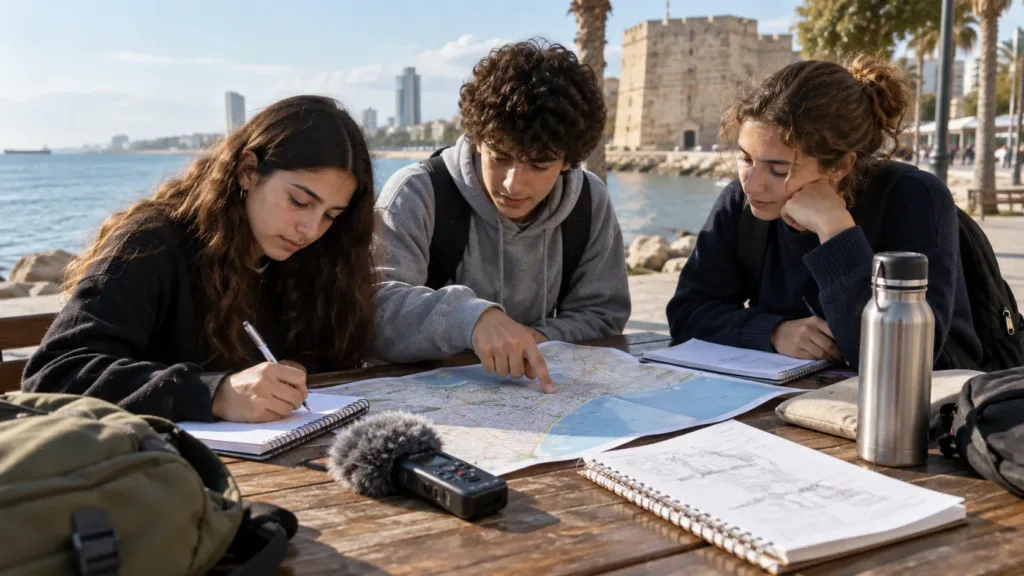
During the February half-term holidays, the ‘Intellectual’ School in Moscow is holding its annual educational field workshop in Cyprus. The workshop comprises humanities and biology streams. This year, as part of the humanities stream, Year 8 pupils Arina Aladysheva and Vitalina Frolova undertook a research project in social geography entitled ‘Analysis of migration processes using the example of the Russian-speaking population of Limassol (Republic of Cyprus)’.
The objectives of the project included examining the composition of migrants by country of origin, citizenship, ethnic and religious affiliation, level of education, marital status, the reasons behind migration, income levels and employment, as well as to examine the adaptation of migrants into the host community.
Questionnaire surveys as the main research method
Two questionnaires were drawn up – one for schoolchildren and one for adults. The survey of schoolchildren was conducted at the L.I.T.C. Russian school. The adult respondents included teachers from this school, staff from the newspaper *Vestnik Kipra*, the company Cyprus Inform, the Cyprus Land amusement park, as well as Russian-speaking people on the streets of Limassol.
Of the 100 questionnaires we brought with us to the island, 42 were completed by adults and 45 by school pupils (in Years 7–11). In addition to the questionnaires, interviews were held with Maxim Okulov, director of the Cyprus Inform group of companies; Svetlana Petrachkova, the architect behind the Cyprus Land project; and Olga Starodubets, deputy headteacher at L.I.T.C. Olga Starodubets, who answered the schoolgirls’ questions about Russian-speaking migrants in Limassol.
Preliminary results from the processing and analysis of the questionnaires were presented at the school research projects exhibition at the Russian Centre for Science and Culture in Nicosia on 21 February. The results of the questionnaire analysis are shown in 43 diagrams, 38 of which were created by the schoolgirls (View the presentation).
Survey results
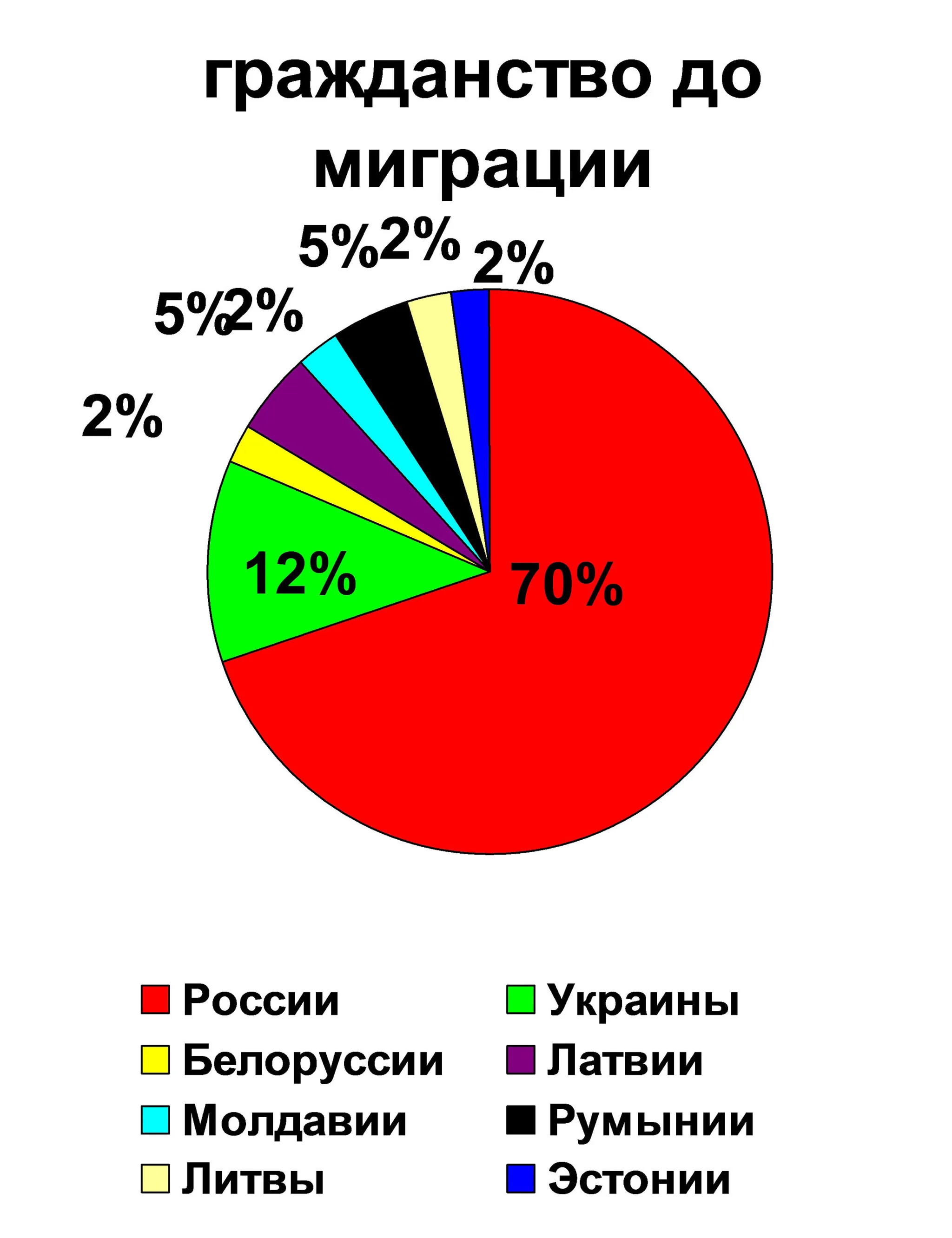
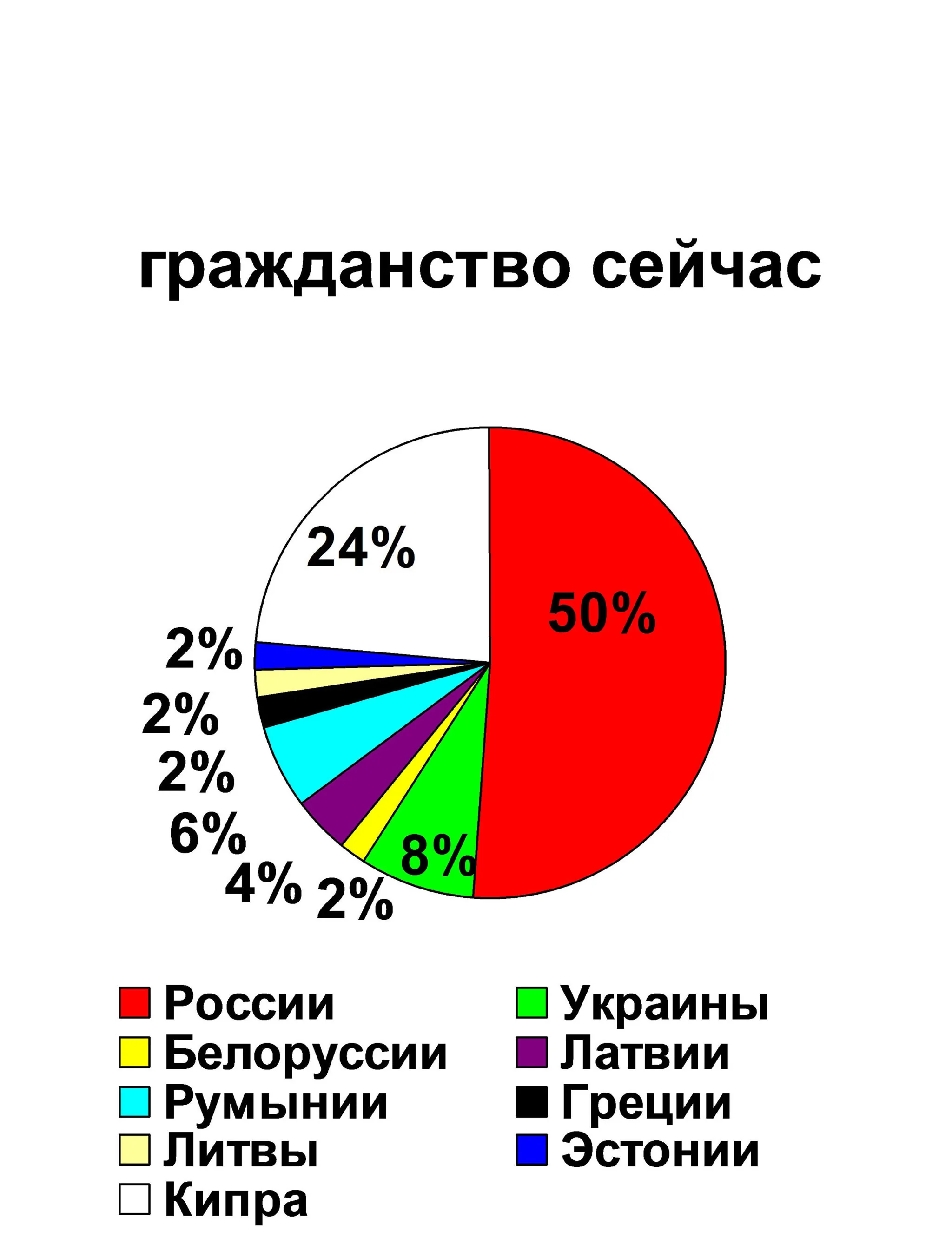
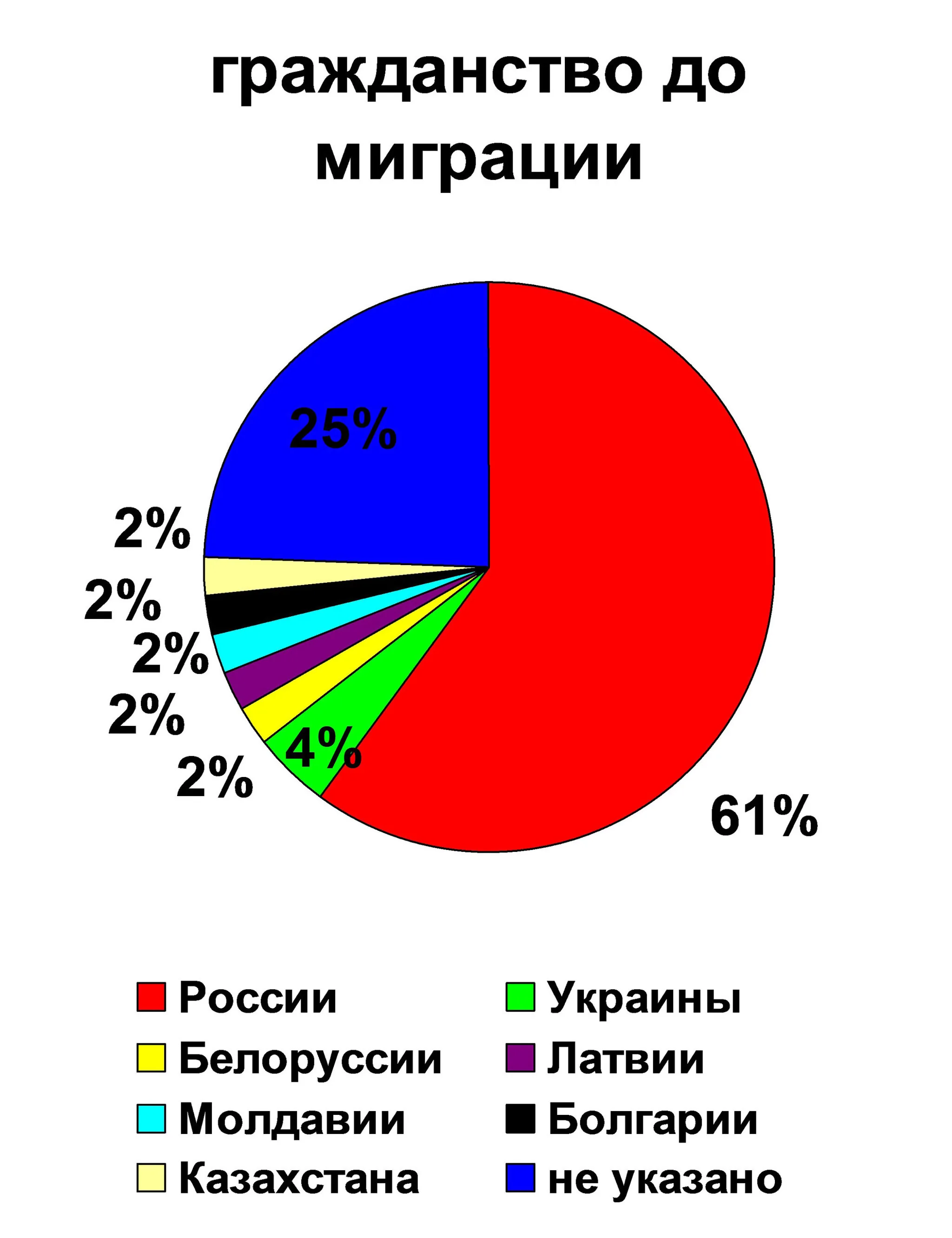
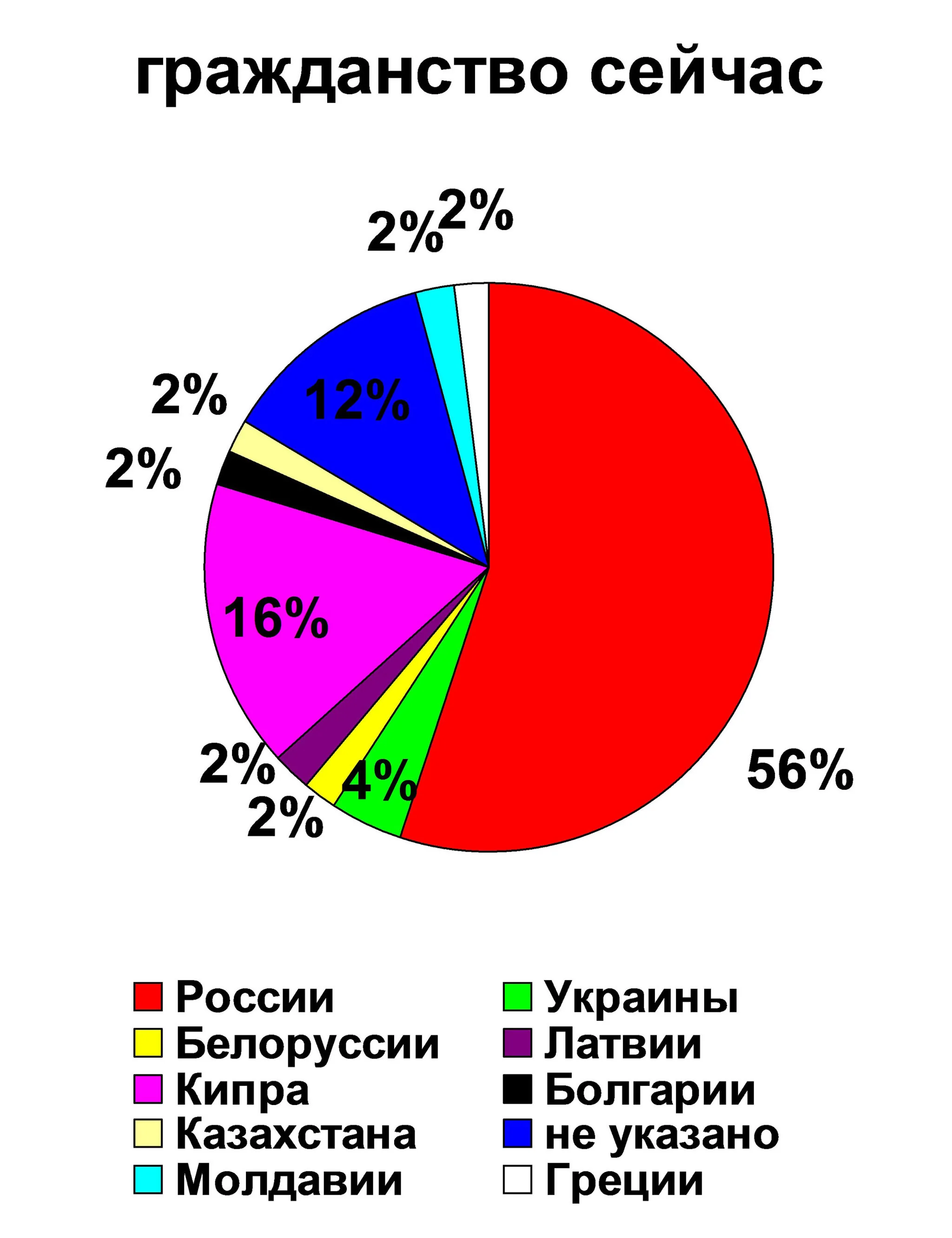
The majority of the adults and children surveyed are Russian. Before migrating, they held Russian citizenship; currently, half of those surveyed still hold it. Most migrants have retained their country’s citizenship. In addition to Russian citizenship, the schoolchildren hold citizenship of Ukraine, Belarus, Latvia, Kazakhstan, Moldova and Bulgaria. Among adults, Lithuania, Estonia and Romania are also included in this list. Cyprus citizenship is currently held by 24 per cent of adults and 16 per cent of schoolchildren, whilst Greek citizenship is held by 2 per cent of both children and adults. The proportion of people with dual citizenship is higher among adults than among schoolchildren (40 per cent and 15 per cent respectively).
ADULTS
SCHOOLCHILDREN
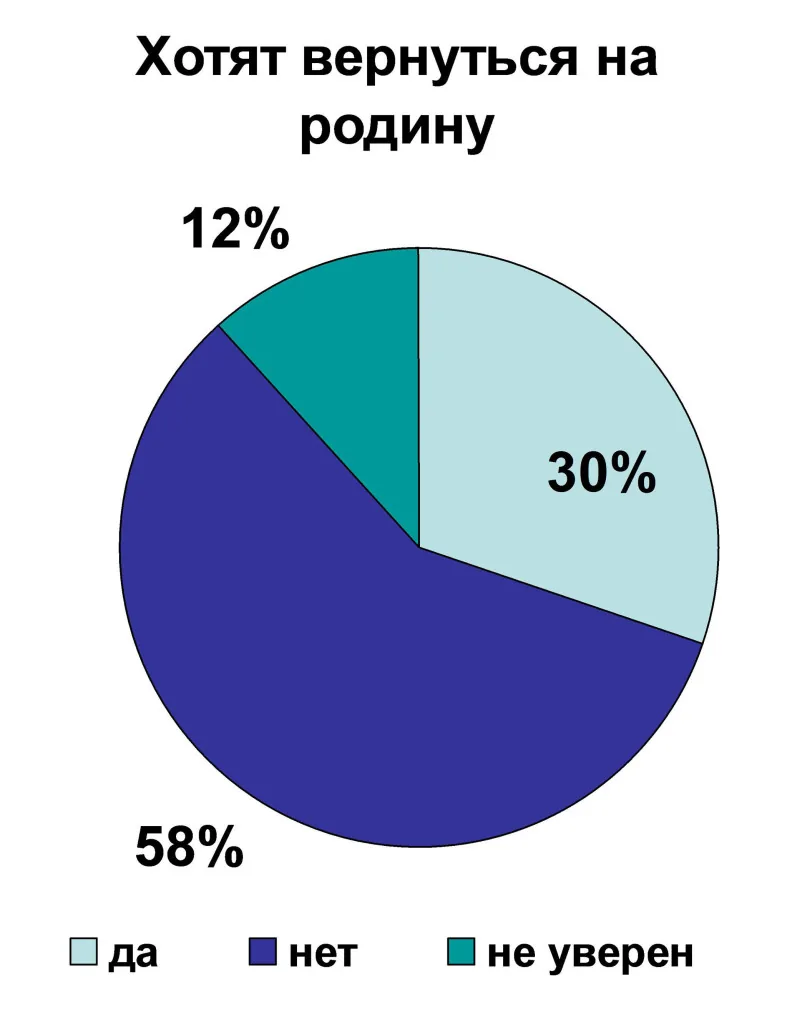
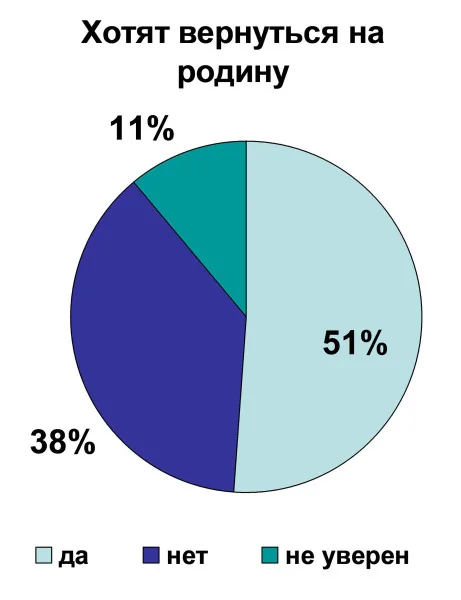
71 per cent of the schoolchildren surveyed moved to Cyprus with their parents, whilst 11 per cent were born in Cyprus. Most adults migrated because they like Cyprus’s natural environment, as well as due to economic difficulties in their home country or a desire to live abroad. A third of adults have lived on the island for between 10 and 20 years, whilst 30 per cent have lived there for less than 5 years. Half of the schoolchildren surveyed would like to return to their home country, compared with just 30 per cent of adults.
| ADULTS | SCHOOLCHILDREN |
 |
 |
45 per cent of schoolchildren and 74 per cent of adults are Christian. As for foreign languages, 46–47 per cent of those surveyed speak English, and 24–27 per cent speak Greek. 72 per cent of adults have a higher education qualification; half are married, and 63 per cent have children.
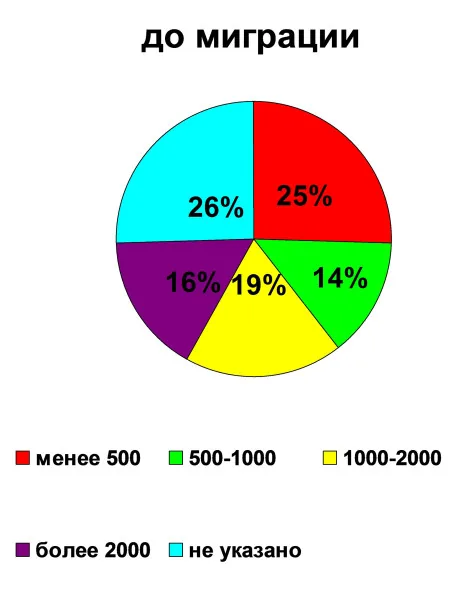
Some interesting findings relate to changes in the socio-economic status of migrants. The monthly income of adults increased after migrating to Cyprus: prior to migration, a quarter of those surveyed had an income of less than 500 euros, now nobody falls into this category, whilst the proportions of people with incomes of €500–1,000 and €1,000–2,000 have increased from 14 per cent to 36 per cent and from 19 per cent to 33 per cent respectively.
Monthly income (euros)
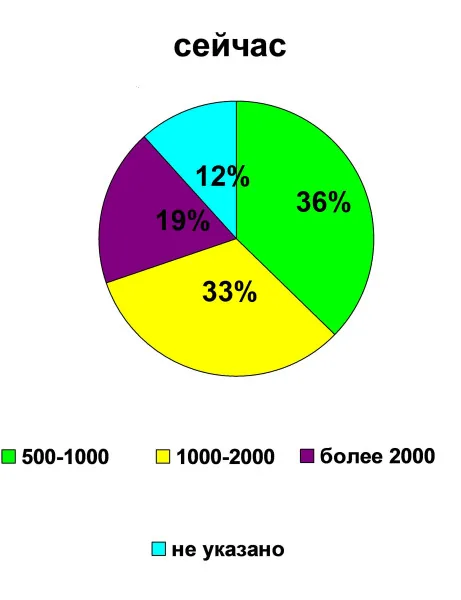
However, the situation regarding housing is the opposite. Before migration, two-thirds of adults owned their own homes; now, only a quarter do. This is due to the high cost of housing in Cyprus. The majority of migrants live in rented houses and flats.
For around a third of those surveyed, the field of employment was, and remains, science and education. The proportion of those employed in tourism has increased. Before migration, some of those surveyed were employed in public administration, healthcare and construction; there are none in these sectors now.
From a conversation with Maxim Okulov, director of the Cyprus Inform group of companies, we learnt that Cypriots are protecting jobs in healthcare and construction. Russian doctors are more highly qualified than their local counterparts. It is very difficult for a Russian doctor to obtain a licence, so they are forced to work outside their specialism and wait to be granted a licence after living in Cyprus for a certain number of years.
Russians are well-liked in Cyprus
Maxim Okulov also explained that, apart from the favourable natural conditions, Russians are drawn to Cyprus by its safety, good conditions for children’s development (for example, English-speaking schools), year-round outdoor sports – particularly water sports (yachting, diving, surfing), as well as the fact that Russians are well-liked here.
The USSR was the first to recognise Cyprus’s independence and helped to halt Turkey’s aggression in 1974. Cyprus was within the Soviet Union’s sphere of influence, and Cypriots studied in the USSR free of charge, just like citizens of other socialist countries. Furthermore, Russians are ‘ideal customers’ for Cypriots because, as a rule, they do not haggle or make a fuss.
Migrants’ integration
For 66–67 per cent of those surveyed, the majority of their friends are Russian-speaking; 13 per cent of children and 21 per cent of adults have an equal number of Russian-speaking and Cypriot friends. None of the schoolchildren have a majority of Cypriot friends, but 5 per cent of adults do.
Half of the schoolchildren and 70 per cent of adults keep up to date with developments in their home country. Adults learn about their homeland via the internet, television news programmes and relatives in Russia. Around a third of adults send remittances to their homeland (mostly on an irregular basis).
For the schoolgirls, the research project proved to be an important and interesting stage in their independent research work, an opportunity to interact with people, and a chance to analyse and interpret the results they obtained.
As the project leader, I thoroughly enjoyed our work and am delighted that we managed to achieve all our research objectives. I would like to express my deepest thanks and gratitude to everyone who helped us.
Maria Sviridova,
Geography teacher at the ‘Intellectual’ School, Moscow