The Flora of Cyprus: Natural Zones, Endemic Species and Conservation
Where to see Cyprus’s plants, how to distinguish between different natural zones, and why it is best to leave rare species where they are.
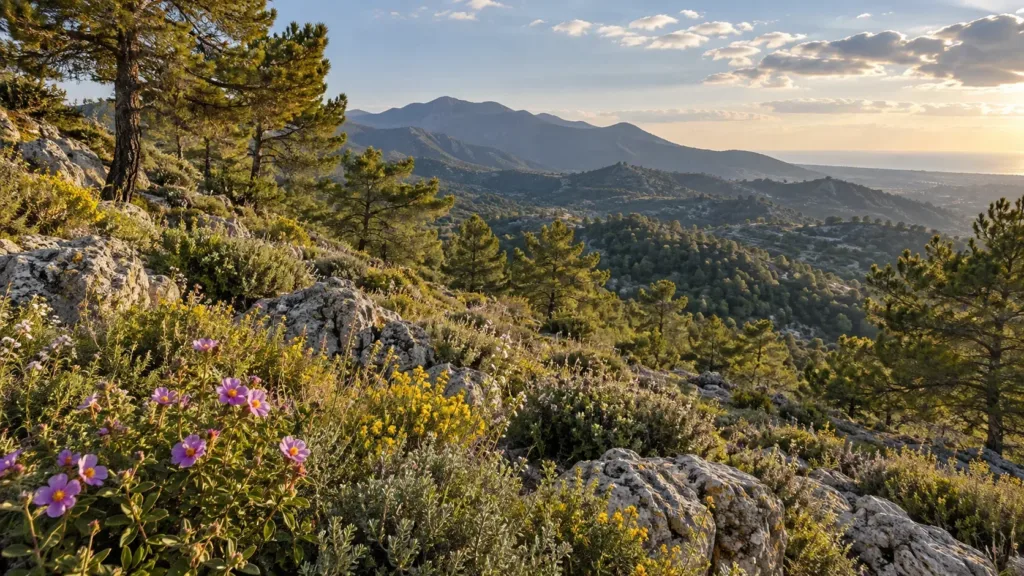
Checked: 27 September 2026.
How to interpret Cyprus’s plant landscape
Cyprus’s flora is not limited to the pine forests of the Troodos Mountains and the flowering coastline. On this small island, dry scrubland, forests, river valleys and mountainous areas coexist, each with different soil types and levels of moisture. The same route looks different in spring and in late summer, so it is always worth linking the sighting of a plant to the place and time of observation.
Start by familiarising yourself with the map of the nature reserve and the official trail description. The Cyprus Department of Forests shows woodland areas, botanical gardens and routes where you can view plants without straying from the marked path. If a trail has seasonal restrictions or a fire risk warning, these take precedence over an old guidebook.
A species is described as endemic if it occurs naturally only in a specific region. This is not the same as saying ‘it grows everywhere’: some of Cyprus’s endemic species are rare and protected. A name taken from a tourist brochure helps you spot an interesting species, but it does not give you the right to pick a flower, dig up a plant or enter a restricted area just to take a photograph.
The coast and dry lowlands
In open areas by the sea, plants have adapted to the sun, wind, salt spray and water scarcity. Low shrubs and seasonal grasses may seem unassuming after their spring flowering, although it is precisely these that stabilise the soil and provide shelter for animals. Do not mistake the dry, summery appearance for a sign that the area is empty or that it is safe to cross off the path.
Coastal dunes and vegetation are sensitive to trampling. You should follow an existing path to the beach rather than cutting a shortcut through the vegetation. Even a small group of people repeatedly using such a path will gradually damage the vegetation cover. In protected areas, check the signs at the entrance and familiarise yourself with the local rules.
When observing flowering, it is better to choose mild weather and take your time than to try to visit a large number of sites in a single day. Take a photo of the plant as a whole, its leaves and the surrounding environment, without breaking any branches. If identifying the species is important for research, send the photographs to a specialist or make use of resources from a botanical garden.
Forests and river valleys
In Cyprus’s forested areas, conditions vary with altitude and slope aspect. The Department of Forests describes communities of pine trees, and in some places cedar and other tree species; damp ravines and riverbeds support a different range of plants. You cannot draw conclusions about the composition of the entire forest based on a single tree by the roadside: study the official route and the on-site information.
The banks of seasonal watercourses often look particularly green. However, the path along the water’s edge can be slippery, and after rain, what is normally a safe crossing can become dangerous. Do not stray from the marked path just to see a plant by the riverbed. The walking time given in the description does not take into account long stops for photographs or the difficulty of walking on wet ground.
Fire risk affects both access and the health of the forest. On dry, windy days, check the official restrictions; do not leave litter behind or use open flames. If a path is closed, the botanical garden or visitor centre will provide more reliable information than trying to get round the barrier via a neighbouring road.
Highlands and endemic species
The Troodos Mountains are characterised by cooler conditions and plant life not found on the hot coast. Official materials from the Forestry Department describe mountain plant communities and individual endemic species. Their inclusion in the brochure does not mean that every specimen is easy to find: their distribution may be localised, and their flowering period brief.
In the mountains, it’s best to stick to a single marked trail with a clear distance and level of difficulty. Take a warm layer of clothing, water and a map showing the way back: the temperature and visibility can change more quickly than at lower altitudes. Do not stop on the narrow edge of the path if this obstructs other visitors or forces them to step onto the vegetation.
Small areas set aside to protect rare plants are of particular value. Their boundaries and regulations are determined not by tourist interest, but by conservation measures. You can find out about the species at the visitor centre or from official materials; it is not necessary to publish the exact coordinates of a vulnerable specimen on social media.
Where can I learn to identify plants?
Botanical gardens are a good place to start: the species are labelled, and visitors can see the differences in the leaves, shapes and seasonal appearance. It then becomes easier to understand why, on a nature trail, you cannot rely solely on the colour of a flower. Check the local and scientific names, as a single common name can refer to several different plants.
Photographic apps provide a clue, not a definitive conclusion. A photograph lacking leaves, fruit and the plant’s natural habitat can easily lead to mistakes. It is particularly dangerous to apply such guesswork when foraging for herbs or preparing food. If you are unsure of the species, leave the plant undisturbed and simply take a photograph.
Information on species abundance and conservation status is subject to review. For articles and guided tours, please quote the date of the source, and check the relevant government department’s website before your visit. The old name of a trail or garden may still appear in search results, even though the entrance, opening hours or accessible section of the route may have changed.
Visiting a natural site with respect
Please stay on the marked path, even if there is a better view off the beaten track. Do not collect seeds, cuttings or flowers without special permission, and do not move plants between areas. Such actions hinder the recovery of populations and may spread pests. All you need for a beautiful photograph is light, distance and patience.
Plan your walk according to the group’s capabilities: distance, elevation gain, shade and drinking water are more important than a list of ‘must-see’ species. It’s helpful to explain to children why they can look at a plant but shouldn’t take it home. If access to your chosen path is restricted, choose an open alternative rather than looking for an unofficial detour.
After your visit, make a note of the route name and take some photographs, noting the date and the approximate area. This will allow you to compare different seasons, although there is no guarantee that the same flower will be in the same place next year. When publishing your observations, avoid giving the exact location of rare specimens and respect the rules of the nature reserve.
What to check before your next visit
The day before, check the weather forecast, fire restrictions, road conditions and the accessibility of your chosen trail or botanical garden. At the entrance, read the signs on display: they reflect local conditions more accurately than the general information about the island’s flora. In hot weather, strong winds or after heavy rain, you may need to alter your route.
If you are targeting a specific species, check with experts about the best season and acceptable methods of observation. Do not promise your travelling companions that the flowers will be in bloom: even within a single month, the weather can affect the timing. A trip remains rewarding when you focus on the environment as a whole, rather than on a single photograph from the internet.
The sources for this article were verified on 27 September 2026. It is intended to help you plan a respectful exploration of Cyprus’s flora, but does not replace the current regulations governing the protected area, advice from a botanist when identifying species, or a decision by the relevant authority to close a footpath.
Continue planning
- Cyprus’s wildlife: where to spot animals and how to avoid causing harm
- Aromatic and Medicinal Plants of Cyprus: A Cautious Guide
- Cyprus’s waterfalls: walking trails, seasonal information and safe access