Cyprus or Crete: which island should you choose?
Cyprus suits a compact trip combining towns and beaches; Crete suits longer routes across a large Greek island. Compare them without relying on volatile prices.
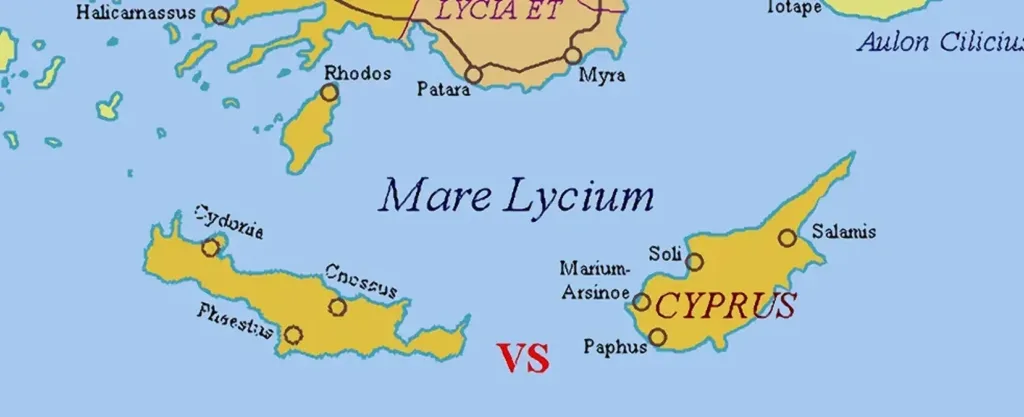
In brief: choose Cyprus if you want to combine several towns, beaches and relatively short transfers in one trip. Choose Crete if you want a large island with long driving routes, strongly differentiated regions and enough variety for repeat visits. Both have Mediterranean climates, but they are in different countries and pose different transport choices.
The central difference
| Factor | Cyprus | Crete |
|---|---|---|
| Status | Independent EU member state | Greek island and administrative region |
| Trip scale | More compact; several bases can be linked by relatively short transfers | Larger; east and west are best treated as separate planning zones |
| Driving side | Left | Right |
| Typical mix | Towns, beaches, archaeology and Troodos in one itinerary | Gorges, long road trips, cities and highly varied coasts |
Beaches and sea
In Cyprus it is easy to base a holiday around the east coast, Larnaka, Limassol or Pafos. The shores vary between sandy coves, urban beaches, rocky sections and snorkelling areas. Start with our guide to Cyprus beaches.
Crete is much larger, so the coast changes more from region to region. A famous beach at the opposite end of the island may require a dedicated day or a change of base. Use regional information on Greece’s official tourism portal instead of trying to cover the whole island from one hotel.
Getting around
Cyprus has two principal international airports, Larnaka and Pafos. Their locations and onward transport are compared in our airport guide. Travel between major cities is possible without a car, but a car or organised excursion makes many villages and natural sites easier to reach.
Crete’s principal air gateways are in different parts of the island, and east-to-west distances are substantial. When hiring a car, compare realistic journey times on mountain and local roads rather than straight-line kilometres. Check document and travel rules on the official Your Europe travel portal for your citizenship and itinerary.
How to decide
- Short first trip: Cyprus is often simpler because it is more compact.
- Long road trip: Crete offers more distinct regions, but needs more time.
- No car: choose a specific resort and check local transport in advance on either island.
- Late autumn or early spring: compare the actual forecast, wind, sea temperature and seasonal services, not only climate averages.
- History and nature: both work well; the deciding factor is which places fit a realistic route.
Before you book
Compare the flight, transfer to the accommodation, need for a car, parking conditions and your two or three priority sights. Prices, timetables and seasonal openings change, so this guide deliberately avoids fixed fares. Check current Cyprus information on Visit Cyprus and Crete information on Visit Greece.
Compare trips with the same format
The comparison loses its meaning if you’re looking at a single resort in Cyprus but the whole island in Crete. Choose the area, duration, type of accommodation and whether a car is required for each option. Then compare the sea, walks, history and logistics under the same conditions.
Both islands are too large to ‘tour in a day’. Long journeys cut into the time you have at your destination. For a week’s stay, it’s usually better to focus on one part of the island and make a few well-planned trips there than to try to tick off a list of distant attractions from various guidebooks.
Write down three must-see experiences and two things you’d prefer to avoid. If a quiet sandy beach is important to you, a specific cove matters more than the name of the island. If you’re after archaeology and mountain trails, assess the distances and how willing you are to drive.
The sea and beaches: no one-size-fits-all label
The shores of both islands feature varying seabed types, depths, wind conditions and infrastructure. ‘Crete’s beaches’ and ‘Cyprus’ beaches’ are too broad a category for a family to decide on. Check the specific beach, access, lifeguards, shade, parking and opening season.
The open coast is more heavily influenced by wind and waves, whilst a sheltered bay may be calmer but busier. A photograph taken on a windless day does not reflect typical conditions. Check the map, the beach’s orientation and current conditions.
Air temperature does not guarantee comfortable water. For the early or late season, have an alternative to the beach. Don’t plan your entire holiday around daily swimming if cool water makes the trip unappealing.
Cars and life without them
In Cyprus, they drive on the left; in Crete, on the right. This affects your willingness to hire a car, but does not determine the quality of your trip. Compare transfer options, parking, routes to your chosen destinations and the possibility of spending a few days on foot.
If you’re travelling without a car, choose accommodation near the beach, a shop and a proper bus stop, and check the last bus time. Don’t rely on the island’s public transport network as you would the underground. An organised excursion might cover one distant destination, but it doesn’t make remote accommodation convenient for everyday use.
If you’re travelling by car, minimise the number of times you change accommodation and don’t underestimate the mountain roads. Travel time doesn’t include stops, winding roads or searching for a parking space. One long drive every other day is easier to cope with than a daily rush.
Final decision in a single evening
First, compare available flights for your dates, including luggage and transfers. Then select two areas on each island and check accommodation of a similar standard. Only then should you compare the total cost and itinerary.
Put together realistic plans for three days: a typical day, a windy day, and a hot or rainy day. A destination where all three remain appealing is a better fit for your style. This is more useful than a list of pros without specific dates.
If the results are close, a simpler itinerary or flexible cancellation terms may tip the balance. There’s no one-size-fits-all winner. A good choice is one where the must-do activities are accessible without excessive travelling and there’s a reasonable buffer day.
Official sources
Information checked on 8 September 2026. Recheck transport and seasonal services immediately before travelling.
Crete is safer, the food is around ten times better, plenty of beaches with amazing white sand, amazing views if you want to go up in the mountains, biggest gorge in Europe – I can keep going.
After you saw them both once you’ll never go back to Cyprus. Better try other places like Zakynthos or even Sardinia. Or Malta.
Cyprus is great. But you have to rent a car to really explore the island. High mountains, beautiful forests, vineyards, lookouts, nature trails (Aphrodite trail, Artemis trail,…), wonderful nature (Akamas, Cape Greco, Troodos),
fantastic monasteries (Kykkos, Stavrovouni,…), lot of nice churches which are still open, historic UNESCO churches and great beaches (Konnos, Nissi or Lara with turtles).
Important is to arrive out of season when there is less people.
It is great combination of nature, beaches, historical sites and spirituality. At the same time there is the best weather in all Europe and you may get air tickets for great prices.
We have been to Cyprus twice and going there again in few days.
I like the Cyprus much more than Malta – dense population, less nature, less mountains in Malta.
Sardenga is on my wish list 🙂