Cypriot coffee: how it’s made, sweetness and ordering
How to order Cypriot coffee, choose the sweetness and make it at home. A small cup, coffee grounds, kaimaki and the everyday culture of the kafenio.
Checked: 3 October 2026.
What is known as Cypriot coffee
Cypriot coffee is a drink made from very finely ground beans, which are brewed with water in a small vessel and served unfiltered. To order a typical local cup, ask for ‘kypriakos kafes’ and specify how sweet you’d like it straight away: sugar is added during preparation, not after serving.
This is a distinct method of preparation, so the word ‘Cypriot’ on the menu does not mean that the coffee trees were grown on the island. The brand, blend and degree of roast may vary. To get to know the tradition, it’s better to ask about the grind and preparation than to look for the one ‘authentic’ brand.
Similar practices are also found in neighbouring countries. In a Cypriot coffee shop, it is natural to use the local name, without any dispute as to who the drink belongs to. Names in different languages reflect the cultural context, but do not in themselves prove the exclusive origin of a recipe.
Inside the small cup
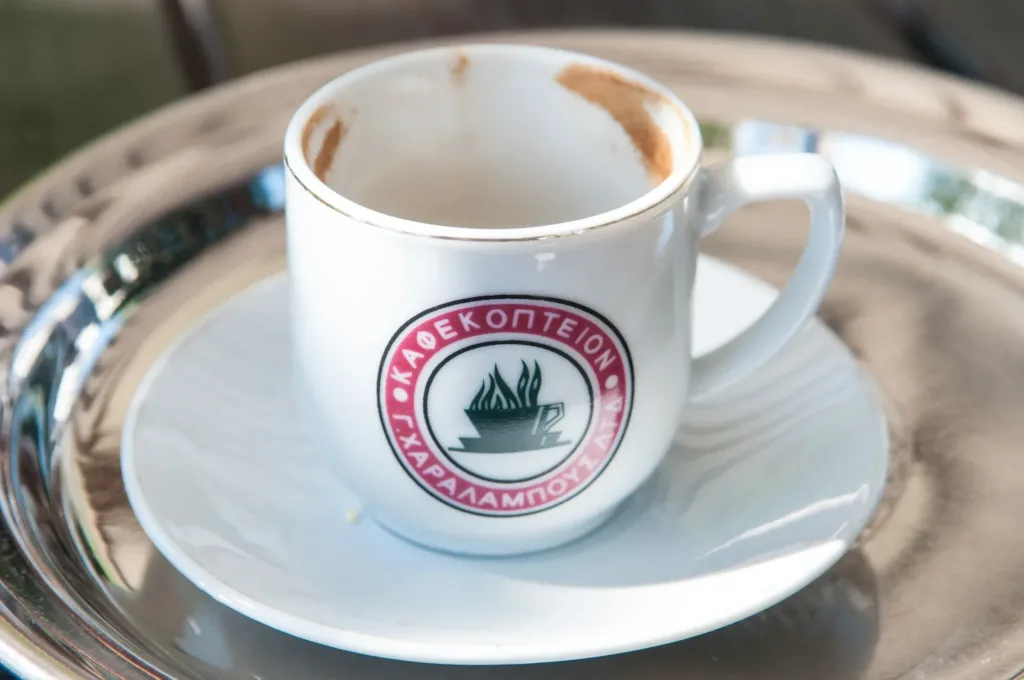
Coffee grounds remain in the cup: this is to be expected after brewing, and is not a sign that the cup has not been washed properly. Let the drink stand for a while, then drink it in small sips. When a thick sediment remains at the bottom, there is no need to finish it off; a large mug is not essential for this method either.
There is sometimes a thin layer of foam on the surface, known as ‘kaimaki’. This depends on how it is prepared and served with care. It is not worth using this as the sole measure of quality: first assess the aroma and flavour, and do not generalise your impression of a particular cup to all the island’s coffee shops.
Water is often served alongside coffee. It helps to refresh the palate and is handy in hot weather; there is no need to regard the strict rule of ‘only before’ or ‘only after’ as a mandatory point of etiquette. The sweetness of the coffee and the amount of water are separate matters, and you can ask for water separately.
Words for ordering
‘Sketos’ means coffee without sugar, ‘metrios’ means moderately sweet, and ‘glykos’ means sweet. These three words help you explain your preference even in a brief conversation. If you have strong views on sugar, simply add the phrase ‘no sugar’ to your order: a clear clarification is more important than flawless pronunciation.
Don’t expect the same number of spoonfuls in every café: cup sizes, blends and baristas’ preferences vary. When ordering for the first time, specify how sweet you’d like it; when ordering again, explain what you’d like to change. This makes it easier to find your preferred flavour than comparing general categories as if they were exact recipes.
For a group, specify the sweetness of each cup separately. Several servings may be prepared separately, which affects the waiting time. If you want a larger serving or a takeaway coffee, clarify how it will be served in advance: a larger volume does not always mean another identical small cup.
Preparing coffee at home
To make it at home, you’ll need finely ground coffee, water and a small vessel with a long handle, often called a ‘jezva’ or ‘tzisves’ in Cyprus. First, measure out a single serving per cup, mix the ingredients together and heat them up. It is best to start with the amount recommended on the packet of your chosen blend, then adjust to taste.
The main practical task is to keep an eye on the heat and the rise of the foam, rather than leaving the mixture to boil for a long time unattended. A small container fills up quickly. Remove it from the heat in good time and pour it carefully: the drink and the metal remain hot, even if the volume seems small.
Coarse grinds for filter coffee and instant coffee will not produce the same result. When buying a packet, check the grind size, date and storage instructions. Once opened, keep the packet sealed according to the manufacturer’s instructions; strong odours from neighbouring food items can spoil your first impression of the cup.
The coffee shop as a place to socialise
A traditional coffee house, or ‘kafenio’, is interesting for more than just the drink: here you can observe the everyday rhythm of the village or neighbourhood. Choose a free table, say hello and ask where you can place your order. There’s no need to pretend to be part of a conversation you’re not familiar with just to feel like a guest.
People sitting at the tables may be chatting, reading or playing games. Before taking a photograph, ask permission from anyone who will be in the shot; this is particularly important for close-up portraits. Visiting a café does not turn a group of strangers into a tourist attraction, nor does it give you the right to move their belongings around just to get a photo.
Older descriptions of kafenia sometimes portray them as exclusively male-only clubs. Modern establishments and their patrons vary; this image cannot be taken as the norm for every venue. Focus on the actual atmosphere, service and local guidance, rather than on a stereotype about all Cypriots.
How is this different from other orders?
Espresso is prepared differently and is not usually served with coffee grounds at the bottom. Frappés and other cold drinks are not simply cold versions of the same cezve coffee either. If there are lots of different names on the menu, ask how they are prepared: this makes it easier to choose a drink, rather than judging solely by temperature or size.
Milk and other additions should not automatically be assumed to be included in a standard order. Ask whether it is possible to add them or choose a different coffee. The same applies to decaffeinated coffee: check with the café whether a particular blend is available, rather than assuming it is based on the name of the drink.
The price depends on the establishment and how it is served. Before ordering, take a look at the menu, especially if a dessert or a few extras are offered with your coffee. There is no set amount for tips or a standard length of time to spend at the table; use the clear bill and the specific establishment’s terms as a guide, without treating your visit as a mandatory ritual.
How to give it a go and what to bear in mind
Start with a single small cup of coffee with your preferred sweetness and allow time for the grounds to settle. This allows you to appreciate the texture and flavour without comparing it to a large serving of your usual coffee. Next time, change just one factor: the sweetness, the blend or the place where the drink is prepared.
As a souvenir, it’s better to buy a labelled packet of the right grind than to try to recreate the drink based on the appearance of the beans. Make a note of the name of the blend you like and the shop assistant’s recommendations. Don’t automatically promise your guests at home that they’ll get the same flavour: water, brewing temperature and the accuracy of the portion also affect the result.
This article describes the drink and the cultural tradition surrounding it, rather than its effects on health. It does not specify a safe number of cups and is not a substitute for personalised advice from a specialist. Please check with the coffee shop for opening hours, availability of the blend and prices; it is perfectly possible to experience the culture without actually tasting it.
Continue planning
- Cypriot cuisine: dishes, ingredients and seasonality
- 10 Cypriot dishes: a practical guide to local cuisine
- A leisurely 3-, 7- and 10-day itinerary around Cyprus
Official sources
Cypriot coffee in a small cup · Photo: Michal Osmenda from Brussels, Belgium · CC BY 2.0 · converted to WebP and resized.
.jpg)