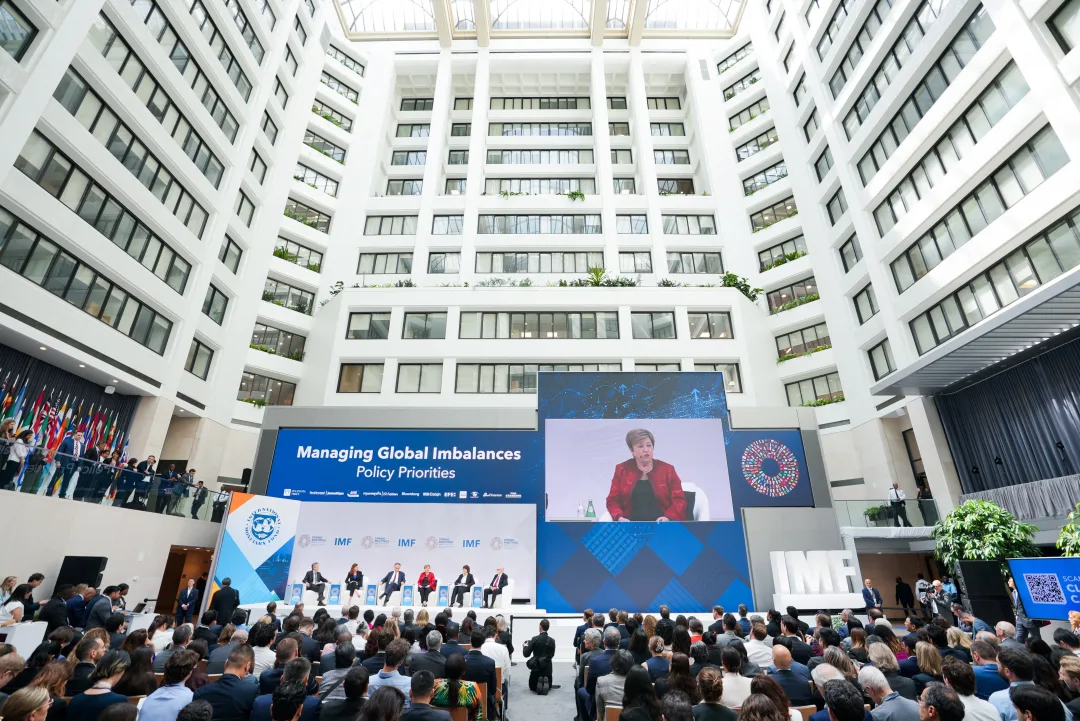
Washington, United States. The International Monetary Fund expects at least a dozen countries to seek new loan programs to cope with surging energy prices and supply chain disruptions linked to the Middle East war, its managing director said Wednesday.
Loan demand estimate and ongoing talks
IMF Managing Director Kristalina Georgieva said disruptions from the war could trigger new demand for $20 billion to $50 billion in financial support, including new loans and augmentations of some of the IMF’s 39 existing country financing programs.
She did not name specific countries that have requested aid, but said several sub-Saharan African nations were seeking help. Georgieva said the IMF was not currently discussing an augmentation of Egypt’s $8 billion loan program despite the war’s impact on its economy.
IMF strategy chief Christian Mummsen said the estimate was developed before the start of the spring meetings and could be expanded after bilateral meetings with finance officials from member countries. Mummsen said the assessment was preliminary and that the list of countries seeking help would likely expand beyond a dozen.
Supply chain concerns and fuel use
Georgieva warned of deepening supply disruptions from the closure of the Strait of Hormuz even if the conflict ends quickly, and urged countries to take measures to reduce fuel usage.
She said she was concerned about a physical breakdown of supply chains, especially for Asian countries dependent on oil, natural gas, naphtha, helium, fertilizer and other inputs from Gulf countries. Georgieva said disruptions would not end immediately even if the war stops, citing shipping delays and warning that the impact in the weeks ahead could deepen.
Outlook risks and growth scenarios
The IMF has said global economic conditions are worsening beyond those that informed its updated World Economic Outlook released Tuesday, which included a 3.1% global growth forecast for 2026 based on a swift end to the conflict and a drop in oil prices.
IMF chief economist Pierre-Olivier Gourinchas said the global economy was drifting toward a more adverse scenario in which 2026 growth falls to 2.5% and oil prices average about $100 a barrel for the year.
What measures do you think governments should prioritize to manage higher energy costs and supply chain disruptions?