Agriculture Minister inspects Pissouri landslide damage as local bodies seek an immediate solution
Christos Senekis toured the landslide-hit community of Pissouri, where the Limassol EOA agreed to build a sewage and rainwater drainage system once the required approval is secured.
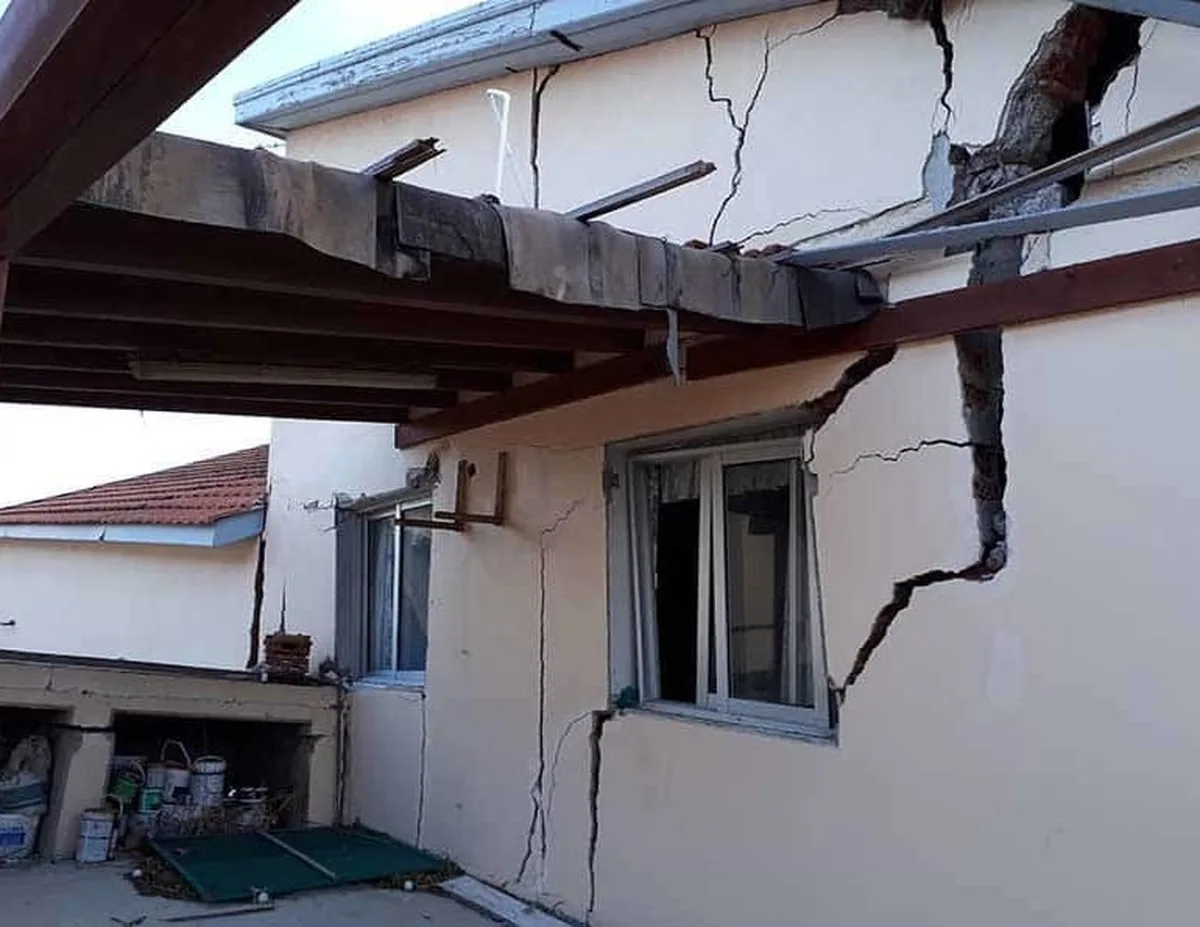
Pissouri, Cyprus. Agriculture Minister Christos Senekis carried out an on-site inspection of the landslides affecting the community of Pissouri on Friday, while local authorities called for an immediate solution because the problem, although less intense, has not gone away.
Tour and meeting
The Limassol self-government organisation (EOA) announced on Monday that the minister was accompanied by its chairman Yiannis Tsouloftas, Limassol district governor Michalis Michail, interior ministry permanent secretary Elikkos Elia and other officials. They were shown damage to homes caused by land slippage over many years.
The tour was followed by a meeting at the Pissouri community council. There, community leader Panayiotis Mavroudis handed over a memorandum listing requests, among them a sewage system. It would help stabilise the ground, since less water would seep into the subsoil.
The Limassol EOA agreed to take on construction of a sewage and rainwater drainage system once the project receives the necessary approval.
Scientific study
A scientific study on the situation in Pissouri was published in June 2025. Land slippage had made many residences unsafe to live in, and eviction notices were issued. The Geological Survey Department carried out the study with help from scientists and experts from other countries, and it was described as the most thorough so far.
At that time, Mavroudis said the problem, which has lasted a decade, stems from water building up in the subsoil in parts of the village. In 2024, the village was added to the World Tourism Organisation’s list of the Top Tourist Villages of the world.
Damage since 2012
Since 2012, property owners in the Limnes area of Pissouri have seen large cracks open in the interior and exterior walls of their homes, leaving them uninhabitable. Swimming pools have been destroyed, and roads have buckled and split.
Pavements, footpaths, retaining walls, drains, water pipes and other infrastructure have suffered severe damage.
Earlier drilling found gypsum at a depth of 60 metres and also detected a void at 100 metres. This deepened suspicions that the phenomenon is much more extensive than previously believed.
This news item was generated automatically by Cyprus Inform from publicly available materials. Report an error →