Christodoulides and Erhurman hold back on Cyprus problem details before UN envoy Holguin’s visit
President Nikos Christodoulides said he and Turkish Cypriot leader Tufan Erhurman agreed to withhold substantive comments and a joint statement before UN envoy Maria Angela Holguin arrives on Thursday.
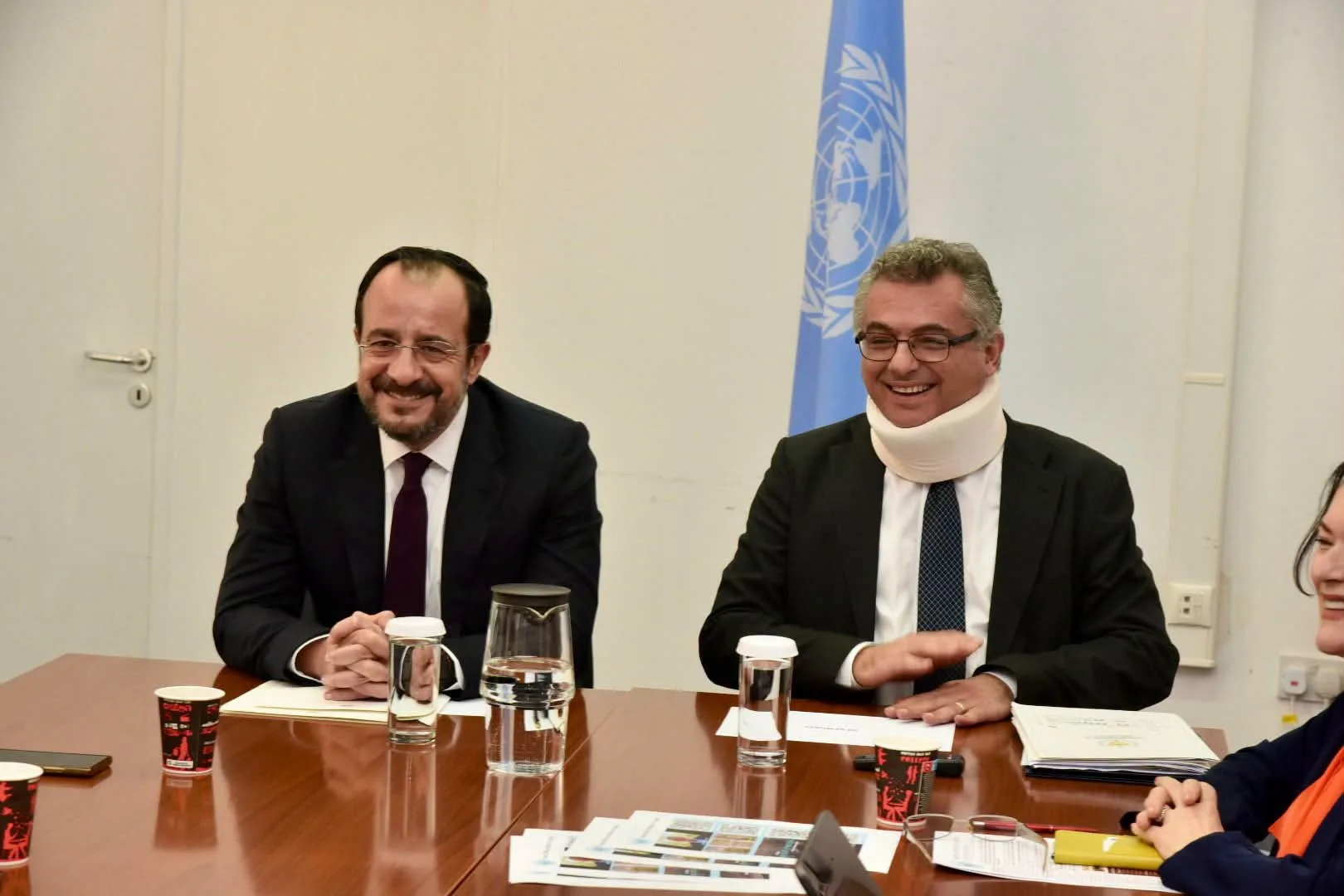
Nicosia, Cyprus. President Nikos Christodoulides said on Tuesday that he and Turkish Cypriot leader Tufan Erhurman have agreed to make “no further statements” on the substance of the Cyprus problem until United Nations envoy Maria Angela Holguin arrives. He spoke after meeting Erhurman in the morning.
Talks to continue during the envoy’s stay
Christodoulides described the exchange with Erhurman as very good and constructive, and said it will carry on while Holguin is in Cyprus. The two leaders also agreed that no joint statement would be released.
Holguin is due on the island on Thursday. She will meet Erhurman and Christodoulides separately, and a tripartite meeting with both leaders is planned for the end of her stay.
Meetings with committees
After their one-on-one meeting, the two leaders met the bicommunal technical committees on cultural heritage and on youth, as well as the civil society steering committee. Christodoulides called these meetings constructive and said committee members put forward a range of views and suggestions. He added that he and Erhurman will discuss those suggestions in the period ahead.
Varosha and Famagusta proposal
Before Tuesday’s meeting, Christodoulides had underlined that his proposal is “mutually beneficial”. The plan would open the sealed-off area of Varosha and resettle it under United Nations administration, and would open the port of Famagusta under European Union control.
He said the proposal creates a positive situation for both sides and works as a practical test of whether they are genuinely committed to progress. In his view, that means taking bold confidence-building measures, which also send a strong message to society as a whole.
Erhurman said last week that he had rejected the proposal. He regretted that it did not amount to the entry into force of the European Union’s direct trade regulation. He acknowledged that it is not the regulation taking effect, but said direct trade would begin because the port would be under EU control.
This news item was generated automatically by Cyprus Inform from publicly available materials. Report an error →