Erimi excavations reveal circular buildings and evidence of prehistoric crafts
Buildings, pottery and craft materials found at Erimi Pamboula offer evidence of daily life in Cyprus around 5,000 years ago, according to the Department of Antiquities.
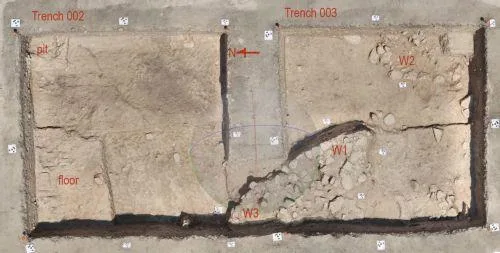
Erimi, Cyprus. Excavations at Erimi Pamboula have revealed buildings, pottery and tools that shed light on daily life and work around 5,000 years ago, according to the Department of Antiquities. The pottery places the settlement in the Middle to early Late Chalcolithic period, between 3500 and 2900/2800 BC.
Buildings and outdoor working area
The department reported that archaeologists had exposed nearly all of one circular building. A wall nearby, earlier interpreted as belonging to a rectangular structure, now appears to form part of another circular building.
An extensive open-air area contained surviving plaster flooring, a mortar made of stone, a hearth constructed from plaster, pottery sherds and animal bones. Archaeologists also identified traces of ochre processing, adding evidence of work involving natural pigments.
Tools and ornament production
Other discoveries reported by the department included pottery predominantly of the Red-on-White type, stone tools made by chipping and grinding, objects of picrolite, lumps of clay, seashells and bones mostly belonging to deer.
The picrolite finds comprised pebbles, incomplete artefacts and beads, suggesting that materials for ornaments were being worked at the site.
Second excavation season
The National and Kapodistrian University of Athens carried out the second season of excavations, directed by professor Giorgos Vavouranakis.
This news item was generated automatically by Cyprus Inform from publicly available materials. Report an error →