Greece, Cyprus, Egypt, Bahrain, UAE and EU reject Turkish-Libyan maritime memorandum at UN
Greek Foreign Minister Giorgos Gerapetritis delivered a joint statement at UN headquarters rejecting the 2019 Turkish-Libyan maritime memorandum after its approval by the Libyan House of Representatives.
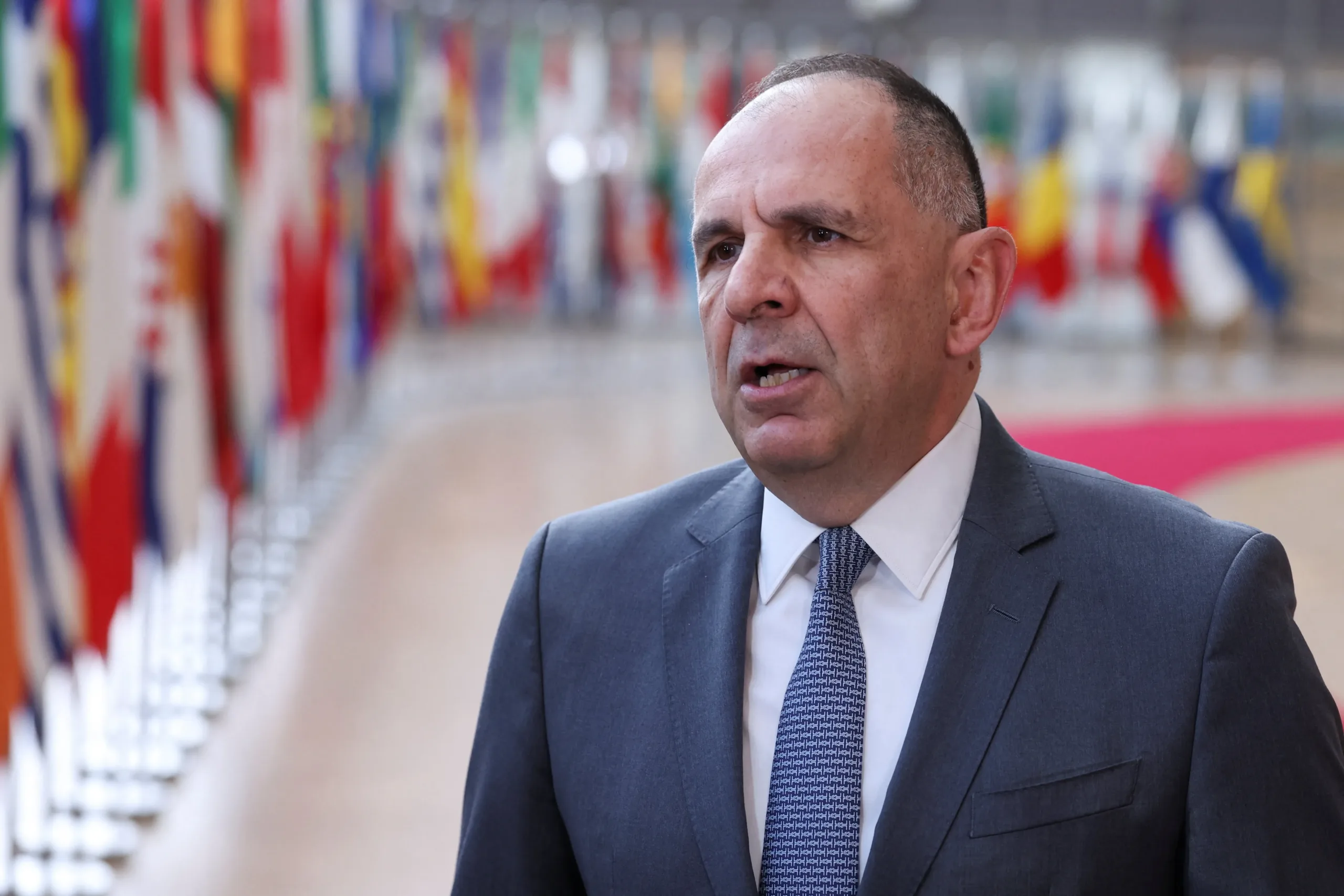
New York, United States. Greek Foreign Minister Giorgos Gerapetritis delivered a joint statement at UN headquarters on Monday on behalf of Greece, Bahrain, Cyprus, Egypt, the United Arab Emirates and the European Union, rejecting the 2019 Turkish-Libyan memorandum on maritime jurisdictions in the Mediterranean Sea. He said the document “remains null and void, contrary to international law and cannot serve as a lawful basis for maritime delimitation or produce legal consequences for third states”.
Reaction to the Libyan parliament’s decision
The statement responds to the recent move by the Libyan House of Representatives to approve the memorandum. The signatories said this step causes serious concern about security and stability across the region. They added that it also points to a wider challenge facing the international legal order: making sure that arbitrary arrangements between two states do not weaken established international rules or harm the rights of other states.
Legal framework for maritime delimitation
Gerapetritis said the legal basis for delimiting maritime zones is international law, in particular the UN Convention on the Law of the Sea (UNCLOS) and customary international law. According to the statement, these rules are vital for predictability, legal certainty and peaceful relations between states. He warned that tolerating bilateral deals that ignore the applicable rules and principles would create a dangerous precedent and erode both the international legal order and the principles behind the peaceful settlement of disputes.
The statement describes the so-called Turkish-Libyan Memorandum as incompatible with these basic principles. It says the document ignores geographical realities and the maritime entitlements of all the coastal states concerned, including the entitlements of islands under UNCLOS. The later vote by the Libyan House of Representatives, it adds, changes nothing about this legal situation.
Support for Libya’s unity and Greek-Libyan talks
The participants renewed their commitment to bringing Libya’s institutions back together and to a united, prosperous Libya. They stressed that a stable Libya that takes an active part in regional cooperation is essential for peace and security throughout the Mediterranean. In their view, Libya’s political transition and its relations with neighbouring states should rest on respect for international law and good-neighbourly relations.
The statement also mentions bilateral talks between Greece and Libya on maritime delimitation. It says Athens has taken part in them in good faith and in line with international law, and remains ready to continue.
Gerapetritis concluded: “Respect for international law is essential to regional stability and a rules-based international order.”
This news item was generated automatically by Cyprus Inform from publicly available materials. Report an error →