Israel Election Exit Polls Show Deadlock Between Netanyahu and Eisenkot Blocs
Exit polls in Israel's wartime election put Gadi Eisenkot's opposition bloc level with Benjamin Netanyahu's camp, with neither side reaching a majority in the Knesset.
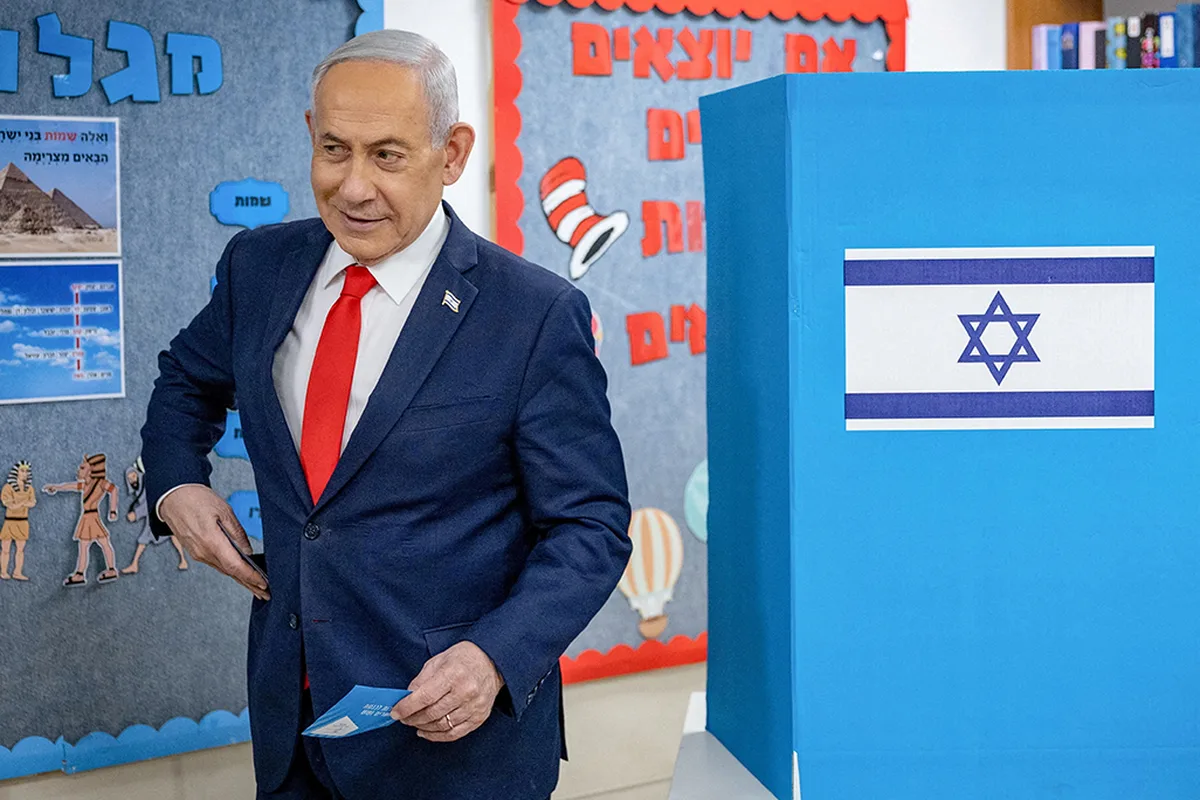
Jerusalem, Israel. Exit polls on Tuesday showed Israel’s wartime election locked in a deadlock, with Gadi Eisenkot’s opposition bloc and Prime Minister Benjamin Netanyahu’s camp roughly even. Neither side appeared to have a clear route to forming a government.
Exit poll projections
The projections suggested a setback for Netanyahu’s coalition and the prospect of weeks of political bargaining over a new government. The stalemate could allow Netanyahu, the country’s longest-serving prime minister, to stay in office in a caretaker role while coalition talks continue.
Related: Israel Faces Coalition Deadlock After Inconclusive Election, With Several Scenarios Open
 RelatedIsrael Faces Coalition Deadlock After Inconclusive Election, With Several Scenarios Open
Kan 11 and Channel 13 showed the two blocs level. Channel 12 reported that the camp led by Netanyahu’s Likud party gained a slight lead over Eisenkot as the night went on. No broadcaster gave either side the 61 seats required for a majority in the 120-seat Knesset.
The far-right religious parties led by Itamar Ben-Gvir and Bezalel Smotrich were projected to win 13 seats between them within Netanyahu’s bloc.
Reactions from the two leaders
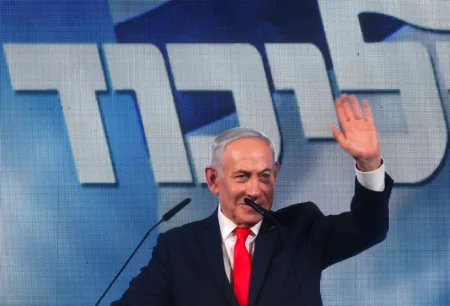
Speaking to Likud supporters in Jerusalem after 3 a.m. (0100 GMT), Netanyahu called for a strong right-wing government. He pointed to Israel’s military successes and described the moment as a historic opportunity to “remove the Iranian threat.”
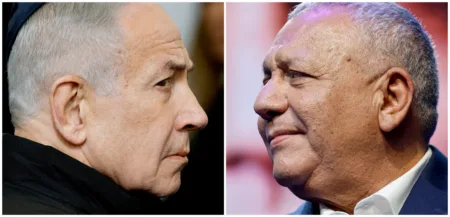
Earlier, Eisenkot addressed cheering supporters in Tel Aviv. He said voters had rejected Netanyahu’s tenure as prime minister and argued that a worthy leader would accept that verdict and announce his departure from politics.
Role of Arab parties
Arab parties that belong to neither main bloc could hold the balance of power. Eisenkot, a former military chief who leads the Yashar party, has all but excluded forming a government with them, which complicates his path to power.
Turnout and next steps
Israel’s Central Elections Committee put voter turnout at 77.7%. That is the highest figure in more than two decades and about 7 percentage points above the 2022 level.
Final results may take several days. Israel’s fragmented political system gives smaller parties the potential to act as kingmakers, and coalition talks after earlier elections have lasted weeks or even months. If neither bloc manages to form a government, a new election could be required, an outcome Eisenkot opposes. He said: “In an election with such a high turnout it would be a mistake to go to another election.”
Related news


This news item was generated automatically by Cyprus Inform from publicly available materials. Report an error →

Write a comment