Smyrna catastrophe and the refuge offered to Asia Minor survivors in Cyprus
The destruction of Smyrna in 1922 displaced thousands, with about 2,400 Asia Minor refugees reaching Cyprus by year’s end.
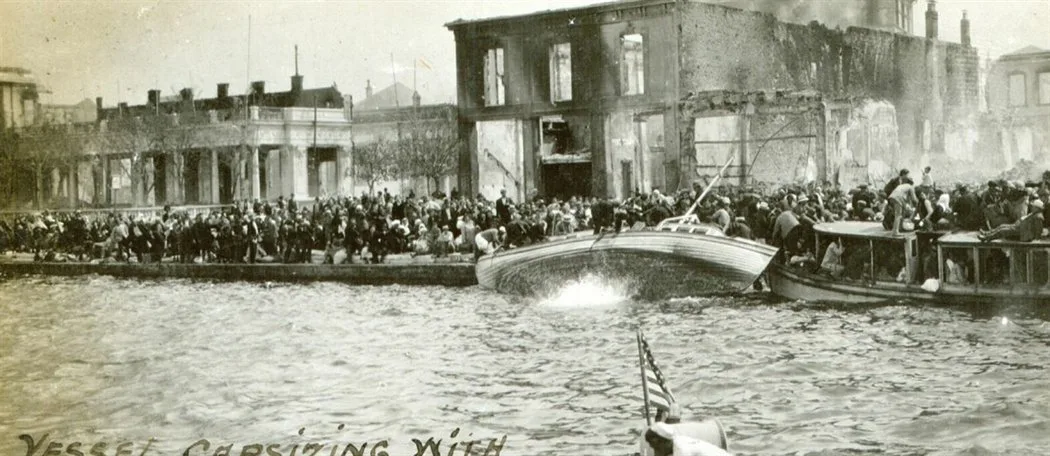
Smyrna, Turkey. The destruction of Smyrna in 1922 left tens of thousands dead and forced hundreds of thousands of survivors into exile, including refugees who later reached Cyprus. The catastrophe also marked the life and work of poet Giorgos Seferis, who had left the city with his family in 1914.
Destruction of Smyrna
Seferis, who was born in Smyrna, left the city eight years before its destruction but remained deeply affected by its fate. In one of his poems, he depicted a horseman bringing fire, a household torn apart and a world with no guilty parties or witnesses, only smoke.
Thousands of Smyrniots were killed, burned alive with their homes, schools and churches, drowned, or died from disease aboard ships and in refugee camps.
On August 27, 1922, irregular Turkish cavalry entered Smyrna, followed by regular Turkish troops. Metropolitan Chrysostomos was handed to a mob and killed.
By August 31, following violence, massacres, destruction and looting, the city was engulfed in fire. About 50,000 people were reported dead, while 70,000 homes and shops were burned and hundreds of other buildings damaged. The 30-metre bell tower of the Metropolitan Church of Agia Fotini was destroyed with dynamite.
Greek newspaper headlines reported Smyrna in flames, the killing of the Metropolitan and Christians being slaughtered in the streets. Later editions accused France and Italy of celebrating during the carnage and condemned Britain for failing to intervene.
Flight and rescue operations
In the following days, thousands of Greek and Armenian men of military age were forced on death marches into the interior. Most surviving residents, estimated at 300,000 people, reached Greece as refugees.
Their evacuation was aided by Asa Kent Jennings, an American Methodist pastor. With Greek authorities having already left the city and Allied ships in the harbour refusing to take Ottoman Christian subjects aboard, Jennings contacted Kemal to gain time and pressed the Greek government to send ships to evacuate refugees.
Seferis later raised questions in his poetry about whether humanity is defined by those who protest, those who withdraw into private concerns, or those who help sustain life.
Refugees arrive in Cyprus
By the end of 1922, about 2,400 refugees from Asia Minor had arrived in Cyprus.
The French steamer Pierre Loti departed Smyrna on September 11, 1922, carrying 327 Greek refugees as well as French nationals travelling to Marseille. Refugees paid 16 pounds each to board, in addition to payments made to crew members.
One refugee arrived without fingers after Turkish captors had cut them off following a robbery. Cypriots who had previously lived comfortably in Smyrna arrived aboard the British steamer King George, described at the time as half-naked and without possessions.
Survivors said killings continued as people fled. Reports described decomposing bodies in Smyrna’s streets and fears of epidemic disease.
A Cypriot eyewitness writing in Foni tis Kyprou reported that thousands of Greek and Armenian women and children died as fire swept through schools and churches where they had sought shelter. He also recorded assaults against women in temples and institutions, and mothers throwing themselves into the sea while holding their infants.
Beginning again
Contemporary press reports also noted the efforts of survivors to rebuild their lives. Among the arrivals was pianist Miss Aigyptiadou, who had studied and performed in Italy, America and Smyrna and planned to settle in Cyprus as a teacher.
Panionios discus thrower Dimitris Karabatis, holder of the Pan-Hellenic record in the event, was also among the refugees.
On September 14, 1922, Archbishop Kyrillos III issued an encyclical expressing grief and sympathy for the “martyred Hellenism of Ionia”. He called for memorial services and ordered collections of money, food and clothing for destitute, sick and homeless victims.
This news item was generated automatically by Cyprus Inform from publicly available materials. Report an error →