Writer links Trump’s behaviour to professor’s theory of rising sociopathy
An account of an interview with a University of Michigan professor presents an evolutionary theory of sociopathy and applies it to Donald Trump’s behaviour.
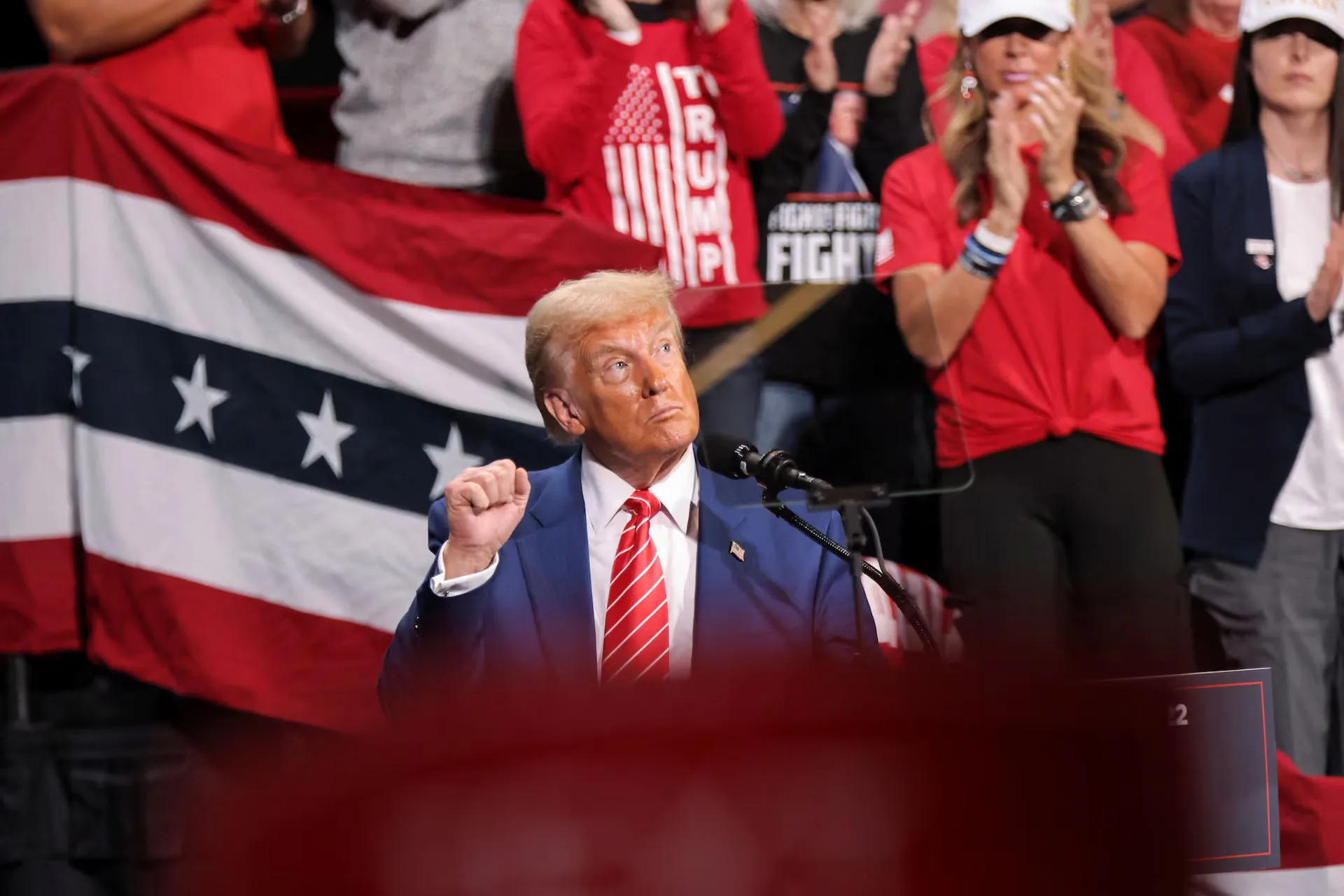
Washington, United States. A writer has drawn on a past interview with an unnamed University of Michigan professor to examine Donald Trump’s behaviour through an evolutionary account of sociopathy. The writer identifies impulsiveness and the capacity to believe one’s own falsehoods as the traits of immediate concern.
A question about changing behaviour
The writer recounts interviewing the professor long ago about subjects the writer considered unremarkable, without now remembering his name. Having nearly abandoned the conversation, the writer unexpectedly prompted a revealing response by asking whether significant human behaviours had changed over recent centuries.
The professor replied: “No, but the sociopaths are multiplying.”
According to the account, the answer renewed the writer’s interest because the writer was then dealing with someone at work whom they regarded as a sociopath. The writer describes sociopathy and psychopathy as terms covering substantially similar behaviour, with potentially greater severity in psychopathy.
In the explanation that followed, the professor described a typical sociopath as a man with higher-than-average intelligence, strong manipulative abilities and no empathy, despite being capable of imitating it. Such a person, according to the account, frequently lies convincingly, immediately accepts those falsehoods as true, and nevertheless remains able to revise them when necessary. The profile also included charisma and numerous children with different women.
An evolutionary explanation
The professor’s argument concerned the small bands in which humans lived throughout their history until the most recent few thousand years. In ordinary circumstances, he suggested, a sociopath offered little benefit to such a group but also had limited scope to cause harm: everyone knew the person and understood that he was untrustworthy.
The account describes early human bands as firmly egalitarian, lacking hierarchies and restraining or expelling anyone seeking leadership. It adds that the small number of hunter-gatherer communities remaining today retain that pattern.
A disaster, however, could change the group’s needs, the professor argued. If half its members died and those remaining were overwhelmed and unable to act, a charismatic figure without scruples might unite the survivors and guide them towards safety, victory or another necessary outcome.
The professor estimated that sociopaths traditionally accounted for around 1 per cent of the population, but said their prevalence had increased to about 3 per cent of men. The writer considered his explanation for that increase plausible.
Modern anonymity and the link to Trump
Under the professor’s theory, sociopaths were less damaging when surrounded by people who had known them from childhood. Societies numbering millions made them more difficult to identify, allowing them to hurt others and then encounter new people unaware of their behaviour. He also argued that they reproduced rapidly.
The writer applies that framework to Trump, characterising him as displaying a broad range of sociopathic traits. In particular, the writer highlights what they regard as his impulsiveness, illustrated by the phrase “let’s attack Iran!”, alongside an alleged ability to accept his own lies as true immediately after voicing them.
This news item was generated automatically by Cyprus Inform from publicly available materials. Report an error →