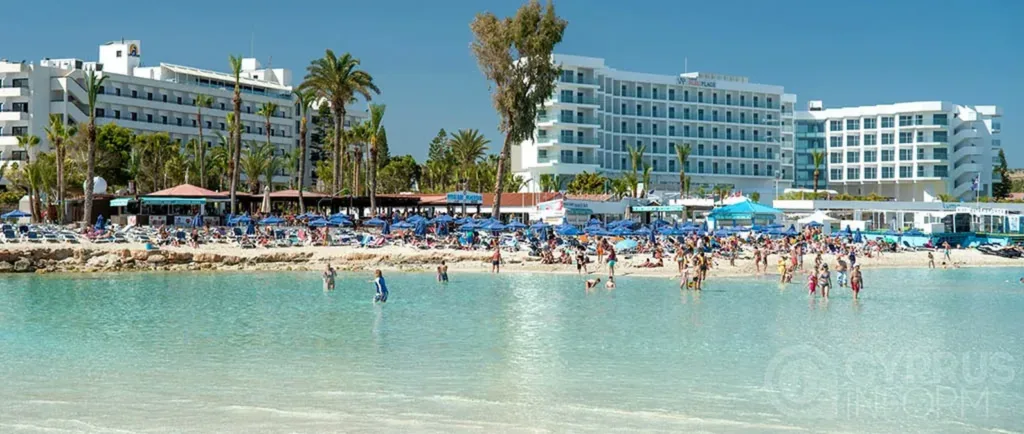
Nissi Beach in Ayia Napa: a practical guide to the beach
About the place
Checked: 13 September 2026.
Where is Nissi Beach and what makes it special
Nissi Beach is situated approximately 3 kilometres west of the centre of Ayia Napa. The official description refers to a sandy stretch about 600 metres long, a sheltered bay and shallow water. The name comes from a small islet opposite the shore, which, under the right conditions, can be reached via a shallow sandbar.
You’ll often see both ‘Nissi Beach’ and ‘Nissi Bay’ used interchangeably, whilst the official tourism portal has separate pages for each beach. When choosing a car park, bus stop or meeting point, check the location and name on the local signpost. The popular term ‘Nissi’ used in hotel adverts does not necessarily mean access to the specific section you are looking for.
This page only answers questions about Nissi: access, facilities, water conditions and planning your visit. A comparison of areas and dozens of beaches is included in the general guide to the Cyprus coastline. This breakdown helps you choose a specific location and avoids repeating the same ratings across different URLs.
When to visit and what to expect from the atmosphere
In summer, Nissi is one of Ayia Napa’s most popular beaches. Music, water activities and large crowds can be part of the day, particularly near the commercial areas. For a more peaceful swim, opt for the early morning, a weekday or the off-peak season, but check in advance which facilities are open.
The shallow water makes it easy to get in, but the sun heats it up more quickly, whilst the wind and waves can affect water clarity. At certain times of year, natural plant matter accumulates near the shore. Its presence should not automatically be considered pollution; current water quality and the safe swimming area are assessed according to official notices and flags on site.
In winter, the beach remains an open natural space, but sun loungers, water activities, cafés and the lifeguard station may operate differently or not at all. Do not assume that the summer description applies to every month. Even for a short walk, take into account the wind, wet walkways and early sunsets.
How to get there and where to park
From Ayia Napa and neighbouring resorts, you can travel by bus, taxi or car. Route numbers, timetables and stops vary by season, so check with the operator on the day of your trip. On the return journey, choose your stop in advance: in the evening, crowds and heavy traffic increase waiting times.
Parking spaces near popular entrances fill up early. Do not leave your car on the hard shoulder, pavement, in a disabled parking space without permission, or in front of a service entrance. If the nearest car park is full, use a legal alternative and assess the walking distance to the beach before unloading your belongings.
From a remote car park, you may have to walk in the heat and over uneven surfaces. For families with a pushchair or people with reduced mobility, it’s not just the distance that matters, but also kerbs, gradients and whether the route is continuous. Book a taxi to a specific entrance and save the geotag for the return journey.
Facilities, lifeguards and costs
The official website lists toilets, changing rooms, sun loungers, parasols, restaurants and kiosks, as well as water sports. Availability, prices and payment methods are subject to change. Access to the public beach and the hire of commercial equipment are two different matters; do not assume that the hotel package is the only way to get to the water.
Lifeguards trained in first aid are on duty seasonally, usually from April to October, but check the noticeboard for exact times. Outside of duty hours, swimming requires particular caution. Locate the lifeguard post before entering the water and show your child who to contact if the group gets separated.
Bring water, sun protection and suitable footwear, even if you plan to hire a parasol. Keep your valuables safe and check the locker rules with the specific operator. Do not leave your documents and mobile phone unattended on a towel just because the beach is part of a well-known resort.
Beach accessibility
The official list of accessible beaches for 2025 classifies Nissi as partially accessible. This means that certain elements of the access route are provided, but independent access to the sea cannot be guaranteed for every visitor. Before your trip, check the condition of the walkway, the availability of toilets, parking and assistance.
Check that there is a continuous path from your transport to your chosen spot on the sand. The access path may not extend all the way to the water’s edge, and the distance to the accessible area may vary when the beach is busy. For wheelchairs, walking frames or pushchairs, the width, manoeuvrability and firm surface are important factors, not just the accessibility icon on a general map.
If you require a water access system or a floating chair, do not assume these will be available simply because they are available at other beaches in Ayia Napa. Request confirmation from the local authority or lifeguard service for your specific date. If suitable equipment is not available, choose a fully accessible beach from the latest official list.
Safety in the water and near the islet
Shallow water does not eliminate the risk. Keep a child under supervision within immediate reach, and remember that an inflatable float is no substitute for a life jacket or an adult. Follow the flags and instructions of the lifeguards; the wind can quickly carry a lightweight ring away from the shore, even in a bay that is visually sheltered.
Do not head for the islet simply because you can see other people there. The depth, current and surface conditions of the crossing vary, and wet rocks can be slippery. Assess the return route before setting off; do not carry a child across unstable ground and do not climb onto the edge of a cliff just to take a photograph.
Stay clear of areas used by boats and water sports; enter only via the designated access point. If you feel unwell or an accident occurs, call a lifeguard; in an emergency, dial 112. When calling, mention Nissi Beach, the nearest entrance or establishment, and send your geotag.
Visit checklist
Check the weather forecast, transport options and seasonal services the day before. Choose your arrival time, a legal parking spot and a nearby alternative beach. If your group requires a quiet spot, accessible facilities or guaranteed shade, confirm these separately: Nissi’s popularity alone does not guarantee these conditions.
Once there, first read the information board, locate the flag and the lifeguard post, check the water entry point, and only then set up your spot. Do not block the walkway or obstruct the space around accessibility facilities. If the beach is overcrowded or the waves are dangerous, calmly switch to your backup plan.
Before leaving, check your belongings and your return route, particularly the last bus. For the new season, check official sources again: facilities and opening hours are subject to change. It’s best to compare Nissi with other beaches using a general beach guide, whilst keeping this page focused on a single clear purpose.
Continue planning
- Cyprus beaches: compare the coasts
- Cyprus with children: trip planning
- Cyprus news: sea conditions and access