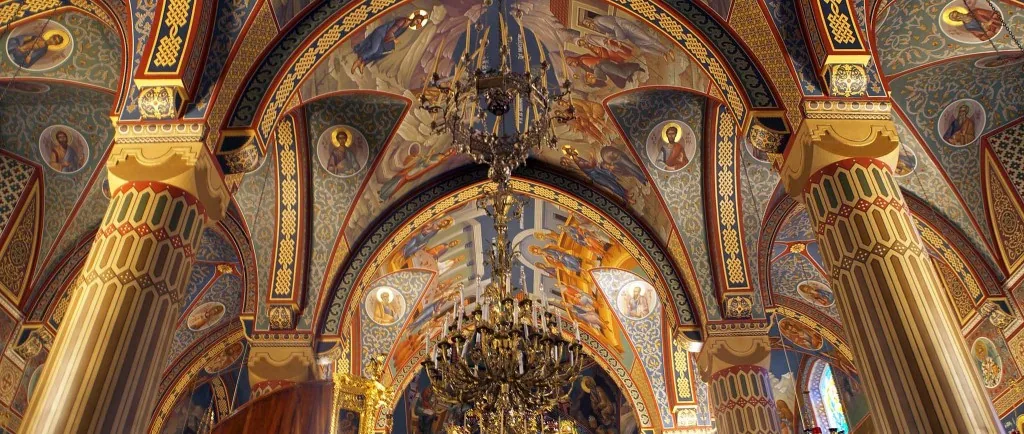
A pilgrimage to the monasteries of Troodos (Troodos)
Description
Historically, a large number of Cyprus’s Christian holy sites have come to be concentrated in the Troodos mountain range.
This is because, during the Iconoclastic period in the 8th and early 9th centuries, devout Christians, seeking to save icons and other Christian artefacts from destruction, hid them in the Troodos Mountains. Later, when the persecutions ceased, churches and monasteries were built on the sites where the sacred objects had been found.
No pilgrimage to Cyprus can be considered complete without a visit to the Troodos Mountains and the most famous monastery, the Monastery of the Most Holy Mother of God of Kykkos.
As many of the Troodos monasteries are built near holy springs, do not forget to bring a container for water. Also, prepare in advance notes requesting prayers ‘for health’ or ‘for the repose of the soul’, which you can leave at the monasteries (preferably written in Latin script: ‘For the health of’; ‘For the repose of’), as this will save you from the hustle and bustle inside the churches.
Be prepared for the fact that the mountain route won’t be easy; the road winds its way through the hills, and many people get travel sick.
Let’s set off!
We set off at 08:30 from Limassol.
It’s fascinating to watch the changing landscape 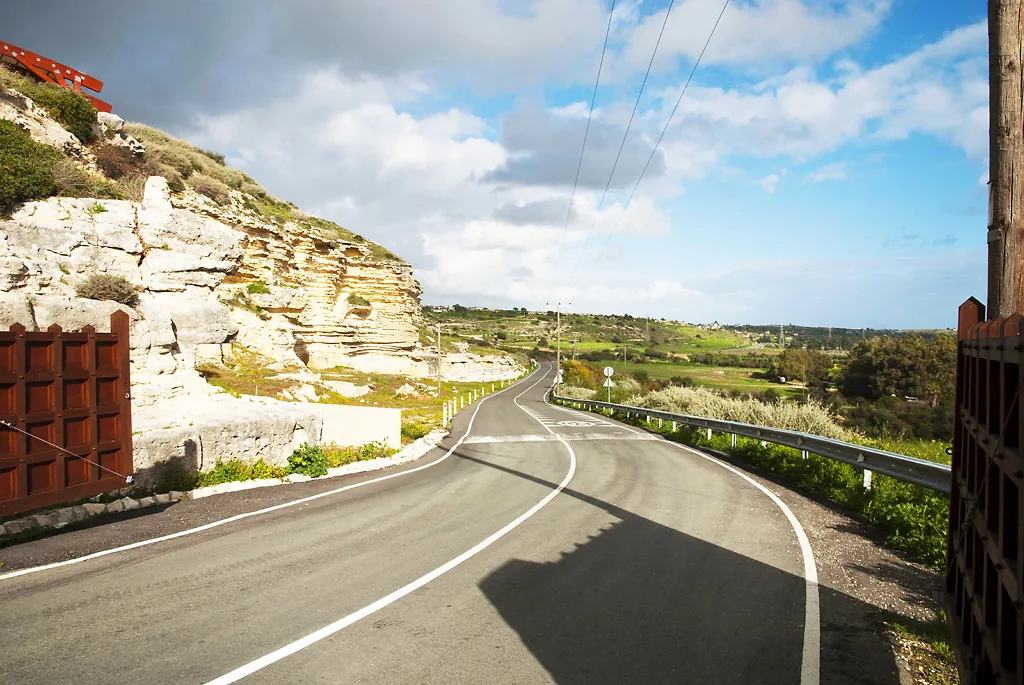 through the bus window as we climb higher into the mountains. It’s hard to imagine today that the island was once 70 per cent covered in forests, with many rivers and marshes. After copper deposits were discovered in Cyprus, the forests were ruthlessly cut down.
Nowadays, the island’s flora and fauna differ greatly from their original state, but endemic plants and animals that exist only in Cyprus have nevertheless survived. A large number of them are found in the Troodos Mountains.
One of the most famous members of Cyprus’s fauna is the mountain sheep – the mouflon. The population is on the brink of extinction, and the animal is listed in the Red List. An image of the mouflon can be seen on the Cypriot 2-cent coin.
On the banks of the Ha Potami River
 So, listening to the tour guide, we drove to the village of Omodos. There are several theories as to the origin of the village’s name. According to one of them, the name derives from the Cypriot word ‘modos’, which translates as ‘take your time’ – meaning ‘carefully’ or ‘cautiously’.
It is also known from ancient documents that in the Middle Ages, a feudal lord named Homodeus lived in this region, and the village was probably named in his honour. In Omodos stands the Monastery of the Holy Cross (Timios Stavros), which is where we headed.
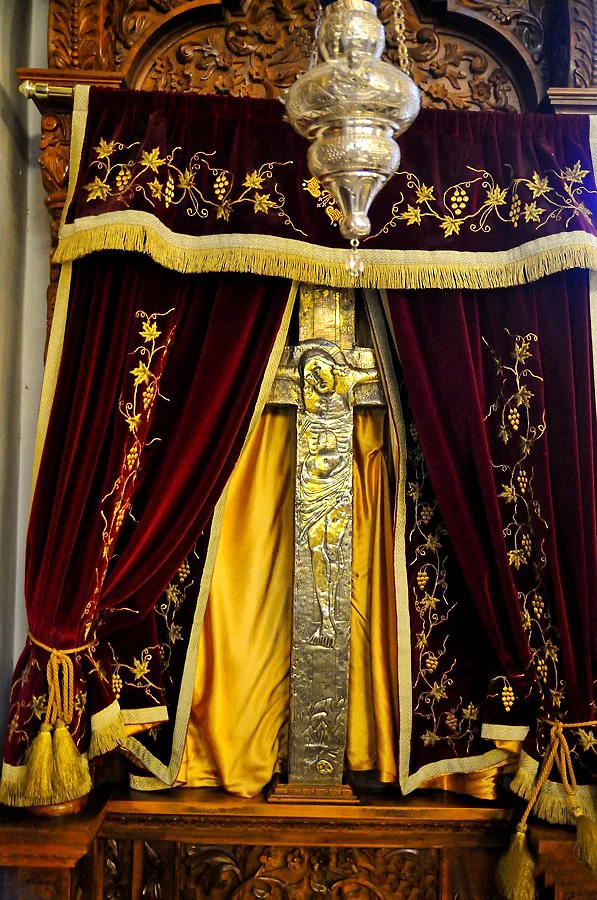
The monastery is one of the oldest on the island. The exact date of its foundation is unknown, but according to accounts, the monastery already existed when Saint Helena brought a fragment of the Life-Giving Cross and a fragment of Christ’s Holy Bonds to the island in 327. Today, the relics are housed in a silver cross-shaped setting, placed beneath a special canopy on the church’s iconostasis. Only a monk from the monastery can open the golden ‘doors’ in the centre of the cross and allow visitors to venerate the relics.
After praying, we left the monastery and walked deeper into the village. This blessed place is known not only for its monastery but also for its magnificent vineyards. And even though we found ourselves in hospitable Omodos during Great Lent, it was impossible to resist tasting the local wines! For those who might disapprove, I would remind you that pilgrims are allowed certain dispensations from fasting.
Trooditissa Monastery
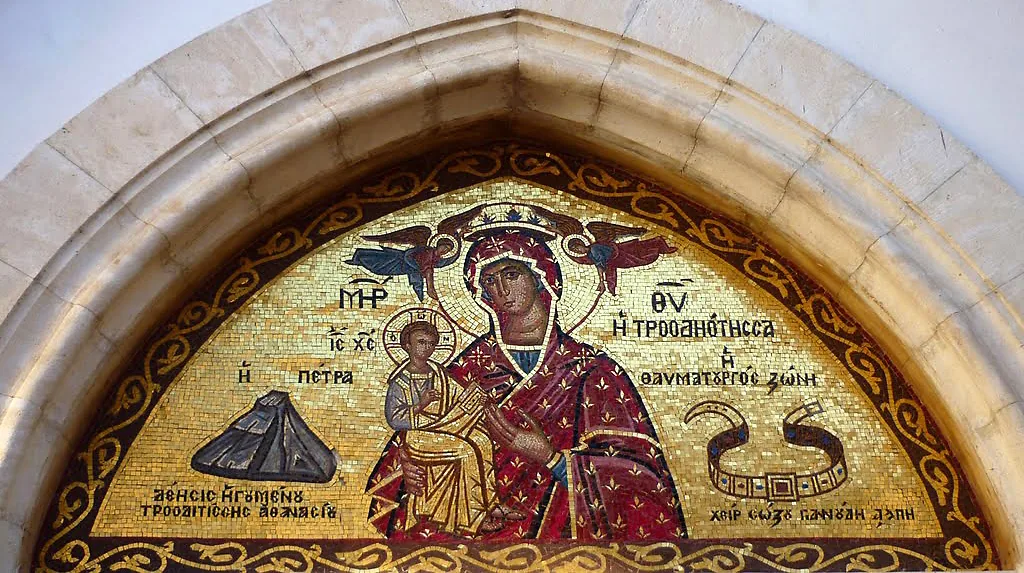 Our next stop was the Trooditissa Monastery, a men’s monastery founded in the 12th century. It is worth noting that tour groups are not admitted to this monastery, but its doors are always open to pilgrims.
Here, I would like to say a few words about the differences between Cypriot and Russian church traditions. Women are permitted to enter all churches and monasteries in Cyprus with their heads uncovered. It came as a revelation to me that this is not a concession, but an established tradition. Christians and Muslims have lived side by side in Cyprus for a long time. To distinguish Orthodox women from Muslim women who might happen to enter the church, Orthodox women were permitted to remove their headscarves whilst inside.
But let us return to the Trooditissa Monastery, whose main shrine is the miraculous icon of the Most Holy Mother of God of Troodos, which, according to tradition, was painted by Saint Luke the Apostle and Evangelist. In 1799, the renowned craftsman Ioannis Kornaros crafted a silver frame for the icon.
There is an old story associated with the icon. A devout Christian woman prayed fervently before the Troodos Icon of the Mother of God for the gift of a child. And a miracle occurred: the woman became pregnant. In gratitude, she offered her precious gold-embellished belt as a gift to the icon.
It is still kept at the monastery. Moreover, a brief prayer service for the blessing of children has developed at the monastery, during which this belt is placed upon the woman. Since then, the Trooditissa Monastery has become a place of pilgrimage for married couples who are unable to have children.
The monastery leaves a lasting impression. It is so austere and majestic in its tranquillity, living in seclusion far from the hustle and bustle of the world.
The Shrine of Prodromos
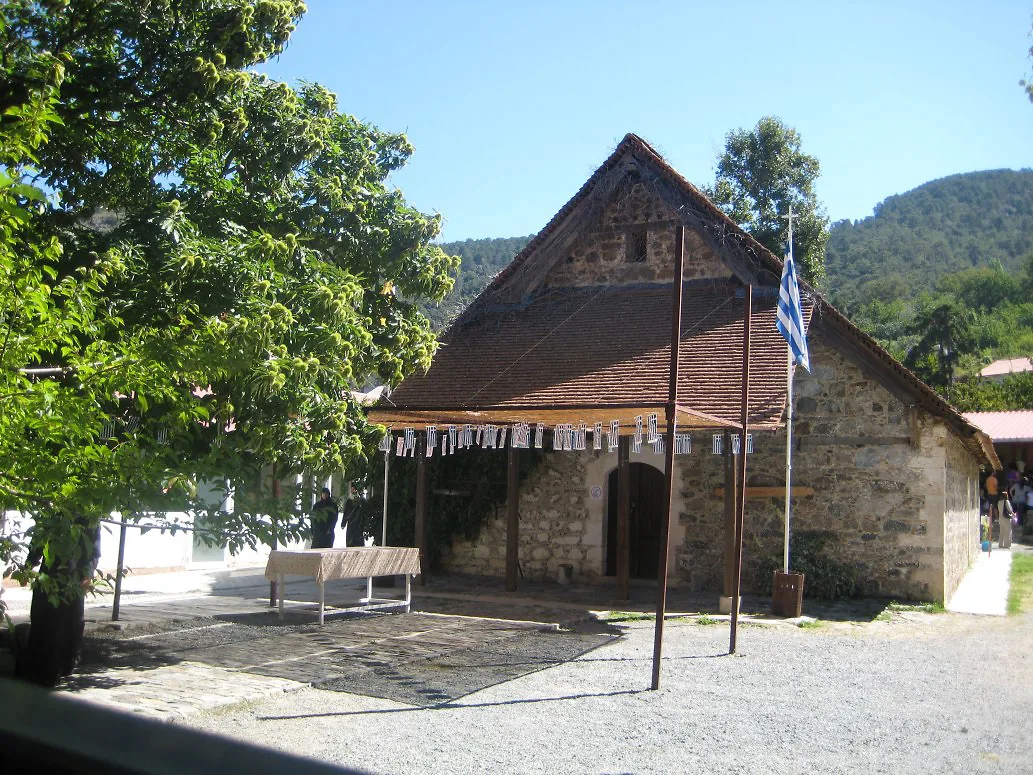 Having drawn water from the holy spring and bidden farewell to the monastery, we set off further up the road towards the village of Prodromos. It is situated at an altitude of 1,300–1,540 metres above sea level and is the highest-altitude village in Cyprus.
Prodromos is one of the names of Saint John the Baptist – ‘the Forerunner’, translated from Greek. Just 2 km short of the village stands the Monastery of the Most Holy Mother of God of Trikoukia.
‘Trikoukkia’ translates from the Cypriot dialect as ‘hawthorn with three seeds’. The exact date of the monastery’s foundation is unknown. It is believed to have been founded during the Byzantine era.
The medieval chronicler Leonidos Macheras wrote in his works that the Monastery of the Most Holy Mother of God of Trikoukkia was established in Cyprus before the famous Kykkos Monastery.
The monastery experienced its heyday during the period of Frankish rule. The monastery’s main relic, the miraculous icon of the Most Holy Mother of God of Trikoukkotissa, was lost during the reign of the Ottoman Empire. During the period of British colonisation, the monastery grounds were used as a flower nursery. It was not until the 1990s that life at the monastery was revived, thanks to Mother Christofi.
Today, the convent is dedicated to work and prayer, strictly observing the traditions of Orthodox monasticism.
The Kikkos Monastery of the Most Holy Theotokos
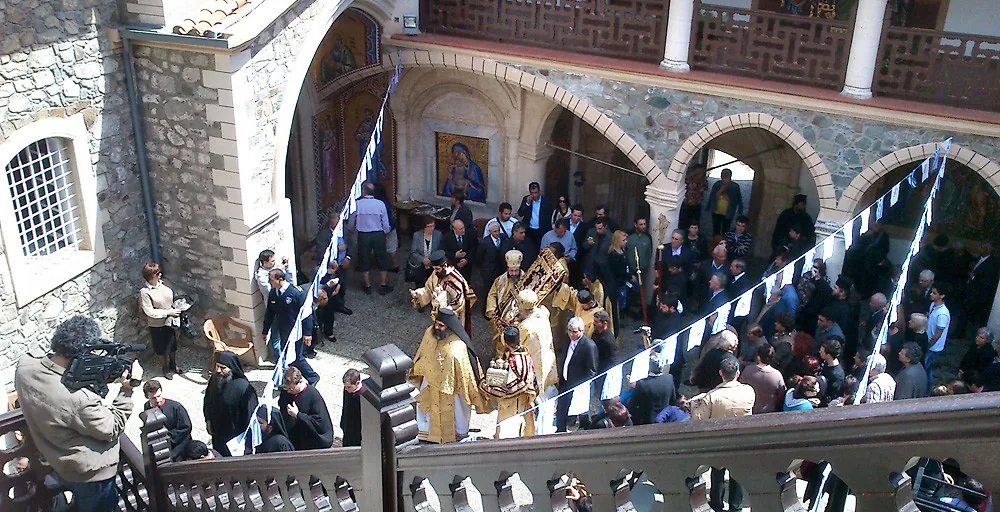 Leaving the monastery, we set off for the island’s most famous monastery, the Holy Kikkos Monastery, whose main shrine is the miraculous icon of the Mother of God, painted by the Evangelist Luke. In addition to the icon, the monastery houses more than 40 relics of various saints.
The room containing the relics is not always open, but I hope you’ll be as lucky as we were and will be able to experience the indescribable grace of this holy place.
The history of the monastery is covered in all the guidebooks on Cyprus, so I won’t go over it again, but I’d like to recall my visit to the monastery last year.
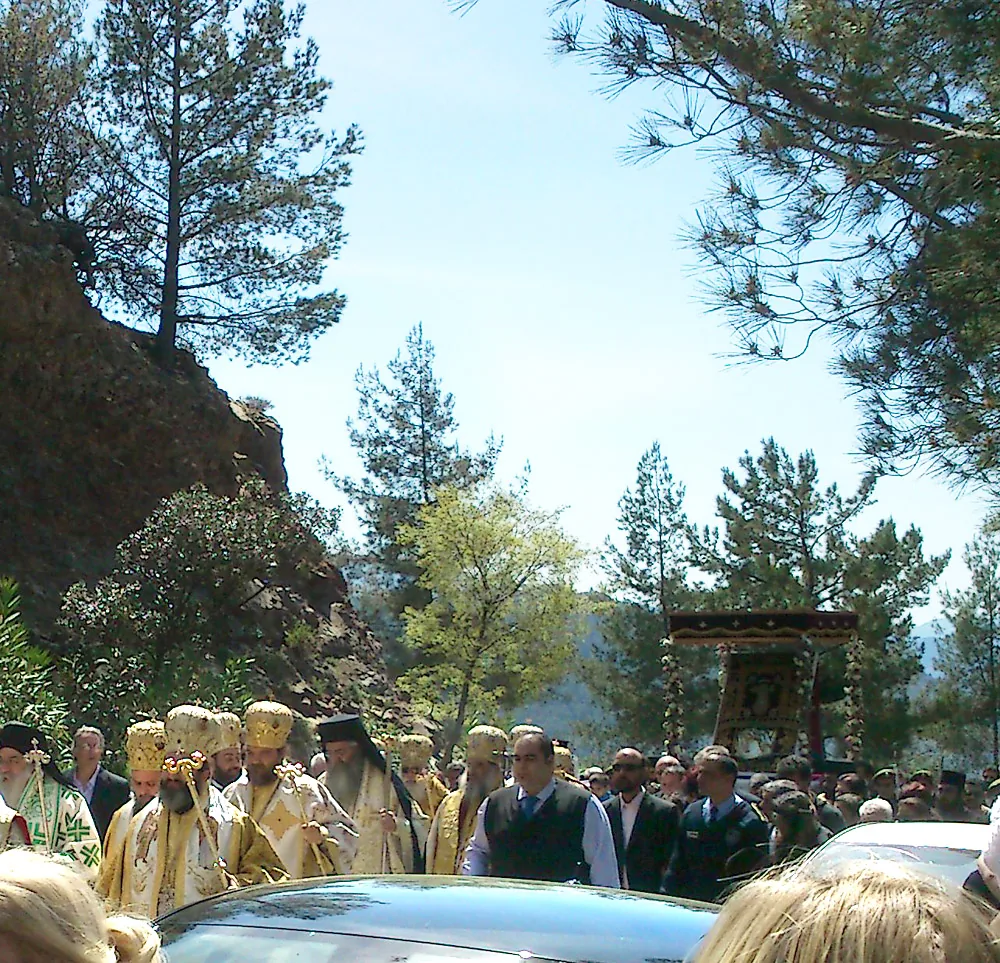
At that time – in the run-up to Easter – the monastery’s clergy carried out the icon of the Most Holy Mother of God and held a procession with it. It must be said that this was done for the first time in many decades, to ward off the calamity looming over Cyprus as a result of the economic crisis. On that day, a great many believers gathered at the monastery walls, and anyone who wished was given the opportunity to pass beneath the icon.
On the way home…
As the day drew to a close, we set off on our return journey. Descending the slopes of the Troodos Mountains, we had the chance to see the peak of the mountain range known as Olympus.
Cypriots also use the name Chionistra, derived from the Greek word χιόνι, meaning ‘snow’. In winter, there really is snow here, and many people go skiing.
We returned to Limassol at around 6 o’clock in the evening. It had been a long day, packed with an incredible journey: from the rocky seashore and a typical resort hotel, we were transported, as if in the blink of an eye, found ourselves on green mountain slopes with mighty trees, where, in picturesque gorges, ancient monasteries—like precious diamonds—are hidden away, bringing grace and peace of mind.
Tour price:
- adults €40;
- children €20.
To book the tour, you can fill in the online booking form, email us at: Show email"> or call us on: +357 25 310 692.


