Paphos. A pilgrimage to the west
Description
Do you dream of learning more about the early days of Christianity on earth, and experiencing the living history of the birth of Christ’s Church?
We invite you to take a trip to the western part of the island and visit the ancient capital of Cyprus – the city of Paphos.
If you’re planning to travel to Paphos from Limassol, the journey will be anything but tiring. The 68 km distance along the motorway can be covered in about 50 minutes. But if you’re planning to travel to Paphos from Larnaca, or even further afield from Ayia Napa and Protaras, you’ll feel like true pilgrims, travelling a long way to pay homage to Christian holy sites.
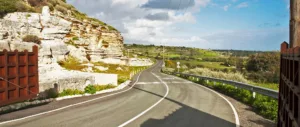
We set off from Limassol to Paphos via the ‘old’ road, which connected the two cities long before the motorway was built. Once again, I was convinced that choosing the right travelling companions is very important when travelling. When you set off on a pilgrimage with fellow believers, and led by a priest no less, the journey takes on a deeper spiritual meaning.
To ‘St Nicholas the Cat’
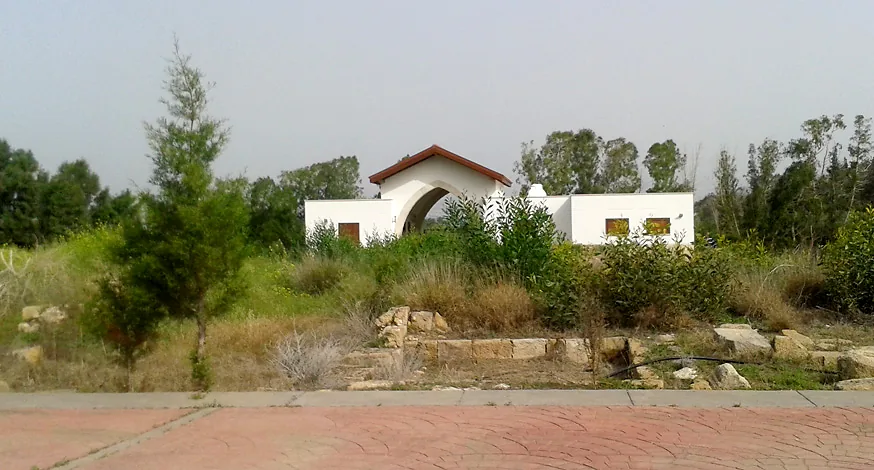 Turning off the motorway, we headed left into the heart of the Akrotiri Peninsula, past the British military bases and the salt lake. Just as in Larnaca, flamingos flock to this lake in winter, but as photography is prohibited near the British bases, you won’t come across any aimlessly wandering tourists here.
What delighted the eye most on this stretch of the journey were the citrus plantations on either side of the road, laden with oranges, mandarins and interesting citrus hybrids. Malaysian acacia also blooms in March, which is very reminiscent of our mimosa.
The first stop on our journey was the Monastery of St Nicholas, popularly known as the ‘Cat Monastery’. The monastery is associated with a story about how Saint Helena, the mother of Emperor Constantine the Great, ordered a ship carrying a thousand cats to be sent to Cyprus to combat snakes.
At the beginning of the 4th century, Cyprus suffered a severe drought, which led to a sharp increase in the number of reptiles. The army of cats that was sent literally saved the local population, hunting snakes just as they would mice. The monks who looked after the cats built a small church on the peninsula.
A monastery was 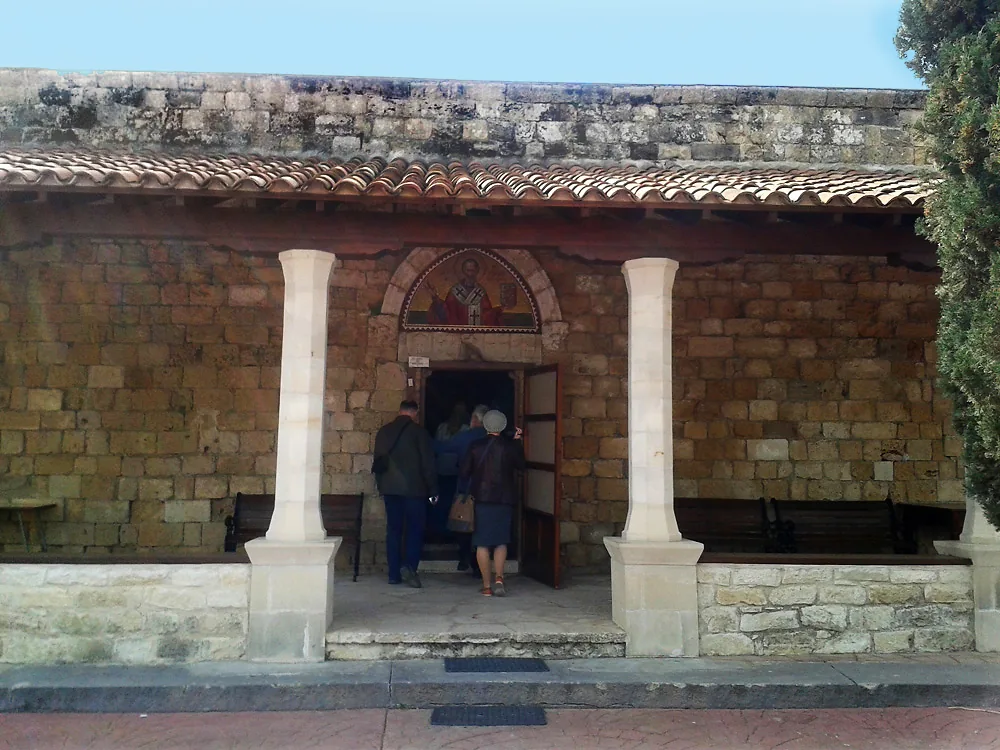 subsequently established there. As fishing and seafaring were the main occupations in this area, and cats had accompanied sailors on ships since ancient times, the church was consecrated in honour of Saint Nicholas the Wonderworker, the patron saint of seafarers.
Nowadays, there are just four nuns and over a hundred cats at the monastery. To be honest, the cats looked rather pitiful, and the nuns admit that they find it difficult to feed such a large number of four-legged friends, who are constantly multiplying.
I really regretted not having brought some cat food with me as a donation – the cats and the nuns would have been grateful.
Panagia Vounarkotissa
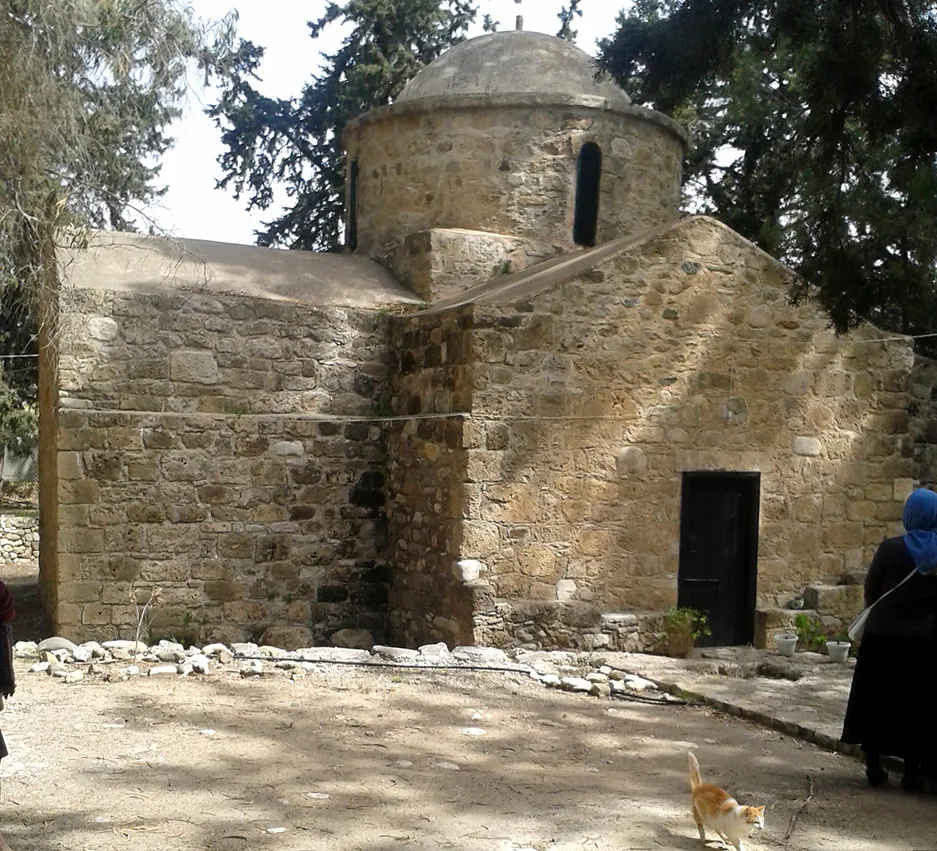
After driving just a short distance to the village of Kolossi, we stopped by a front garden. A stone-paved path led to a wooden canopy. There, beneath the canopy in a cave, lies one of Cyprus’s oldest churches — Panagia Vounarkotissa (Our Lady of the Cave).
During the persecutions of Christians, Christian relics were hidden in the cave. Since then, rumour has it, miracles of healing have taken place here.
Many local residents come to this cave church to ask the Mother of God for the health of their children and loved ones. Some bring wax figurines.
After praying in the church together with the priest, we moved on to the village of Achelia, on the outskirts of which stands a 13th-century Byzantine church dedicated to Saint Theodosius, ‘the chief of all lives’. Fragments of 13th–14th-century frescoes have been preserved in this small church.
A short distance further on, and we finally arrived in Paphos.
 What is so special about this city, and what attracts tourists and pilgrims to it?
It is interesting to note that Paphos is the only Cypriot city that has not changed its name throughout the island’s history.
Today, Paphos is home to the largest concentration of historical sites, ranging from antiquity through to the Frankish and later periods. This enabled the city to be named the European Capital of Culture in 2017.
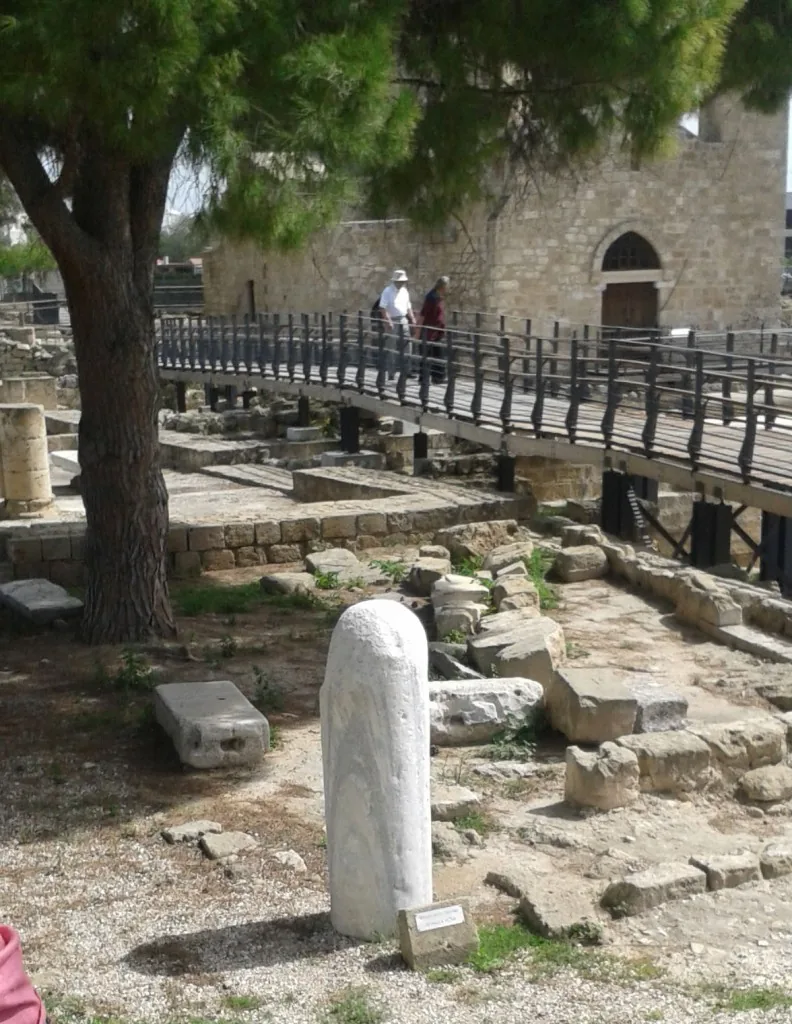
We walked down from the area known as Pano Paphos (Upper Paphos), along Danais Street to the historic centre of the ancient capital and, upon alighting from the bus, made our way to one of the most important Christian shrines — the Column of St Paul, where the saint was flogged.
The tour guide told us that the column was originally located elsewhere and was moved to the archaeological park much later.
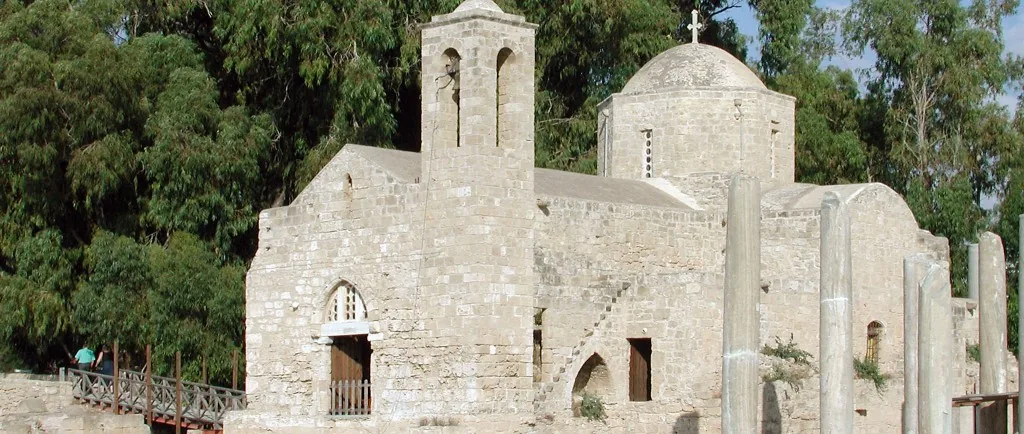
As well as the column, the park contains the ruins of the Christian church of Panagia Chrysopolitissa (4th–10th centuries), Roman and Byzantine mosaics, and the 15th-century church of St Kyriakos.
The walkways, which were built following the Pope’s visit to Cyprus in 2010, make it very easy to explore the entire archaeological park.
The Monastery of St Neophytos
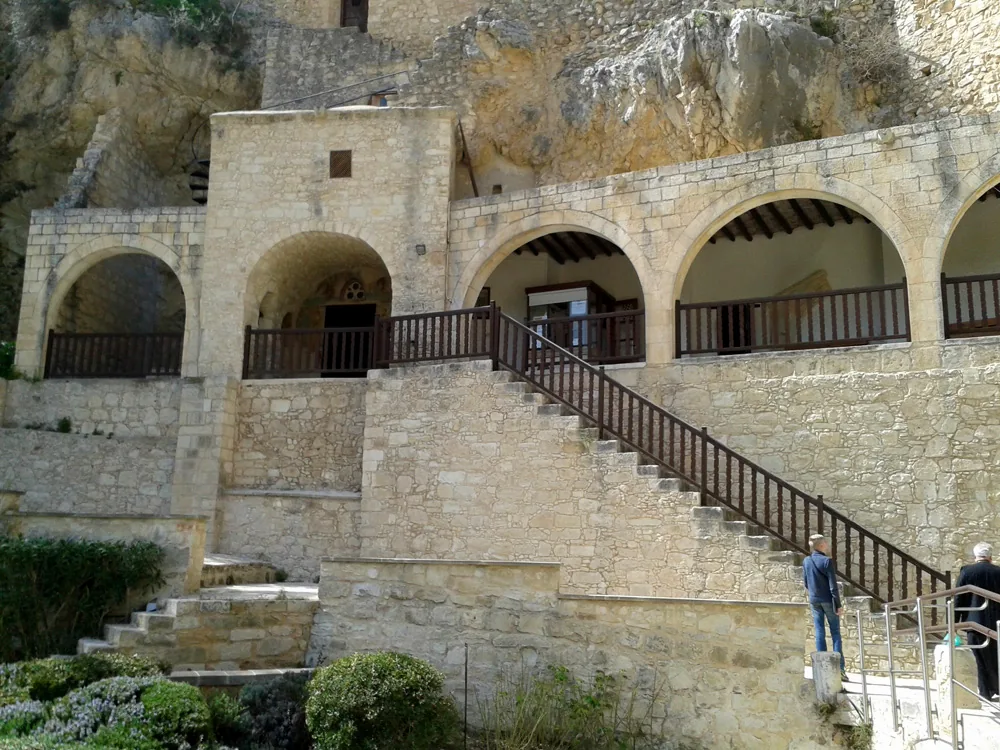 The final stop on our itinerary was the stauropegial monastery of St Neophytos the Recluse. It made a particularly strong impression. As you enter the monastery grounds, you feel a sense of tranquillity pervading the air.
The first building on the monastery grounds dates back to the 12th century – it is a church carved into the mountain. The cell of Saint Neophytus is also located here, adorned with frescoes from the 13th–14th centuries. The saint’s relics were discovered in 1746 and are now housed in the monastery’s main church.
There is a museum on the monastery grounds, housing a collection of ancient icons and monastic artefacts.
We didn’t want to leave the monastery, but it was time to set off on our return journey. By 16:30 we were back in Limassol. Bearing in mind that our trip began at 08:30, we covered the entire route in 8 hours. It was a blissful day, filled with the spiritual joy of coming into contact with sacred Christian history.
Cost of the excursion:
- adults €50;
- child €25.
To book a tour, you can fill in the online booking form, email us at: or call us on: .