‘Unknown and Beautiful Cyprus’
Description
‘Unsung and Beautiful Cyprus’ is yet another tour that offers the chance to discover the beauty of the Troodos Mountains.
The itinerary is designed so that visits to Christian holy sites alternate with opportunities to admire natural attractions. Even those who have already been to Troodos will find something new to discover, as many of the places included in the itinerary are not widely known tourist destinations.
The village of Pano Panaya
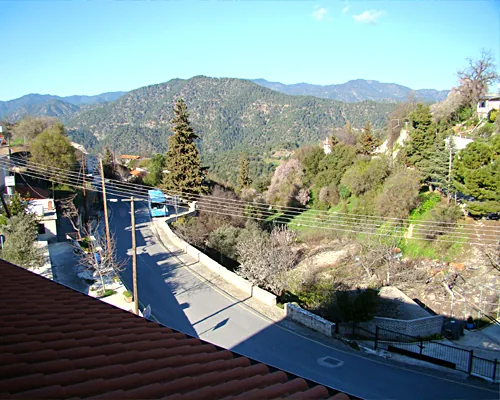 The village of Pano Panaya (Village of the Virgin Mary), where we made our first stop, is situated at an altitude of 900 metres above sea level to the west of the Troodos mountain range. You must admit, it’s a rather unusual name for a village.
Local old-timers claim that it got its name from the large number of churches and chapels dedicated to the Virgin Mary located in and around the village. For instance, right in the centre of the village stands the small 14th-century Church of Our Lady of Eleusa. If you walk about 1.5 km to the east, you’ll come across the Chapel of Our Lady of Sarkas.
Not far from it stands another chapel dedicated to Our Lady of Karion. Meanwhile, 2.5 km to the south-west of the village lies the famous Monastery of Our Lady Chrysoroiatissa.
As well as the churches dedicated to the Virgin Mary, there is also a large, modern church consecrated in honour of St George, and the Chapel of Elijah the Prophet, situated in the southern part of the village.
However, the village gained widespread fame because it was here, on 13 August 1913, that Michail Christodoulou Mouskos was born; he later became Archbishop Makarios III, the first president of the independent Republic of Cyprus. A large, life-size statue stands as a silent reminder of this fact.
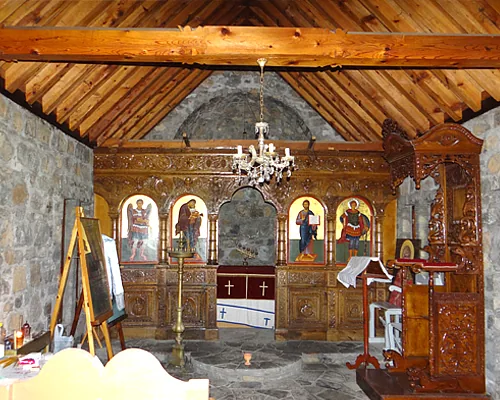
The Monastery of the Virgin Mary Chrysoroiatissa
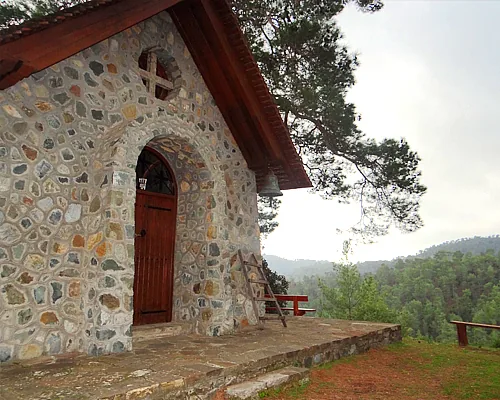
After a short walk through the village, we reached the Monastery of the Virgin Mary Chrysoroiatissa. It is situated in a magical spot. The surrounding scenery is simply breathtaking. It strikes one that when a church, monastery or chapel is situated in close proximity to nature, one can physically sense the presence of God.
The monastery was founded in 1152 by the monk Ignatius. Its construction was not fully completed until 1770. The monastery’s principal relic is the miraculous icon of the Most Holy Mother of God, which, according to tradition, was painted by the Evangelist Luke.
Today, this icon, like the icon of the Mother of God of Kykkos, is concealed beneath a silver frame.
So 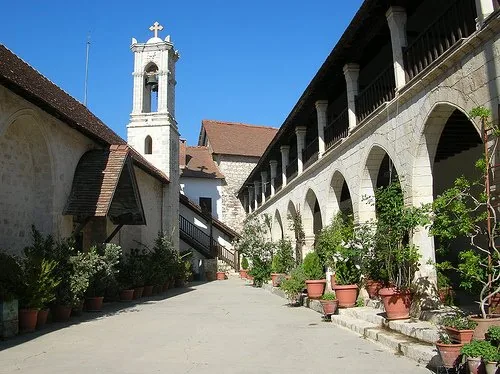 where does the name of the Chrysoroiatissa Monastery come from? It is clear that ‘chryso’ means ‘gold’ in Greek. However, interpreting the second part of the name presents some difficulties. Local residents are convinced that ‘Royatissa’ derives from the word ‘rodi’, which translates as ‘pomegranate’—a local symbol of fertility and abundance.
In support of this theory, one can see numerous pomegranate trees around the monastery. A less popular but more obvious alternative theory suggests that the icon is named after Mount Roya, on which the monastery stands.
The monastery grounds feature a wonderful museum and an old, disused winery. The monks still produce wine today, but the winery has been moved outside the monastery grounds.
If you look at a map, you can see that the Chrysoroiatis Monastery is very close to Kykkos. They are separated by the Cedar Valley, which is considered one of Cyprus’s natural attractions. After stopping in the valley, we walk along a path deeper into the forest, admiring the centuries-old trees.
 Kikkos Monastery
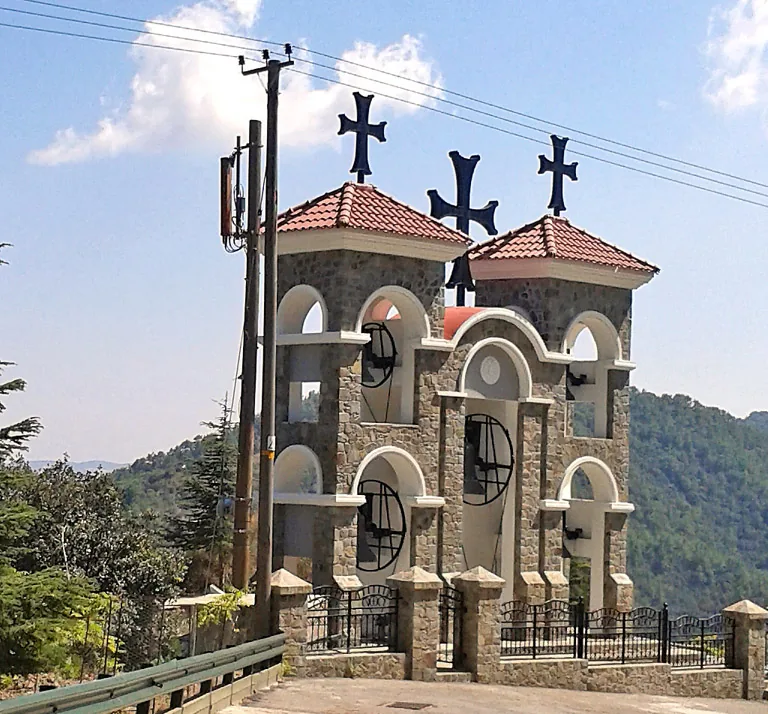
The next stop on our itinerary is the famous Monastery of the Holy Mother of God of Kykkos. It is featured in every guidebook, and the Kykkos Icon of the Mother of God is officially regarded as Cyprus’s most important holy relic.
If you make the effort to climb a little further up the winding mountain road from the monastery, you can see the burial site of Archbishop Makarios. The beautiful square, adorned with golden-beige stone, and the imposing statue truly make a strong impression.
At one with nature
 The next stop was entirely devoted to communing with nature. It’s difficult, of course, to switch out of ‘tourist mode’ and, without rushing about, stroll through the forest, listening to the birdsong and the rustling of the trees.
Try to seize the moment, to feel the mountain air filling your lungs, the energy nourishing every cell in your body. After all, this is exactly what you dreamt of whilst sitting at work, planning your holiday.
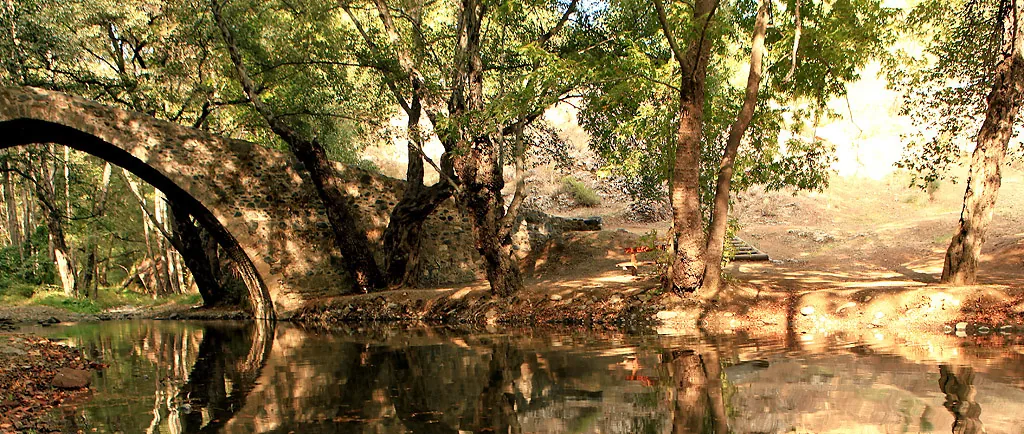
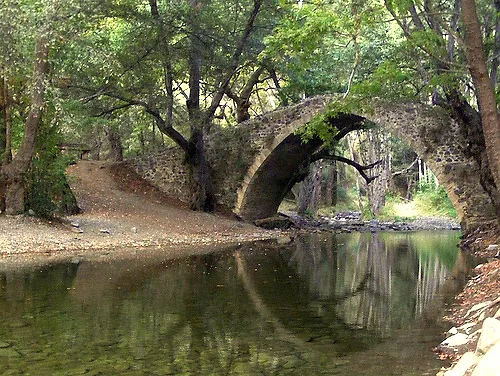
You can continue your connection with nature at the next stop, by the Venetian bridge of Chelefos. Like a silent sentinel, it guards the river from uninvited guests. One can only speculate as to why this bridge was built in the middle of the forest so long ago. And now, several centuries on, the bridge still stands in its place, and this fairy-tale spot offers a spark of inspiration to the many people who visit the banks of the Diarizos River, both in winter and summer.
A village feast in Omodos
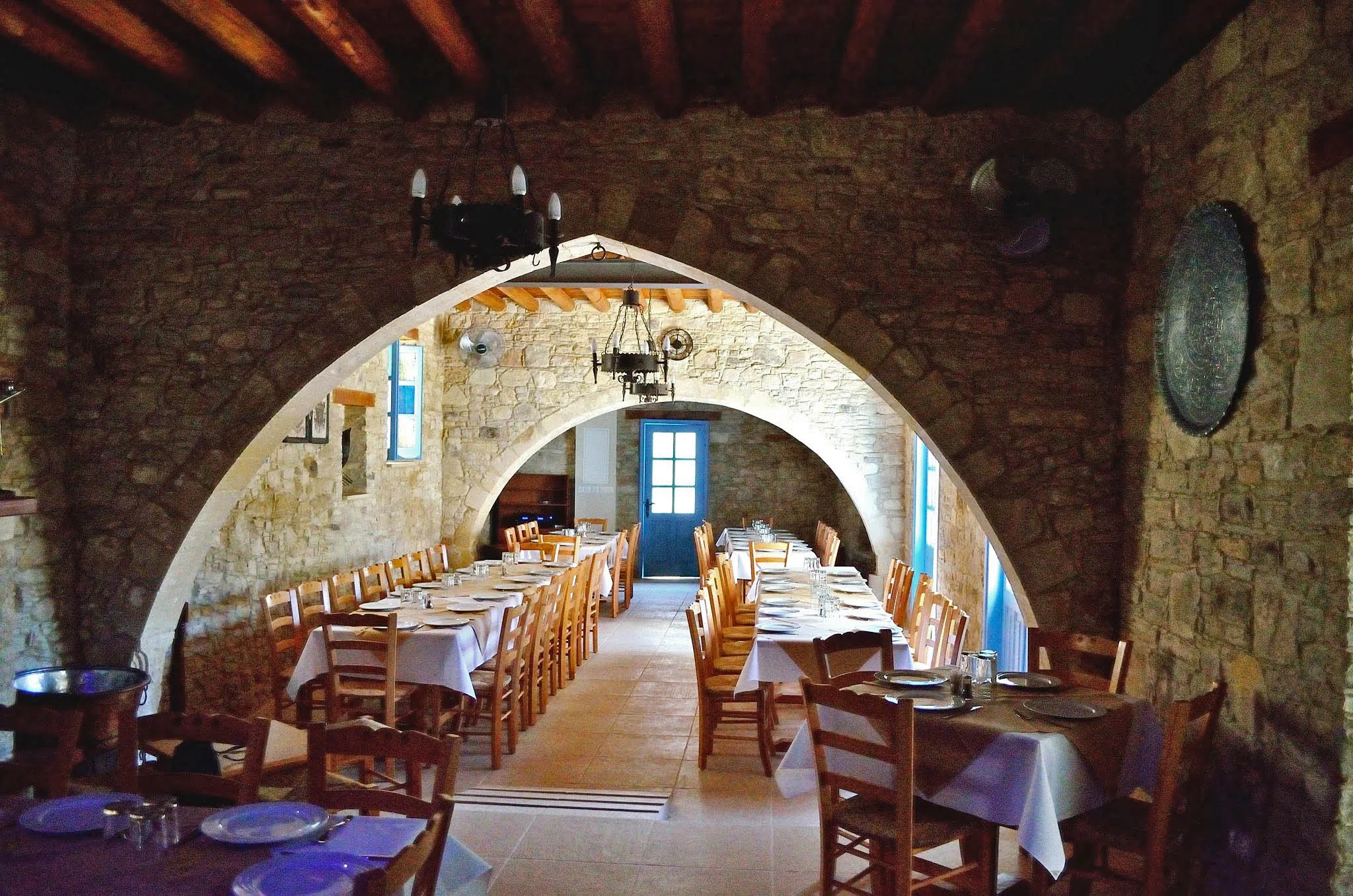 The final stop on our itinerary was the mountain village of Omodos. Knowing that a rustic lunch and homemade wine awaited us there, it was impossible to think of anything else. And, as we all know, walks in the woods work up an appetite.
The meal did not disappoint. A fresh Greek salad with feta cheese, fragrant kebabs (known locally as souvlaki) and all sorts of appetisers with names that are hard to remember at first go. What could be better?!
After a hearty lunch, we still had some free time to stroll through the village, pop into the Monastery of the Life-Giving Cross, which is situated right in the centre of the village, and sample some local sweets in a little shop.
Having recharged our batteries with positive energy and spiritual enlightenment, and taken in a host of new experiences and emotions, we returned safely. Isn’t that the main aim of a holiday?
Cost of the excursion:
- adults €55;
- child: €27.50.
To book the tour, you can fill in the online booking form, email us at: or call us on: +357 25 310 692.