Polemi, Cyprus: a wine village near Paphos and the Metochi of Kykkos
About the place
Checked: 29 October 2026.
Polemi at a glance: a wine village in the hills north-east of Paphos
Polemi (Πολέμι) is a village in the Paphos district, in the hills north-east of the town. According to the community council, it lies about 17 km from Paphos. The village’s average altitude is about 460 m above sea level. According to the 2021 census, it has 870 residents.
Official texts also use the genitive form Πολεμίου — for example, in the name of the community council. Do not confuse the village with Polemidia (Πολεμίδια), on the outskirts of Limassol. According to the council, the western edge of Polemi is 3 km from the main Paphos–Polis road, and local roads lead to the neighbouring villages of Psathi and Tsada.
Polemi is a rural centre for the surrounding villages, with a kindergarten, a primary school, a gymnasium and a lyceum. The village is known for its vineyards, the Metochi of Kykkos Monastery and its wild tulips. The tulip festival is covered in our separate article on the Polemi tulips; this one is about the village itself.
The history of Polemi and the origin of its name
According to the community council, the village has been known by this name since Byzantine times. The Byzantine settlement is thought to have stood near the present one, at a place called Kampos tis Rigainas (Κάμπος της Ρήγαινας), where a prehistoric stone axe was also found.
Explanations of the name differ. Some researchers link it to a Byzantine landowner called Polemios, while the medieval chronicler Leontios Machairas links it to the veneration of Saint Polemios, one of the so-called Alaman saints. Maps from the Frankish period already show the village in Latin script as Polemi. The community council does not mention the popular reading ‘village of warriors’, from the word πόλεμος (‘war’).
In the British colonial period, a police station operated in the Polemi community building. According to the council, it was closed after villagers took part in the anti-colonial October events, known in Cyprus as the Oktovriana (Οκτωβριανά); among those punished were the village headman and the priest. Despite people moving away to the towns, Polemi remains one of the largest villages in the district.
The church of Panagia Chryseleousa and the chapels around the village
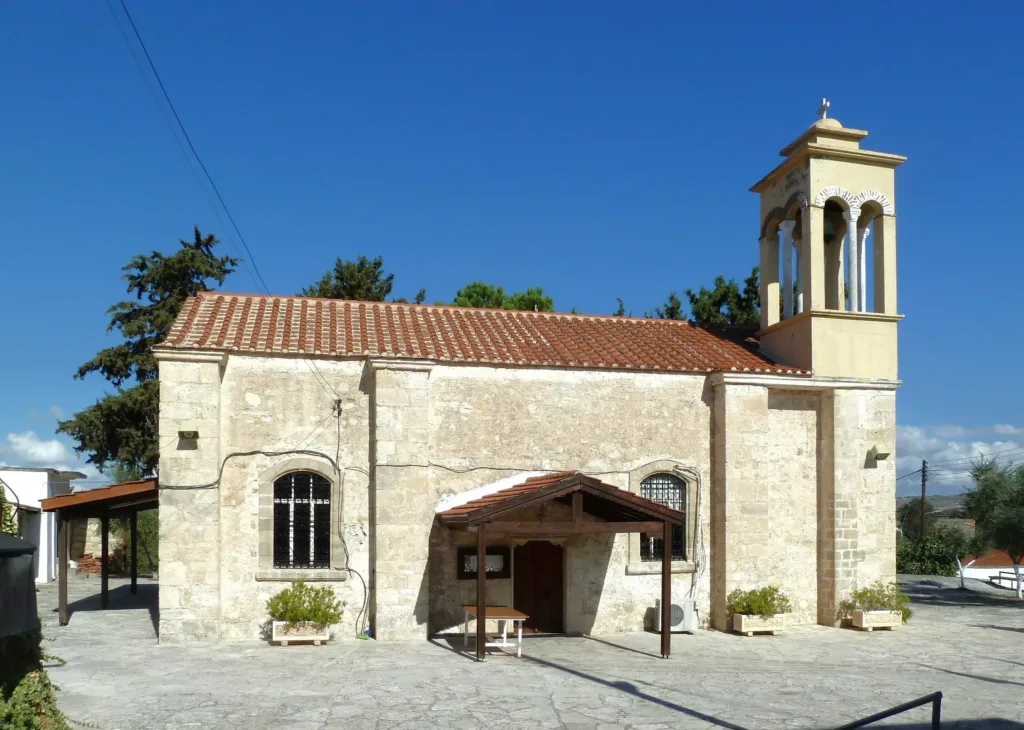
The main church of the village is Panagia Chryseleousa (Παναγία Χρυσελεούσα) in the northern part of Polemi. According to the community council, the oldest part of the church dates from the 12th and 13th centuries: a single-nave, cross-domed church with a narthex in the Byzantine style. A new southern section was added around 1723.
The 1953 earthquake badly damaged the church and destroyed the old bell tower; a new one was built a few years later. Inside is a carved wooden iconostasis with icons from the 15th century and later. Another page of the council’s website gives a later dating by the researcher Rupert Gunnis, so the dates in the sources differ.
According to the council, 14 chapels once stood around the village, and most of them are now abandoned or in ruins. Local tradition holds that they were placed in a circle to protect the village from epidemics. The best known is dedicated to Saint Nipios (Nepios), venerated as the protector of infants. The chapels of the Prophet Elijah and Saint Marina have been rebuilt on their old foundations.
The Metochi of Kykkos Monastery in Polemi
On the western side of the village stands the Metochi (Μετόχι), a dependency of Kykkos Monastery: a large stone building with an inner courtyard. According to the community council, much of the land of Polemi once belonged to the monastery. The monastery itself, in the Troodos Mountains, is covered in our guide to Kykkos Monastery.
The Metochi is also tied to the village’s wine history. The community council writes that viticulture in Polemi developed thanks to Abbot Kleopas of Kykkos, who offered to hand the land over to the villagers on condition that they planted it with vines. The vine suited the area because it needs little water.
For a long time the building stood half-ruined. A wine routes brochure from Visit Cyprus, the official portal of the Deputy Ministry of Tourism, says that the Metochi has passed into community ownership and operates as a cultural centre with a garden. According to the council, a restoration lasting several years was nearing completion in 2019.
Polemi vineyards and the wine route
According to the community council, the climate and terrain made viticulture the villagers’ main occupation, with apples the second most important crop. In 1985 Polemi ranked fourth among the villages of the Paphos district by vineyard area, with wine grape varieties predominating.
Polemi is on the Visit Cyprus ‘Vouni Panagias – Ampelitis’ wine route, which passes through Tsada, Stroumbi, Polemi, Psathi, Letymvou and other villages in the district. The E703 side road leads to Polemi and then continues to Psathi. Our article on Stroumbi covers the neighbouring village on the main road.
The Visit Cyprus brochure lists the Tsalapatis winery in the village itself, with a tasting room at cellar level, and the SODAP cooperative’s Kamanterena winery between Stroumbi and Polemi. The brochure dates from 2015, so check visiting arrangements with the winery. There is more in our guide to Cyprus wineries and wine routes.
Getting to Polemi and planning your visit
A car is the most convenient option. From Paphos, take the main road towards Polis and Tsada, then, as Visit Cyprus describes, turn onto the E703 side road to Polemi. Check the route on your navigation app before setting off: the hill roads are winding.
Buses to villages in the Paphos district run less often than in the town. If you are using public transport, check the timetable with the district bus operator shortly before your trip, including the time of the return bus.
A couple of hours is usually enough for the church, the Metochi and a short walk around the village. The trip combines easily with Stroumbi, Psathi and other villages on the wine route. In spring Polemi gets more visitors because of the tulips, and on festival days expect parking to be difficult.
What to check before visiting Polemi
Opening hours of the Panagia Chryseleousa church and the Metochi of Kykkos depend on the season, services and events. Check them with the Polemi Community Council or the parish. The usual rules for an Orthodox church apply: covered shoulders and knees, a quiet voice and photography only with permission.
Arrange a winery visit in advance: tasting hours and booking terms change. If you are tasting wine, do not drive, and decide in advance who will be the driver.
Polemi is a lived-in village, so park without blocking gateways or the road for residents. In spring, follow the advice on visiting responsibly in our tulip guide. Summer on the hills is hot: plan walks for the morning or evening and carry water.
Continue planning
- Tulips in Polemi: the festival, the season and a considerate visit
- Kykkos Monastery: history, museum and a visit
- Cyprus’s wineries and wine routes: how to plan your trip
Official sources
- 2021 Population Census — Cyprus Statistical Service (CYSTAT)
- Village history — Polemi Community Council website
- Religious life: the church and chapels — Polemi Community Council website
- Sights and the Metochi — Polemi Community Council website
- Nature and viticulture — Polemi Community Council website
- Cyprus Wine Routes brochure (2015) — Visit Cyprus (PDF)
The church of Panagia Chryseleousa in Polemi · Photo: Chris06 · CC BY-SA 4.0 · converted to WebP and resized.
