Aromatic and Medicinal Plants of Cyprus: A Cautious Guide
How to learn about the herbs of Cyprus, identify their species and origin, and avoid confusing traditional uses with proven treatments.
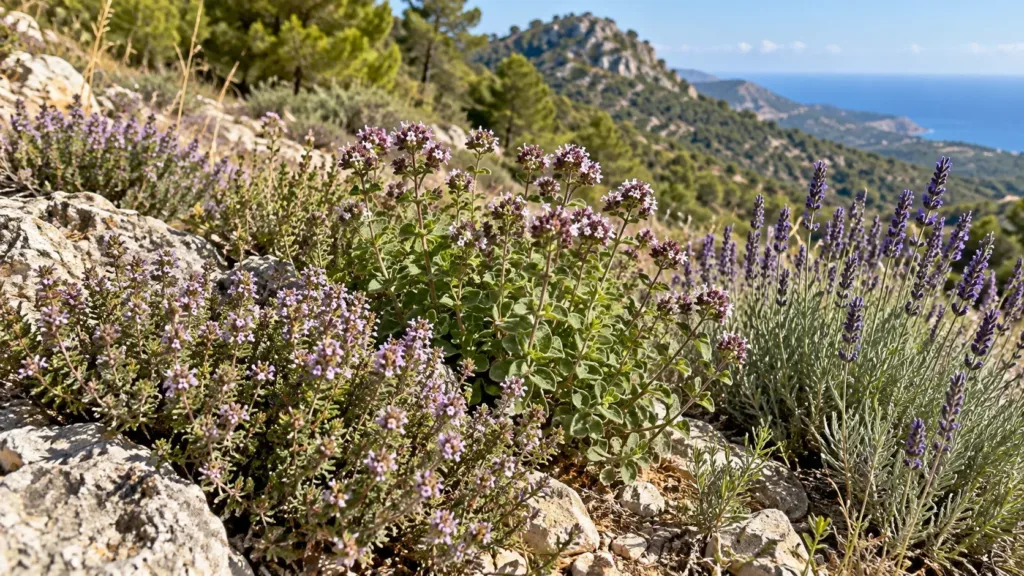
Checked: 27 September 2026.
What does ‘medicinal herb’ mean?
Both wild and cultivated aromatic plants grow in Cyprus. The terms ‘medicinal’ and ‘traditional’ often refer to the history of their use rather than any proven benefits of the product. The species, the part of the plant used, the method of preparation and the composition may vary. It is therefore best to begin your exploration of herbs with botany, rather than with a self-medication recipe.
The Department of Agriculture publishes material on aromatic and medicinal plants and their cultivation. The European Medicines Agency assesses data on the safety and efficacy of herbal medicines separately. These sources serve different purposes: a description of a species or agricultural techniques should not be interpreted as advice on treating a disease.
This article does not contain any dosage information or claims regarding effectiveness. If you are taking medication, are pregnant, are breastfeeding, or are considering using this remedy for a child, please discuss its potential use with a qualified professional. If you have symptoms of an illness, do not replace medical treatment with herbs bought at the market or gathered whilst out for a walk.
How to avoid misidentifying a plant
Common names such as ‘thyme’ or ‘sage’ may refer to several species and local varieties. To identify a plant accurately, you need to consider the characteristics of its leaves, flowers, scent, and sometimes its fruit and habitat. A single photograph and the app’s automatic suggestion do not rule out confusion with a similar plant, especially outside the flowering season.
Check the Latin name on the official label from the botanical garden or in a reference book. If the plant is being sold for food or medicinal purposes, ask for the full scientific name of the species, its origin and the product labelling. The seller’s claim that ‘this is definitely a local herb’ does not confirm either the correct identification, the storage conditions or the purity of the raw material.
Do not try a wild plant just to see what it tastes like. Similar species may have different properties; plants growing near a road or cultivated land may be contaminated. If the species cannot be reliably identified, leave it in the wild. For a family walk, it is enough to observe its shape and take a photograph without damaging the plant.
Fragrance, cuisine and medical claims
Aromatic herbs may be a part of cooking, but their culinary use does not constitute medical advice. The amount used in a dish, a concentrated extract and a medicinal preparation are different forms of administration. Even a familiar scent does not guarantee that an unknown plant is safe to consume or suitable for someone with allergies.
Check the product packaging for the ingredients, manufacturer, use-by date and intended use. If the packaging claims to treat a specific condition, check this against the product’s official classification and seek advice from a specialist. Do not apply information about a regulated medicinal product to a home-made infusion of the same plant: the composition and concentration may differ significantly.
Traditional practices may be of cultural interest. When discussing them, it is important to distinguish between ‘used in the past’ and ‘proven to be effective’. European monographs explain how herbal medicinal products are assessed; they do not give nature lovers permission to collect any plant or prepare a remedy without first checking the risks.
Where to learn about herbs in Cyprus
Botanical gardens and visitor centres are ideal for observation: the species are labelled, and visitors can compare the leaves and growth habits. On an official nature trail, plants remain part of the ecosystem, so there is no need to break off a twig to identify them. Make a note of a few distinguishing features whilst you’re there and check them later.
In the mountains, forests and on dry slopes, the composition of the flora varies with altitude and the season. A photograph of flowers in bloom from a spring guidebook is no guarantee that they will be in bloom in autumn. Access to certain areas may be restricted for species conservation or fire safety reasons. Before setting off, check the current regulations issued by the relevant authority.
You can look for products from local producers at the market, but the place of sale does not prove the plant’s local origin. Check whether the raw materials have been cultivated or foraged, how the species is identified, and who is responsible for the product. If the answers are vague, do not assume that the product is safe for your health based on your purchase alone.
Why you need to be careful when foraging in the wild
Picking flowers and collecting seeds reduce the plant’s ability to reproduce. For rare and protected species, the damage can be particularly significant. Do not assume that an empty plot is ‘nobody’s land’: it may be a protected area, private land or a site undergoing vegetation restoration. Signs and rules posted on site take precedence over advice from this blog.
The acceptability of collecting plants should not be judged solely on the basis of quantity: ‘just a few twigs’ from many visitors can add up to a significant impact. If the aim is to enjoy the taste or fragrance, it is wiser to purchase a clearly labelled cultivated plant from a responsible seller. There is no need to take anything away when observing nature.
Do not transplant any plants you find to your holiday home, and do not move seeds between areas. Such actions may disrupt local populations and spread pests. If you notice damage to a protected area, please report it to the managing authority rather than publishing the exact coordinates of a rare plant for a wide audience.
A conversation with a doctor or a pharmacist
If you are discussing a product you intend to take, please have the packaging or full name to hand, and list any medicines you are taking and any important health conditions. A specialist will then be able to assess the suitability of the product and any potential interactions. The phrase ‘natural means safe’ does not help to assess the risk, particularly in the case of a chronic condition.
Do not prescribe a course of treatment for yourself or your loved ones based on someone else’s experience. Even when a herbal remedy has been studied, the conclusion depends on its specific form, composition and indications. Uncertainty is particularly important when it comes to children, pregnancy and breastfeeding; the absence of a warning on a travel website does not mean that it has been proven to be safe.
If you feel unwell after consuming an unknown product, seek medical advice and keep the packaging or details of the plant. Do not attempt to ‘neutralise’ the effects yourself using another herb. This section describes the procedure for seeking help, not a home-based method of diagnosis or treatment.
What to check again from time to time
Before setting off, check the latest information on access to the botanical garden, the footpath and the protected area. Before making a purchase, check the labelling, use-by date and status of the specific product. Before using a medicine, seek up-to-date professional advice. These three checks relate to different situations, and none is a substitute for the others.
When reading an older article, please note the date, the scientific name and the link to the original source. The list of species or guidelines for caring for plants may have been updated, and the commercial product may have changed. The sources for this material were last checked on 27 September 2026; this does not mean that the advice will remain valid indefinitely.
The guide helps you to explore Cyprus’s aromatic plants with care and ask the right questions. It does not endorse the medicinal properties of any unknown herb, do not authorise collection within a protected area, and are no substitute for consulting a doctor or pharmacist when making decisions about your health.
Continue planning
- The Flora of Cyprus: Natural Zones, Endemic Species and Conservation
- Cyprus’s waterfalls: walking trails, seasonal information and safe access
- Birdwatching in Cyprus: seasons and rules