Cypriot bread: types, bakeries and baking traditions
The bread-making traditions of Cyprus and Athienou: how to tell the different types apart, choose your baked goods and check the festival programme, whilst keeping an eye out for local bakers.
Checked: 3 October 2026.
Bread as a distinct part of the cuisine
Cypriot bread is well worth trying on its own: pay attention to its shape, crust, crumb and any ingredients, rather than just the name on the shop window. For your first taste, ask for a standard loaf baked locally and one filled variety, specifying the ingredients and size so that you can compare them without making any unnecessary purchases.
You can learn about the bread-making tradition both at a bakery and at a suitable local festival, where the artisans demonstrate their craft. A single old advert does not prove that the event takes place on the same day every year. The cultural theme retains its significance even outside the context of a specific festival programme.
Not all the baked goods in a Cypriot bakery are just one type of bread. You might find rolls, flatbreads, sweet pastries and items with cheese or olives all sitting side by side. It’s handy to compare them by their purpose: bread to serve with a meal, a snack on its own, or a festive treat bought for a special occasion.
Athienou and its bread-making heritage
Athienou is known for its bread, known as ‘athienitiko’, and its local bread-making tradition. The Cyprus National Commission for UNESCO describes this practice as living intangible heritage. It is about people’s knowledge and work, not just the beautiful finished loaf.
When learning about such a tradition, it is useful to ask about the sourdough starter, the kneading process and the oven, but one baker’s answers should not be taken as the norm for the whole island. Recipes and production processes vary. The name of the region helps to frame the question, but does not mean you should neglect to pay attention to the specific product.
The municipal museum and the restored mill in Athienou provide further context: you can see the link between grain, milling and everyday meals. Before you visit, please check the availability of the exhibition and demonstrations. Just because the museum is open doesn’t necessarily mean that they’ll be kneading and baking bread on that particular day.
How to distinguish between items in a shop window
It’s a good idea to choose plain country bread based on what you plan to eat it with. For cheese, olives and vegetables, you can opt for a simple loaf without any sweet additives. Ask the shop assistant about the crust and the density of the crumb, especially if you’re choosing a large loaf for several people or to keep until the next day.
Olive pastries, which are sometimes known as ‘eliopita’, are a different story: the fillings are already inside. Pastries filled with cheese also differ from plain bread. Don’t judge the ingredients by the colour or shape: similar-looking baked goods in neighbouring display cases may have different fillings.
Sesame seeds on the surface and aromatic additions are important flavour elements, but they do not prove that there is a single traditional recipe. To compare, take small portions and make a note of the product’s name. This makes it easier to work out your own preference and ask for a similar loaf next time, rather than just any old bread.
What to ask at the bakery
Ask when the bread has been baked and how it is recommended to be stored. The word ‘traditional’ does not indicate when the bread came out of the oven. If you want freshly baked bread, ask about the next batch; however, do not assume that every item must be served hot or that yesterday’s bread is automatically unsuitable.
For a family breakfast, it’s better to check the weight or size in advance rather than choosing solely on the basis of the price per item. Check the slicing, packaging and whether you can buy part of a larger item whilst you’re there. If you’re taking bread with you on a journey, ask for packaging suitable for that particular product, rather than wrapping up hot baked goods at random.
If you have significant dietary restrictions, please ask about the ingredients and allergen information. Wheat-based ingredients, sesame seeds, cheese and other additives require specific clarification; the appearance of the bread does not replace this information. This article does not determine the medical suitability of the products nor does it guarantee the absence of cross-contamination.
How to check a bread festival programme
To plan your trip to the festival, start by checking the announcement from the organiser: the local council, community group or the institution hosting the event. Look for the year, date, venue and the latest version of the programme. The general page on bread-making traditions and the programme from previous years answer different questions and should not be used interchangeably.
A festival celebrating local produce is held in Athienou, where bread is showcased alongside dairy products, music and demonstrations. This is a good example of the link between food and community life, but the festival’s name does not guarantee that the programme will be the same every season. Be sure to check the specific edition you plan to attend.
As of the date of this check, no confirmed date for the next relevant festival has been announced here. Previous dates have not been carried over to the future calendar. If there is no new programme on the organiser’s page yet, you can plan a regular visit to the bakery or museum, and add the event once the programme has been published.
Demonstration and day-to-day operations
A demonstration of the mixing or baking process helps you understand the movements, tools and sequence of steps involved. However, a festival demonstration may be abbreviated: not every stage is carried out in front of the audience from start to finish. Ask the presenter what is being demonstrated at the moment and which stages were prepared in advance.
Please ask for permission before taking photographs of staff and participants. Do not go behind workbenches, near the oven or near the equipment unless the organisers have invited you to do so. Even an open demonstration remains a working area, where hot surfaces and the movement of people take precedence over getting the perfect shot.
If there is a tasting session, check exactly what is on offer and whether it is included in the admission price. Product sales, workshops and open viewings may have different conditions. The list on the poster helps you plan your day, but it’s best to check with the organiser to confirm the availability of specific breads and any remaining places.
Buying bread with realistic expectations
You don’t need to attend a major event to get to know bread: a small purchase and a brief chat at a bakery often give a clearer impression of the product. Make a note of the name and ingredients of the bread you like. This is more useful than judging a tradition solely by the size of the festival or the number of stalls.
If you’re buying bread as a gift, bear in mind the journey time and storage recommendations. Freshly baked bread may not be the most practical souvenir for a long journey. Don’t promise that the texture will be the same a few days later; it’s better to explain to the recipient how the bakery recommended the product be used and stored.
Stable information about bread-making and a changing event programme should be read separately. This cultural article has been verified against the sources cited; please check prices, timetables and the event programme before visiting. This way, the information remains relevant even after a particular festival date has passed.
Continue planning
- Cypriot cuisine: dishes, ingredients and seasonality
- Cyprus Festivals: A Seasonal Calendar of Events
- A leisurely 3-, 7- and 10-day itinerary around Cyprus
Official sources
- Cyprus National Commission for UNESCO — bread-making in Athienou
- Visit Cyprus — Athienou
- Athienou Municipality — local produce festival
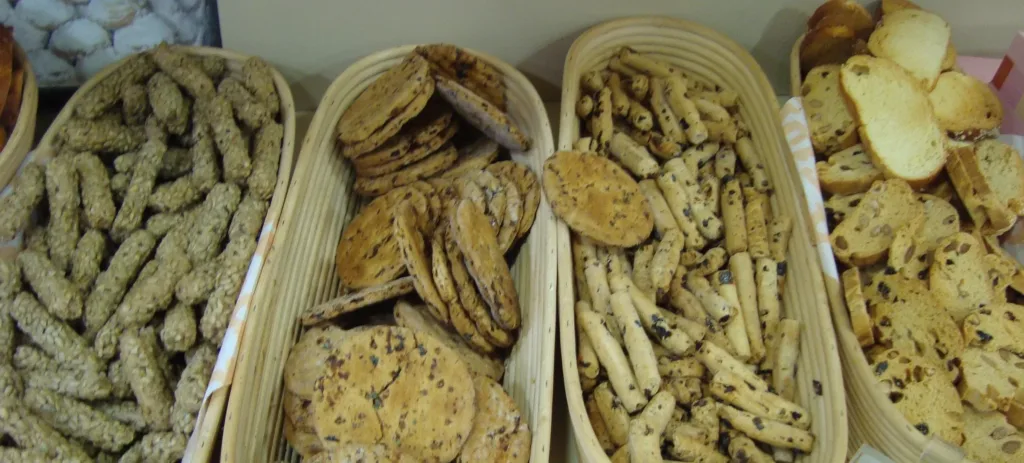
Cypriot baked bread and rusks · Photo: AyianapaProtaras · CC BY-SA 3.0 · converted to WebP and resized.
