Olives in Cyprus: processing, buying and storing
How Cypriot olives differ, what their colour and processing methods mean, how to read the brine ingredients list and how to store your purchase safely.
Checked: 24 September 2026.
Olives in Cyprus: what the buyer sees
Olive trees are found in many parts of the island, and the fruit is sold at markets and in shops, and served at the table. The flavour of ready-to-eat olives depends not only on the variety and ripeness, but also on the processing method. Therefore, two packets of similar colour may differ significantly in terms of salt content, acidity, spices and texture.
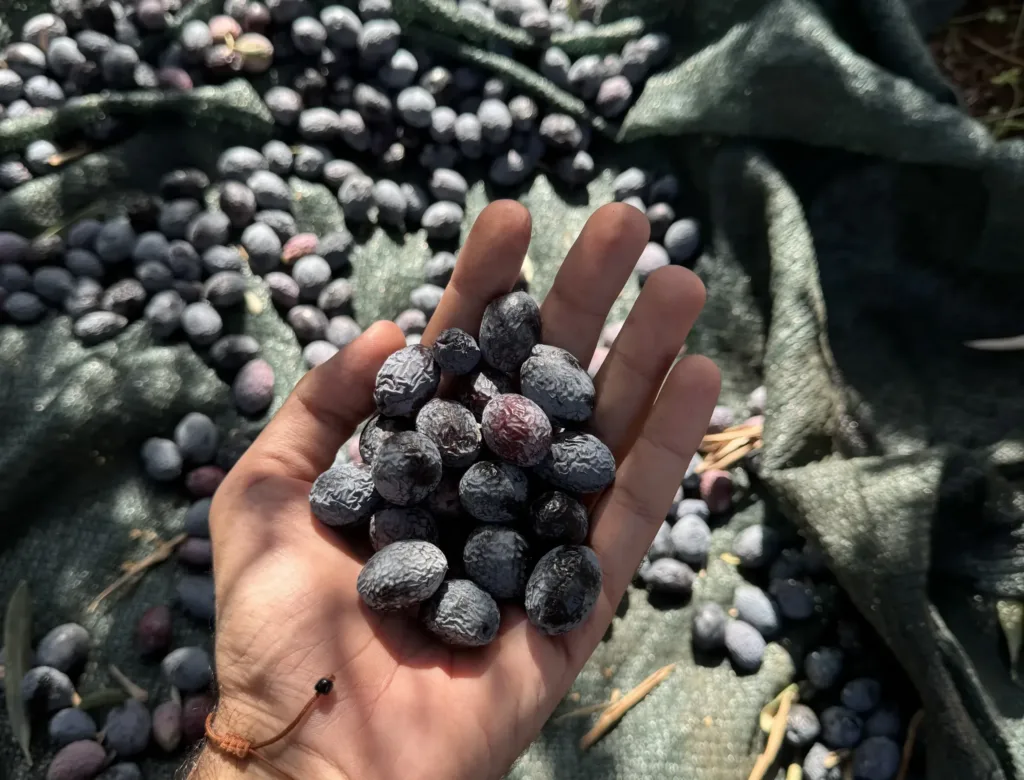
Green and dark colours are often associated with the stage of ripeness, but the colour of the finished product may also depend on the processing method. It is not possible to determine the variety, country of origin or whether the olives have been naturally processed based on colour alone. It is more reliable to check the ingredients, category and information about the manufacturer, and to ask the shop assistant for further details at the market.
Olives are part of a meal, not a universal health remedy. The brine often contains a lot of salt; people on a low-sodium diet should check the nutrition labelling and portion size. In local cuisine, you can try the product in small portions, comparing flavours, rather than looking for the ‘healthiest’ ones based on colour.
From tree to edible fruit
A fresh olive straight from the tree is usually very bitter. To make it palatable, the fruit is processed using brine, water, salt and other permitted processing methods. The specific method used affects the flavour and shelf life, so home recipes and commercially packaged products are not always interchangeable.
Harvesting and sorting are important for the appearance and integrity of the fruit. A large olive may be convenient for stuffing, but size alone does not determine quality. Smaller olives can also be full of flavour; it is best to compare olives within the same category and check how much flesh there is, how firm the skin is and whether there is any damage.
Home canning requires care. If you’ve got a recipe from friends, check that the processing and storage methods are safe by consulting a reliable source, especially if the jar contains oil, herbs or garlic. Do not taste the contents of a jar that is swollen, leaking or smells suspicious.
Different flavours and ways of serving
In Cyprus, you can find olives in brine, with herbs, citrus, spices or oil. These additions alter the flavour but may mask the salt content and allergens in the finished mixture. Ask for the ingredients list if buying by weight, and check whether the same brine is used for all jars on the shelf.
With light appetisers, it’s good to compare the pure flavour of the olives without too many seasonings. More distinctive varieties go well with meat and vegetables, provided they do not overpower the main dish. It’s a matter of personal preference rather than strict tradition: in one family, olives are eaten for breakfast, whilst in another they’re served only as a meze.
Pitted and unpitted olives are both handy for different purposes. For a platter of appetisers, you can choose whole olives, whilst for a salad, it’s best to remove the stones beforehand and check each portion. Even ‘pitted’ packets require caution: small fragments may remain after mechanical processing.
How to read the packaging
Check the product name, ingredients, weight, details of the manufacturer, use-by date and storage instructions after opening. If the origin of the olives is important to you, look for a direct statement rather than making assumptions based on Greek lettering or an image of Cyprus. The place of packaging and the place of cultivation do not always coincide.
Different brines and marinades result in varying levels of salt and acidity. A nutritional table allows you to compare products on an equal basis, whilst the list of ingredients reveals any added flavourings or preservatives. The presence of an authorised additive does not automatically make a product bad; it is important to understand your own limits.
At the market, you can try a product sold by weight if the seller observes good hygiene and offers a separate sample. Ask for the date of preparation, storage instructions and use-by date. The terms ‘homemade’ and ‘farm-fresh’ do not exempt the seller from the obligation to provide clear information about the food product.
Buying whilst travelling
For a picnic, a small, airtight container is convenient; for a gift, choose a jar with a legible label and a sufficiently long use-by date. Glass is heavier and requires protection against knocks; a bag containing brine must be securely sealed. Check the rules on transporting liquids and foodstuffs with the transport provider and the country of entry before setting off.
Buying large quantities by weight is only worthwhile if you have suitable storage conditions. Check whether the olives need to be kept in their brine and in the fridge, and transfer them to a clean food-grade container. Do not mix leftover olives from a new batch with those from an old one: this makes it difficult to monitor their freshness.
The season and product range vary. A photograph in an older article does not guarantee that the same variety is available today or has been grown locally. If your purchase is linked to a trip to a specific village, check availability with the producer or retailer in advance.
Storage and safety
Follow the instructions on the packaging regarding temperature, shelf life after opening, and contact between the fruit and the brine. Use a clean spoon and close the jar immediately after taking a portion. If the brine runs low, do not top it up with any random liquid without the manufacturer’s recommendation: the composition of the brine is important for preserving the product.
If there is an unusual smell, mould, gas build-up or a damaged lid, do not taste the product ‘to check’. It is safer to return the product or ask the seller. For home-made preserves without a label, it is particularly important to know the date, recipe and storage conditions; if this information is missing, it is best to avoid consuming them.
Rinsing may reduce the saltiness on your tongue, but it does not make the product salt-free. If you are limiting your salt intake, follow the labelling and seek advice from a specialist. For children and people who find it difficult to chew, bear in mind the seeds and the firmness of the fruit so that a familiar snack does not pose an unnecessary risk.
What to ask a local producer
Ask where the fruit was harvested, how it is processed, what is added to the brine, and how long the jar can be kept after opening. These questions help you understand the product better than the advertising claim ‘made according to an ancient recipe’. If a farmer shows you the trees, respect the property and do not pick the fruit without permission.
Olives are linked to local olive oil, but they are separate purchases. Table olives and olives intended for pressing may differ, and the presence of an olive mill nearby does not prove the snack’s origin. For oil, refer to the separate category and the label; for olives, check the brine composition, weight and storage conditions.
The sources for this page were verified on 24 September 2026. Check with the seller regarding the season, the batch’s origin and the range available. A good purchase starts with clear information about the fruit and its processing, whilst discovering the taste of Cyprus leaves room for personal choice regarding saltiness, texture and seasonings.
Continue planning
- Olive oil in Cyprus: categories and how to choose
- Halloumi: Cypriot cheese, origins and cuisine
- Fish meze in Cyprus: ingredients and choosing a taverna