Fish meze in Cyprus: ingredients and choosing a taverna
How fish meze is served, and what to check regarding ingredients, the origin of the fish, price and allergens before ordering.
Checked: 24 September 2026.
What does ‘fish meze’ mean?
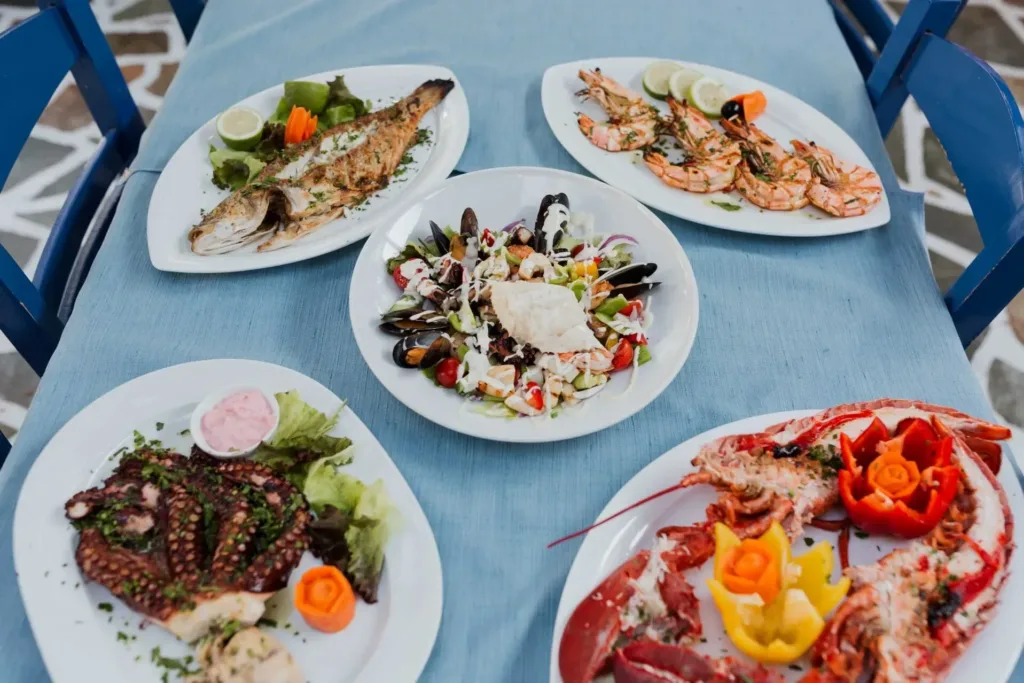
Fish meze in Cyprus is a dining format consisting of a sequence of small dishes, rather than a single recipe with a fixed selection. Typically, the table is served with appetisers and various fish or seafood dishes. The selection depends on the establishment, the season and what the kitchen has to offer, so it’s best to check today’s menu to manage your expectations.
The label ‘fish meze’ does not guarantee that all the fish was caught locally, nor that every ingredient is fresh in the sense of ‘never having been frozen’. The restaurant should answer questions about the ingredients and availability honestly, but you should check the specific origin of your chosen dish. A sea view for tourists is not proof of the ingredients’ origin.
It’s convenient to order meze as a group, as it takes time to serve and is typically shared from a communal platter. However, the minimum number of guests and the price are determined by the restaurant’s menu, not by a universal rule. Before ordering, check whether the price is per person, what is included in the set menu, and whether portion sizes can be reduced for children.
What the meal might consist of
The meal often begins with bread, salad, olives and sauces, followed by hot dishes. The set may include squid, prawns, small fish, fillets or shellfish, but the list should not be taken as a guarantee. Ask the staff to list the main dishes of the day and to inform you of any substitutions before the meal is served.
Some dishes are fried, others are grilled or stewed. This affects the flavour and the amount of oil used, and is also important if you have dietary restrictions. If you prefer a particular cooking method, check whether a substitution is possible; the restaurant may offer a separate dish instead of the set menu.
Sauces deserve special attention. Taramasalata, tahini, yoghurt and garlic-based sauces differ in their ingredients, even when they look similar. Sesame, fish, dairy products and other allergens may be present in the starters served before the main course, so simply asking ‘is there any fish?’ is not enough.
How to choose a taverna
Check the current menu, booking conditions and recent information about the establishment itself. An old list of ‘top spots’ may be of historical interest, but establishments change owners, chefs, prices and menus. If you’re travelling specifically for meze, contact the restaurant on the day of your visit.
It’s a good idea to ask which dishes are on today’s set menu, what the total price is, and whether bread, water and service are included. For large groups, check whether portions are calculated per guest and whether individual payments are possible. A written menu is a better way to avoid surprises than a verbal promise that ‘there’ll be plenty of everything’.
Assess quality based on the clarity of the menu, cleanliness, service and flavour, rather than just portion size. If you’re interested in local fish, ask specific questions about the species and its origin. A waiter may tell you that some of the produce is imported or has been frozen; this is useful information for making an informed choice.
Allergens and safety
Fish, crustaceans and molluscs belong to different allergen groups. A person may tolerate one group but react to another. If you have a severe allergy, inform the restaurant in advance, specify the ingredients in question and ask about shared cooking surfaces, oil and crockery.
Even if the dangerous ingredient isn’t on your plate, shared sauces or equipment could lead to cross-contamination. Staff should be able to verify this information, but if the answer is unclear, it is safer to choose a different dish or venue. Do not rely on a photograph of the menu, and do not assume that ‘fish’ excludes milk or sesame.
Seafood requires proper storage and preparation. You cannot determine whether a dish is safe based solely on its smell or the appearance of the finished portion. If a dish seems off, stop and speak to the staff; trying to ‘cook it further’ at the table does not solve the problem.
How the dinner proceeds
Don’t rush to fill your plate with the first course: meze consists of several stages, and the pace can be leisurely. If you need a break or are already full, let the waiter know. Ask which dishes are still to come so you can decide whether to order any further items.
When dishes are served family-style, take care with bones, shells and hot crockery. For a child, it’s best to find out in advance if there is a suitable separate dish available and how to remove any bones. Add sauce and lemon after your first taste: this makes it easier to appreciate the flavour of the fish itself, rather than just the seasoning.
Drinks are ordered separately unless the menu states otherwise. Water and non-alcoholic options are just as natural a choice for a long meal as local wine. If you need to drive after dinner, plan your choice of drink in advance, without relying on the length of the meal as a safety net.
Price, portion size and the bill
The price of meze may seem high or low without understanding exactly what you are paying for. Compare the number of guests, the types of dishes, portion sizes and any possible surcharges. The word ‘from’ on a sign is no substitute for the final price on the menu. Pay particular attention to the dish of the day and fish sold by weight.
If fish is offered separately by weight, ask for the weight, the price per unit and an estimate of the total cost before it is cooked. For set meze, check whether substitutions are included in the price. These are standard questions and help avoid disputes after your meal.
Keep your bill and check that the items listed match your order. If there’s a discrepancy, calmly ask for an explanation before paying. Old articles with specific prices quickly become out of date, so there’s no guarantee on this page as to how much dinner will cost at today’s tavern.
A practical plan for your visit
Choose a neighbourhood and a few restaurants based on their current menus, then book a table if you’re visiting in the evening or at the weekend. Check the kitchen’s opening hours, not just when the restaurant opens. If a sea view is your priority, ask about the table’s location, but don’t use it as a measure of the quality of the seafood.
Before ordering, mention any allergies, ask about the ingredients in the meze and the total price. Once the meal is served, leave room for the hot dishes and ask questions about any unfamiliar ingredients. Such a conversation won’t spoil the experience; it helps to make the whole dinner a comfortable experience for the entire party.
The sources for this page were verified on 24 September 2026. Official gastronomic materials explain the tradition, but the selection and conditions at a particular tavern are confirmed by its current menu. Fish meze is best viewed as a flexible way to explore the cuisine, rather than as a set list of dishes.
Continue planning
- Kleftiko in Cyprus: the dish and how it is served
- Halloumi: Cypriot cheese, origins and cuisine
- How to pair Cypriot wines with food