Halloumi: Cypriot cheese, origins and cuisine
What does the protected designation Halloumi/Hellim mean, and how to choose, cook and store the cheese whilst taking allergens into account.
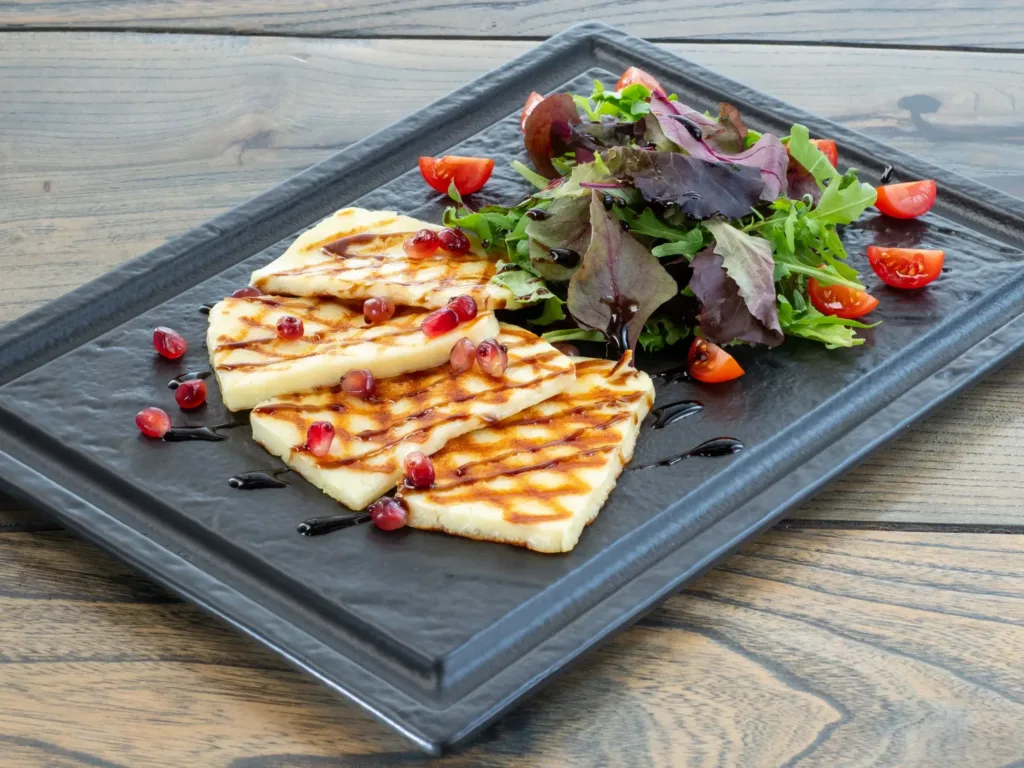
Checked: 24 September 2026.
Why Halloumi is known outside Cyprus
Halloumi is a cheese closely associated with Cypriot cuisine. It is recognisable by its firm, springy texture and the fact that slices are often fried or baked whilst retaining their shape. However, the flavour and saltiness vary between different producers. To get to know it, it’s worth trying the cheese both in a hot dish and without strong seasonings.
The name ‘Halloumi/Hellim’ is protected in the European Union as a designation of origin. This signifies the product’s established link to Cyprus and the production rules, rather than an award for a specific brand. Buyers should read the label in full: a similar shape or a word in the dish description does not necessarily prove the status of the packaged cheese.
Older publications sometimes rely on the results of a past competition or promote a single brand as the best. Such assessments reflect a specific year and the conditions under which the tasting took place. For today’s purchase, what matters more are the current labelling, ingredients, use-by date and whether the flavour suits how you intend to cook it.
Milk, salt and texture
Protected product regulations specify the permissible raw materials and production methods. Check the packaging of a particular cheese for information on the milk, ingredients and manufacturer; you shouldn’t try to guess the proportions of ingredients or flavour characteristics based on appearance alone. Dairy ingredients are allergens, even if the cheese is served hot.
Halloumi is usually sold in brine or in sealed packaging. Its firm texture helps it withstand heating, but the cooking time and method affect the result: cooking it for too long can make the piece dry. Start by following the manufacturer’s instructions and do not automatically add salt until you have tasted it.
Mint is sometimes mentioned in the description — a familiar flavour note in many varieties. However, the presence or absence of mint leaves in the visible packaging does not explain the entire production process. If mint, additional spices or a specific type of milk are essential to you, check the ingredients list for the batch you have chosen.
How to identify a product in the shop
Look for the full name, manufacturer, country of origin, list of ingredients, use-by date and storage conditions. Products with a protected designation of origin bear the relevant labelling in accordance with EU regulations. Do not rely solely on the shelf label: there may be other cheeses for frying nearby with different ingredients and legal status.
Choose a pack size that suits your intended use. For a family dinner, a quantity that can be cooked without needing to be stored for long after opening is convenient; for a gift, it is important to be able to maintain the correct temperature whilst travelling. In hot weather, do not leave dairy products in the car whilst on an excursion.
Buying directly from a farm may give you the chance to ask about the production process, but this does not replace the need to check the packaging. Check where and by whom the cheese was made, how it should be transported, and how long it can be kept after opening. The terms ‘homemade’ and ‘traditional’ are no substitute for information on food safety and allergens.
In the kitchen: from the frying pan to the salad bowl
Slices of halloumi are often fried on a well-heated surface until a crust forms. The thickness and moisture content of the cheese, as well as the heat of the frying pan, affect the result, so it’s best to go by its appearance and the instructions on the packaging rather than relying on generic cooking times from an old article. Serve shortly after cooking.
Fresh vegetables, bread and herbs can balance out the saltiness of the cheese. In a salad, it’s best to add a warm slice just before serving, so that the texture doesn’t change. Sweet fruits or citrus provide a different contrast; these are options to experiment with, rather than essential parts of the Cypriot recipe.
Halloumi is found both in meze platters and as a standalone appetiser. If you’re ordering a set menu, check whether the cheese is included in the price and whether it’s prepared separately from meat products. For people with food allergies, it is particularly important to check the ingredients and the possibility of cross-contamination on shared surfaces.
Nutritional information and restrictions
The cheese contains milk proteins, fat and salt. Its nutritional value depends on the specific packaging and portion size, so it is not possible to specify a universal ‘healthy’ intake. If you have been advised to limit your intake of salt or certain dairy products, compare nutritional tables and follow your specialist’s individual recommendations.
Lactose intolerance and milk protein allergy are different conditions. The phrase ‘cheese is well tolerated when fried’ is no guarantee of safety if you have an allergy. When dining out, inform the staff of your requirements and ask about ingredients, cooking fats and cross-contamination with other foods.
Whether a product is vegetarian depends on the production method and composition of the specific item. If this is important to you, look for clear labelling or confirmation from the manufacturer. Do not assume it is vegetarian simply because the dish looks like cheese with vegetables: various enzymes may be used in cheese-making, and the garnish is sometimes cooked in animal fat.
Storage and transport
Before opening, store at the temperature indicated on the label and do not use packaging with a damaged seal or that is swollen. Once opened, keep the cheese in a clean, sealed container as advised by the manufacturer. The shelf life after opening may be shorter than the overall use-by date on the packaging.
When travelling home from the shop, use a cool bag if the journey is long or the weather is hot. When travelling by air, check the carrier’s regulations in advance and ensure the cheese can be kept cool. A decorative souvenir box does not replace the temperature control required for a dairy product.
If the smell, colour or appearance gives you cause for concern, do not attempt to salvage the product by cooking it at a high temperature. Heat treatment does not automatically make spoiled food safe to eat. Keep your receipt and batch details so that you can raise any queries with the shop or the manufacturer.
How to experience the tradition
In a tavern, compare halloumi on its own without a complex sauce and as part of a dish, noting the saltiness and texture. If you want to find out its origin, ask for the brand or farm: the name of the dish on the menu does not usually provide this information. A small tasting of several varieties is more useful than a definitive ranking.
The European Commission publishes documents on the protected designation of origin for Halloumi/Hellim, whilst Visit Cyprus describes the cheese’s place in the local cuisine. When selecting a product, check its legal status against the current label. Ingredients, packaging and storage conditions may vary even for a familiar brand.
The sources for this page were verified on 24 September 2026. Halloumi is of interest both as an everyday product and as part of local tradition, but a specific purchase should be assessed based on its labelling and condition. For allergies and special diets, decisions are based on the ingredients rather than the dish’s reputation.
Continue planning
- Olive oil in Cyprus: categories and how to choose
- Olives in Cyprus: processing, buying and storing
- Kleftiko in Cyprus: the dish and how it is served