Gynura: what is this plant and is it safe to consume?
We take a look at what is known about Gynura procumbens, why laboratory studies do not prove its therapeutic effect, and what precautions are important to bear in mind before consuming the plant or supplements.
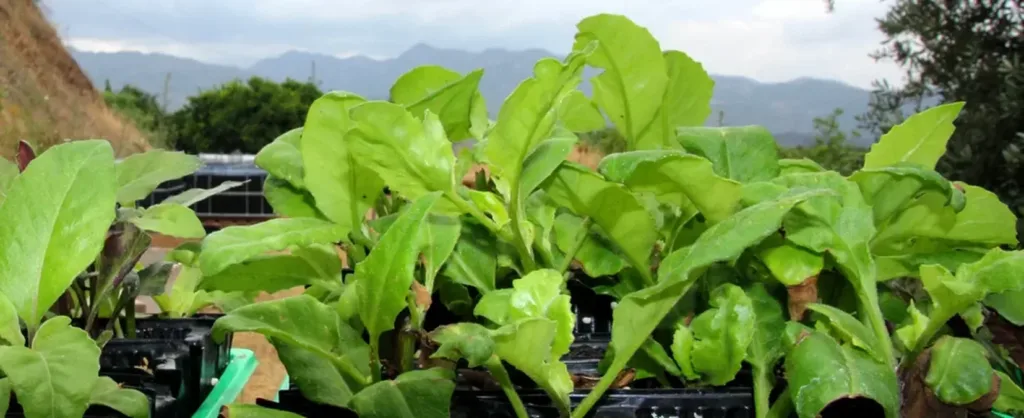
Checked: 13 September 2026.
What is referred to as ‘Gynura’
Plants of the genus Gynura, belonging to the Asteraceae family, are sold under the name ‘Gynura’. In publications about edible leaves, the reference is most often to Gynura procumbens. The Kew database recognises this as the accepted botanical name and identifies its natural range as tropical Africa, Asia and New Guinea. It is not a traditional wild plant native to Cyprus.
A single common name does not guarantee a single species. Ornamental gynuras, young plants and visually similar greens may differ in composition and permitted uses. A photograph from a shop or social media is not a reliable means of identification. For consumption, a label stating the Latin name, origin and intended use of the product is required.
In Cyprus, Gynura can be found as a pot plant or an imported food product, but the mere fact that it is sold does not make it a medicine. Make a clear distinction between growing it for ornamental purposes, using the leaves as food, and taking it as a concentrated supplement: they have different dosages, quality control standards and levels of risk.
What the research actually shows
Reviews describe laboratory and animal experiments involving extracts of Gynura procumbens. These studies examined various biological effects, but such results merely form the basis for a hypothesis. They do not prove that the leaves or the supplement treat diabetes, hypertension, cancer or any other human disease.
A systematic review notes the limited number of clinical studies and the need for further investigation into toxicity, pharmacokinetics and safety before use in clinical medicine. This is more important than a list of promising effects: the quality of the evidence, the formulation and the duration of follow-up determine whether the findings can be extrapolated to humans.
The phrase ‘natural remedy’ says nothing about efficacy or safety. A plant contains many substances, the concentration of which depends on the species, soil, processing and extraction methods. A leaf picked at home, a cup of tea, a powder or a capsule are not equivalent to the sample used in a study; therefore, one cannot simply adopt the study’s results or dosage.
Why you should not replace prescribed treatment
If a person is taking medication for blood pressure, blood sugar or blood clotting, experimenting with a plant may alter a controlled parameter or exacerbate an undesirable effect. Even a presumed overlap in action is a reason for caution, not an argument for taking both remedies together. The decision must be made by a doctor or pharmacist with a full list of your medicines.
Do not stop taking your tablets or change the dose based on a home reading, an online review or advice from a sales assistant. A deterioration in your condition may go unnoticed, and an improvement in a single reading does not mean the condition is under control. A supplement is no substitute for the diagnosis, tests and monitoring prescribed by a specialist.
Promises of ‘detoxification’, ‘normalisation of the entire body’ and a guaranteed cure are particularly dangerous. They do not specify a measurable outcome and conceal the limitations of the evidence. A proper description should specify the particular plant, the form of the product, the study group and any uncertainties, rather than using a generic therapeutic label.
Who needs to exercise extra caution
Do not start using this product if you are pregnant or breastfeeding, if it is for a child, or if you have a severe chronic condition, liver disease or kidney disease, without an individual medical assessment. The absence of any mention of harm in a popular article does not equate to proven safety for these groups.
Allergic reactions are possible even to edible plants. Jinura belongs to the Asteraceae family, so anyone with a history of reactions to plants in this family should discuss the risks with a specialist. If you experience a rash, swelling, difficulty breathing, severe weakness or any other acute symptom, stop taking it and seek emergency medical assistance.
Before any planned surgery, a new course of treatment or a medical examination, inform your doctor about all the herbs and supplements you are taking. It is important to specify the brand, ingredients and frequency of use, rather than simply saying ‘Gynura’. Concentrates may contain additional ingredients, and the actual composition of the product is not always clear from the marketing name.
Food products and EU regulations
In the European Union, a history of substantial use prior to 15 May 1997 is important for a new food product. The European catalogue helps to provide guidance, but states that it is not exhaustive or legally binding. Where necessary, the operator must confirm the history and legality of the product’s placement on the market.
Buyers should look for complete labelling: botanical name, intended use as food, ingredients, the person responsible within the EU, and storage conditions and shelf life. Products labelled ‘for research purposes’, ornamental seedlings or goods of unclear origin are not suitable for consumption. Do not consume plants that have been treated with pesticides not intended for food crops.
Ordering from outside the EU adds uncertainty: the product may not comply with European requirements, and passing through customs does not guarantee its safety. Any medical claims on the packaging do not constitute authorisation as a medicinal product. If in doubt, ask the seller for documentation and check the status with the relevant authority.
If the plant is grown at home
First, confirm the species using a reliable label from the nursery and keep it. Keep edible plants separate from ornamental specimens and household chemicals. Do not pick leaves from a plant of unknown origin, and do not rely solely on the shape or colour of the leaf.
The pot requires drainage, a suitable growing medium and a watering regime that prevents water from standing for long periods. Conditions such as the Cypriot heat, direct sunlight and air-conditioned rooms vary, so signs of stress should not be treated with fertilisers at random. A plant that is diseased or infested with pests must first be identified and treated safely.
Even a confirmed edible species requires standard food hygiene: clean hands, water and utensils, the removal of damaged parts, and proper storage. Home cultivation does not eliminate microbiological contamination nor does it standardise active ingredients. It provides control over the plant’s origin, but not a medical dosage.
A safe approach
Define your aim: is it for flavour and a new product, or an attempt to alleviate a symptom? In the latter case, a diagnosis is required first. Then determine the exact type and form, check the labelling and legal status, compile a list of medicines and medical conditions, and ask your doctor or pharmacist a specific question about compatibility.
If the specialist sees no contraindications, follow the instructions for the legally sold product and do not combine several new supplements at once. This makes it easier to spot an adverse reaction. Do not increase the dose in the hope of achieving faster results, and do not give the product to another person based on your own experience.
Keep the packaging and batch number. If you experience any symptoms, stop taking the product and inform a healthcare professional exactly what you took, when you took it and in what quantity. For general information, consult official and scientific sources; in the event of an acute condition, seek emergency medical assistance rather than looking for advice online.