New Year in Cyprus: Vasilopita, presents and traditions
What the cutting of the vasilopita signifies, how to agree on presents and family visits. New Year’s wishes and a review of the public programme.
Checked: 3 October 2026.
New Year and local customs
New Year is celebrated in Cyprus on 1 January, and in the Greek Orthodox cultural tradition, this day is also associated with Saint Basil. The most recognisable household tradition is the cutting of the vasilopita, which contains a coin. If you’re attending as a guest, ask the hosts about the procedure: it may differ from the version you’re familiar with.
A festive evening, a service and a family dinner — these are different parts of a possible scenario. Not all families combine these, and not all residents follow the same religious tradition. New Year’s customs are best described as the living practices of specific individuals, rather than as a set of mandatory activities for the whole island.
A New Year’s greeting does not require knowledge of all the traditions. Paying attention to the invitation, being punctual and showing an interest in the hosts’ stories are more important than trying to come across as an expert. If there is a detail you don’t understand, ask about it calmly: it is usually easier for the family to explain their own customs than to correct someone else’s confident assumption.
Vasilopita and a coin
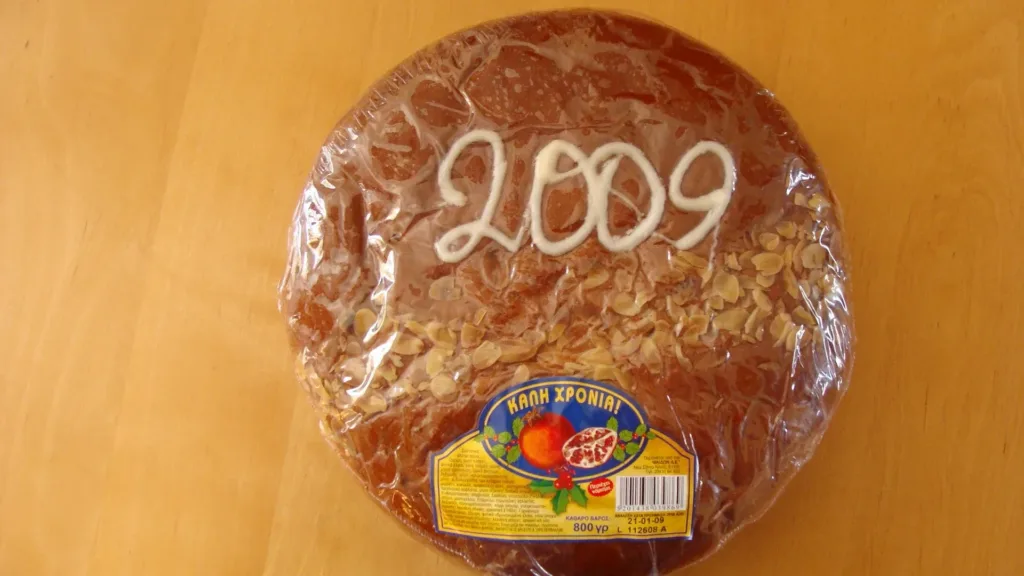
Vasilopita is a festive cake into which a coin is placed; it is then cut up and distributed according to the family’s customary order. Finding the coin is associated with a wish for good luck for the coming year. This is a symbolic custom: it is not a way of predicting income, health or other real-life events.
The order in which the slices are cut and to whom they are given may vary. Sometimes a slice is set aside as a symbolic gesture; at other times, the order is determined by the family’s composition. Do not substitute the hosts’ explanation with a ready-made, one-size-fits-all list; it is more helpful for a guest to understand which slice has been offered to them and how it is customary to continue cutting the cake here.
The coin is an inedible object hidden inside the treat. Before serving, check where and how it has been placed, and let anyone who isn’t yet familiar with the custom know. This festive game shouldn’t turn into a rush: take a good look at your piece, and explain to the children that they should show their find to an adult.
Saint Basil and presents
In New Year’s traditions, the figure of Saint Basil is associated with good wishes and presents, but modern families may exchange them on other days during the winter season as well. You should not promise a child a present from another family based solely on a cultural description: you should find out about the hosts’ customs and traditions separately.
If you’re invited to a friend’s house, ask about the gift-giving arrangements before you buy anything. In some circles, it’s customary to bring a small token gift, whilst in others, it’s not customary to buy anything at all. What matters is that everyone is on the same page, not the price supposedly required to take part in a ‘proper Cypriot New Year’.
A gift of food also requires careful consideration of its contents and storage. Check whether sweet pastries or a drink would be appropriate before automatically choosing them. A small, thoughtful gesture is usually more welcome than a big surprise, which creates extra work for the hosts or puts the recipient in an awkward position.
The first entry and wishes for good fortune
Ethnographic accounts mention the custom of the first person to enter a house after the start of the new year: significance is attached to the person, the moment and the wish for well-being. The details varied from place to place. This is an opportunity to discuss family traditions, rather than a rule that a tourist must enter every house.
If the hosts follow this custom, they will explain themselves who they are expecting first and what they suggest doing. Do not impose yourself as a participant without warning, and do not try to organise someone else’s home ritual based on a list found online. Even a well-known tradition may have its own explanation and a different order of events for that particular family.
Wishes for good luck and folk superstitions should be distinguished from actual promises. Discussing them helps one to understand the language of the festival, but does not confirm that the action will influence future events. Respect for tradition is compatible with viewing it symbolically and refraining from attributing one’s own mystical interpretations to it.
Family invitation
Before your visit, find out whether the invitation is for New Year’s Eve, the midnight celebration or a daytime gathering. The phrase ‘New Year’ alone does not specify the time or duration. Also, find out who will be attending: this will help you choose the right kind of gift, what to wear and how to contribute to the meal.
If the family is organising the cutting of the Vasilopita, wait for an invitation and a cue. There’s no need to search for the coin in the cake yourself or swap slices just for a laugh. The custom is about sharing the moment; a willingness to follow the simple explanation is more valuable than showing off your knowledge of its various versions.
Please enquire separately about photographs and the publication of family videos. A private home and children should not be featured in a public announcement simply because of a special occasion. If you wish, you can save an agreed-upon photo of the table or record a message you particularly liked, without sharing portraits of all those present.
Social events and a trip
Concerts, fairs and festive programmes vary depending on the town and the organiser. Don’t assume that a fireworks display or concert takes place every year at the same venue at the same time. Look for the programme for the relevant year and the latest information on the time, venue, entry arrangements and any possible changes.
Before visiting a restaurant, check in advance whether they are serving their usual menu or a special festive dinner, whether a booking is required, and what is included in the price. You cannot assume that the arrangements at one establishment will apply to a neighbouring one. If the local custom of the Vasilopita is particularly important to you, ask about it directly, rather than assuming it is available just because of a decorated sign.
It’s worth planning your return journey before the evening begins. Check what transport is available and agree on a meeting point if you’re going out in a large group. The fact that it’s a public holiday does not in itself guarantee that buses will run to their usual timetable, that taxis will be available, or that there will be parking near the venue.
How to distinguish tradition from a pre-written script
An ethnographic source describes what people used to do and how they explained their customs; a modern poster sets out what a particular organiser is offering. These materials answer different questions. An old description of a village festival cannot be used as a modern-day timetable or as a set of instructions for every family.
Vasilopita, gifts and good wishes bring generations together, but the way the celebration is observed continues to evolve. A family may retain one element, dispense with another, or combine different traditions. This does not make their celebration any less meaningful; cultural understanding begins with an interest in their choices, rather than with a scrutiny of their authenticity.
For your next visit, make a note of what the hosts have explained to you and confirm the programme for the community event before you travel. There is no fixed date for cutting the cake in every home, nor is there a guaranteed programme for next year. This article provides guidelines for respectful participation, whilst leaving the actual arrangements to those organising the celebrations.
Continue planning
- Public holidays and opening hours in Cyprus
- Cyprus Festivals: A Seasonal Calendar of Events
- A leisurely 3-, 7- and 10-day itinerary around Cyprus
Official sources
Vasilopita; illustration of New Year baking · Photo: Μυρμηγκάκι · Public domain · converted to WebP and resized.
