Rock climbing in Cyprus: areas, access and safety
How to choose an area and an organiser, check the access and route conditions, and ensure that the training isn’t merely a description of the rock face.
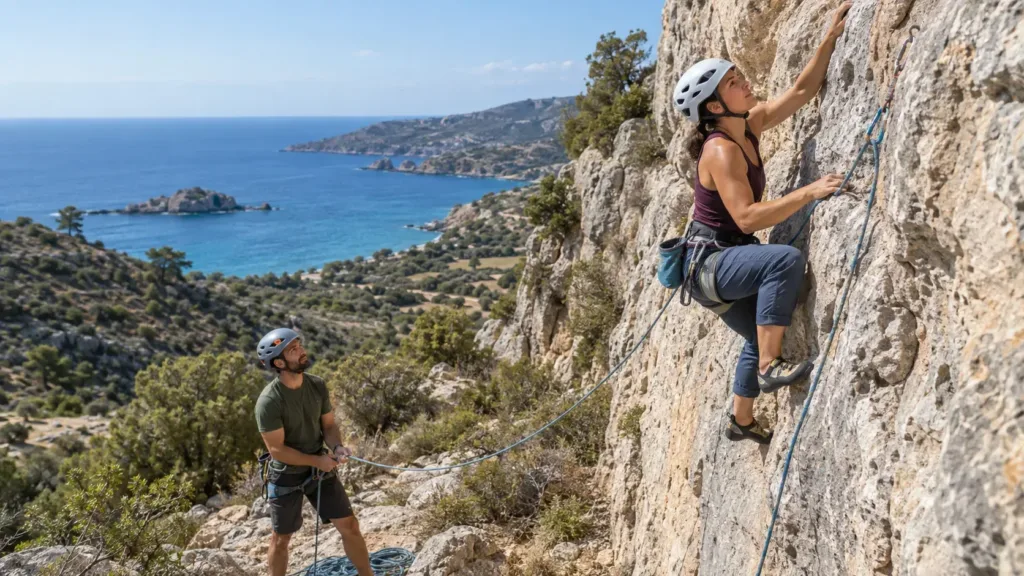
Checked: 27 September 2026.
Start by deciding on the format of the session
Rock climbing in Cyprus includes climbing walls, sport routes and areas requiring traditional protection. These are different activities in terms of the skills and equipment required. The official tourism portal describes climbing areas, but its overview does not confirm the current condition of each site, its accessibility or the suitability of a route for a particular person.
It is sensible for a beginner to start with an instructor and a suitable venue, rather than heading out to the crag on their own based on a photograph. Check the guide’s qualifications, the group size, the equipment, insurance and the procedure in the event of bad weather. If the organiser cannot explain how they assess the route and the participants, reschedule the session.
For the climbing party, up-to-date local information is essential: the condition of the approach, the anchors, any restrictions on the area and communication options. A route guide is no substitute for a site inspection and standard safety procedures. Do not apply a difficulty rating from another crag based solely on the numerical grade.
Areas and different rock types
Visit Cyprus mentions Kavo Greko, the Drusheya and Ineya areas, the Diarizos Valley and other locations. These names help you find a local expert and up-to-date topography. They do not imply that every crag is open all year round or that all routes in the area offer the same standard of safety.
When choosing an area, take into account the approach, aspect, heat, shade and any potential impact on protected natural areas. A coastal crag differs from a valley crag in terms of wind conditions and access to the water. Do not choose a route simply for the sea view if the group’s experience does not match the type of climbing involved and the ability to return safely.
Old maps and descriptions of the number of trails quickly become out of date: equipment wears out, access may change, and some routes are closed for environmental reasons. Before setting off, ask a local club or instructor about the current situation and check the signs at the entrance.
Access and protected areas
There are rules in place in the nature reserve that are not always mentioned in tourist guides. Check whether access is permitted, whether there are any seasonal restrictions for birds, and where you can park your car. Do not use an unofficial route across private land or through a closed-off part of the park simply because an old GPX file leads that way.
Rock climbing can affect vegetation and nesting sites. Avoid damaging shrubs and altering the rock; do not leave chalk or rubbish where it is prohibited. If the area has a local code of conduct, adhere to it, even if it limits the number of routes available.
If a route is closed, you should choose an alternative plan rather than trying to get round the barrier. On site, the instructions of the managing authority and the organiser take precedence. Photos of people on a closed cliff do not confirm that it is possible to go there today or that the route is safe.
Equipment and the organiser’s responsibilities
Before the session, check who is providing the helmet, harness and other equipment, how its condition is checked, and who it fits. Do not accept ill-fitting equipment just to avoid holding the group up. The instructor must explain the scope of the session and check that participants understand their instructions.
This article does not contain diagrams of belay set-ups, knots or abseiling. An error in such a procedure can lead to serious injury, and the text alone, without hands-on practice, does not allow you to verify a person’s actions. Learn technical skills under the supervision of a qualified specialist and follow the equipment manufacturer’s current instructions.
Ask about the communication and evacuation plan, the nearest accessible road and the role of each participant. If the group is too large to manage or communication is not working, the organiser must adapt the route. Do not assume that ‘we’ll give it a go and sort it out when we get there’ is a substitute for preparation.
Weather, heat and route conditions
In summer, exposed rock heats up, and there may be no shade along the approach. Take into account the start time, water supplies and physical exertion, particularly if participants have travelled from the coast and are unfamiliar with the local terrain. Wind, rain and thunderstorms can change conditions on the crag; the decision on whether to go ahead is made on the day, not at the time of booking.
Check the area around the route: there may be rocks, other groups or a narrow passage. The approach to the crag also requires careful attention; it is better to finish the climb whilst still having energy to spare than to have to return along an unfamiliar path in the dark. For children and beginners, agree in advance on the duration of the climb and the possibility of taking a break.
After rain, the surface and approach may still be unsuitable. Do not judge the conditions by the sunny sky outside the hotel. A local guide who knows the area should be able to decide against a particular route; such a decision is a sign of a responsible organisation, not a shortcoming of the service.
How to choose a course
Ask for the course programme: participants’ entry-level skills, the format of the practical sessions, the instructor-to-group ratio, and the venue and time. Clarify what constitutes completion of the course and whether any certificate is issued. The phrase ‘suitable for all levels’ does not explain what activities will be available to someone with no prior experience.
For a child, it is important that the activity is age-appropriate, that they are supervised, that they are protected from the heat, and that the experience is clearly explained to an adult after the session. Do not choose a challenging nature trail just for the sake of a family photo. The child’s interest and their ability to take a break should take precedence over an excursion that has already been paid for.
Compare the total cost: the instructor, equipment, transport, site entry and cancellation terms. If an offer promises a ‘guaranteed safe’ route, ask for an explanation of the actual limitations. In outdoor sports, a reputable organiser will discuss the risks and alternatives.
On-the-spot decision
Before setting off, double-check access, the weather, the condition of the approach route and the group’s readiness. Ensure that everyone understands the communication plan and is free to opt out of the route. If you have any doubts about the equipment, the organisation or your own physical condition, stop the session and discuss a simpler alternative.
Sources were checked on 27 September 2026. Information about the areas helps in preparing questions, but access, anchor points, weather and facilities may have changed. Do not use the date of the article as confirmation that a particular crag is safe to climb today.
This guide is intended to help you choose a location and ensure you are properly trained. It is not a substitute for an instructor, a personalised assessment of your skills, or a thorough inspection of the route. In the event of an accident, follow the group’s plan and contact the emergency services.
Continue planning
- Cyprus’s waterfalls: walking trails, seasonal information and safe access
- Kayaking and SUP in Cyprus: where to launch and how to assess sea conditions
- Cycling routes in Cyprus: how to choose a route and prepare